Pêcheur Québec
Published on June 30, 20263 min read
The complete checklist to nail your first family fishing trip in Quebec: license, gear, bait, safety, plus practical tips and 9 FAQs.
Taking the kids fishing for the first time creates a memory that lasts. But a successful outing takes preparation: a forgotten license, a hungry toddler, or an afternoon that drags on can spoil the day. This guide gives you a clear preparation checklist and practical tips so your first family outing is a pleasure, not a source of stress. It complements our Quebec family fishing guide, worth reading before you leave.
The essential preparation checklist
Pack your bag the night before: nothing is worse than rushing in the morning while the kids grow impatient. Here is everything to check off before you go.
- Adult's fishing license + photo ID: mandatory from age 18. Children under 18 fish free under your supervision. Keep your license and a photo ID on you.
- Simple gear: one light rod per child, a few hooks, sinkers, a float, and a small landing net. No expensive equipment needed to start.
- Bait: earthworms, a classic that works everywhere and that kids love to handle. Bring enough for the whole outing.
- Weather and time: check the forecast the day before. Favor early morning or late in the day, when fish bite most and the heat is bearable.
- Snacks and water: hungry kids lose patience fast. Bring plenty of water and easy snacks (fruit, bars, cookies).
- Sun protection: hat, sunglasses, and sunscreen for everyone. The glare off the water amplifies the rays.
- Life jackets: essential near the water, especially on a boat or a dock. One well-fitted jacket per child, non-negotiable.
- Garbage bag: carry out everything you bring in. Set the example: a clean waterway is a pleasure for all.
- First aid kit: bandages, disinfectant, tweezers (for a misplaced hook), and bug spray.
Key takeaway — Pack the bag the night before and check each item: license + photo ID, simple gear, bait, snacks and water, sun protection, life jackets, garbage bag, and first aid kit. Aim for early morning or late afternoon.
Tips for a successful first outing
Good gear prep isn't everything. Mindset matters just as much, especially with kids.
Choose an easy spot
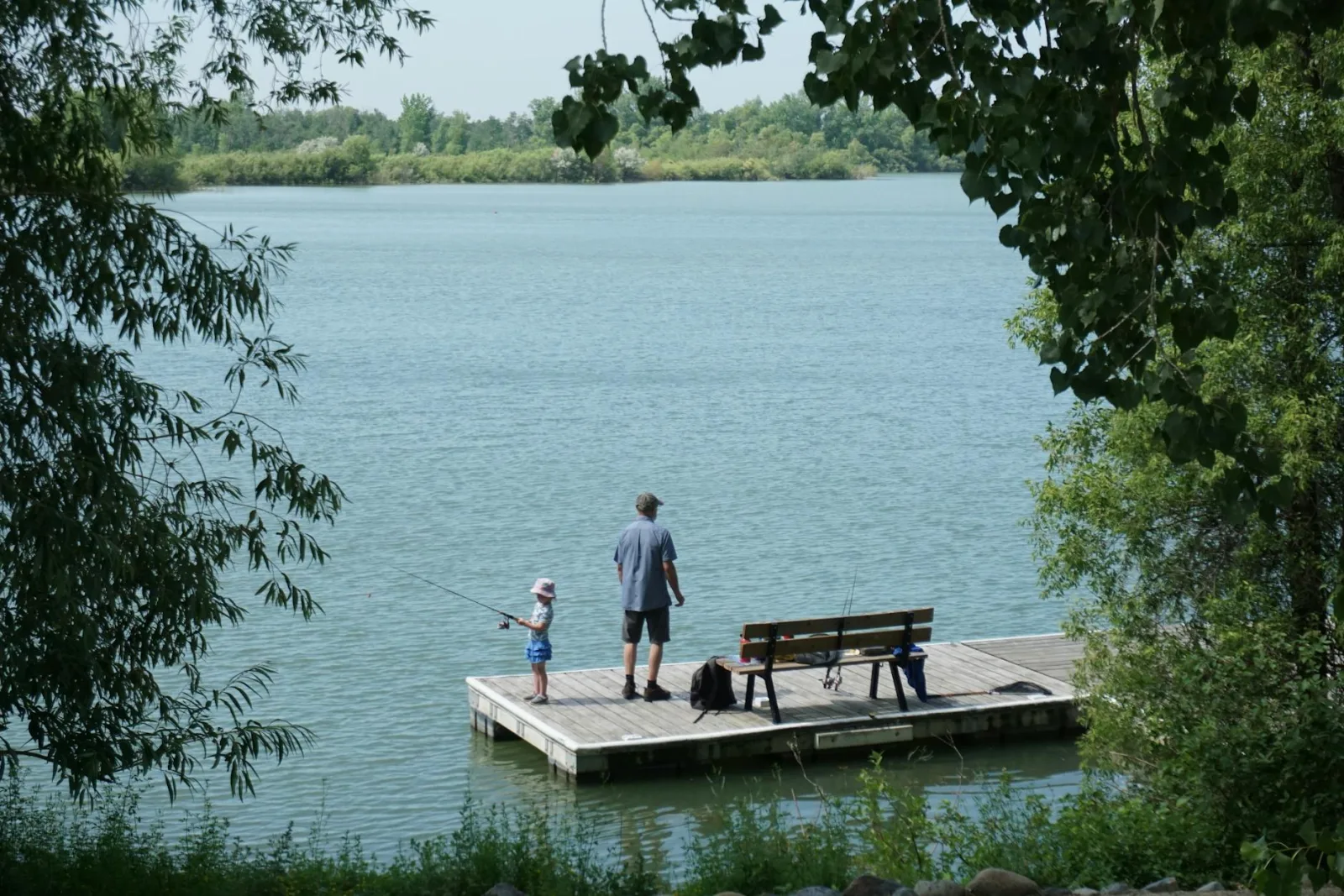
For a first time, skip the remote corners. Aim for a municipal dock, an accessible shore, or a developed lake with nearby restrooms. A place where fish bite often beats a famous but fickle spot. See our guide on where to fish with kids to find the best family-friendly, accessible places.
Keep it short
Two hours is plenty for a first time. Young children have limited attention spans, and it's better to end on a high note than to stretch the day into boredom or tears. You can always go longer next time.
Choose and adjust the gear
A rod that's too heavy or too long discourages a child. Pick gear suited to their size and strength. Our article on kids' fishing gear breaks down the right choices by age, from an easy-to-use closed reel to the ideal rod length.
Manage expectations
Explain from the start that fishing also means waiting and sometimes catching nothing. Turn it into a game: watch the dragonflies, skip stones, count the ducks. If fishing becomes a source of pressure, the fun disappears. The goal of a first outing is to make them want to come back.
Celebrate the first catch
When a child catches their first fish, even a tiny one, it's a big moment. Take a photo, praise them warmly, and let them decide whether to release it. That positive memory is what turns them into a lifelong angler.
After the outing
Put the gear away with the kids, rinse the rods, and check what's missing for next time. Use the moment to talk about the day: what they liked, the fish they hope to catch next time. It's also the right time to plan future outings.
Before each season, make sure you have an up-to-date fishing license and check the opening dates for your zone: some species and waters have specific seasons. A well-prepared family is one that can't wait to head back out.
?Frequently asked questions
At what age can a child start fishing in Quebec?
Do children need a fishing license?
What's the best time of day to fish with kids?
How long should a first outing last?
What basic gear is needed for a first family outing?
What bait should you use with kids?
Where should you fish with young children?
Are life jackets mandatory for children?
What if my child gets bored or catches nothing?
Go further
Buyer’s guides