Pêcheur Québec
Published on June 30, 20264 min read
How to recognize a good accessible fishing spot for children and beginners: stable dock, safe shoreline, shallow water, easy fish, plus a criteria checklist and the best types of places.
Family fishing starts with the right spot. The best place for a child or a beginner isn't the one that gives the biggest fish: it's the one where you can set up easily, safely, and catch something quickly. This guide explains what a truly accessible site looks like, which criteria to check before leaving, and which types of places to favour. For the big picture, start with our family fishing guide for Quebec.
Key takeaway — A good accessible spot brings together four things: a stable dock or clear shoreline, safe access (no steep bank or strong current), shallow water near the edge, and abundant, easy fish like yellow perch or sunfish. The rest (parking, restrooms, shade) makes the outing comfortable and lets you stay longer.
What does a good accessible spot look like?
When fishing with kids, success is decided in the first few minutes. An ideal site combines a few simple qualities.
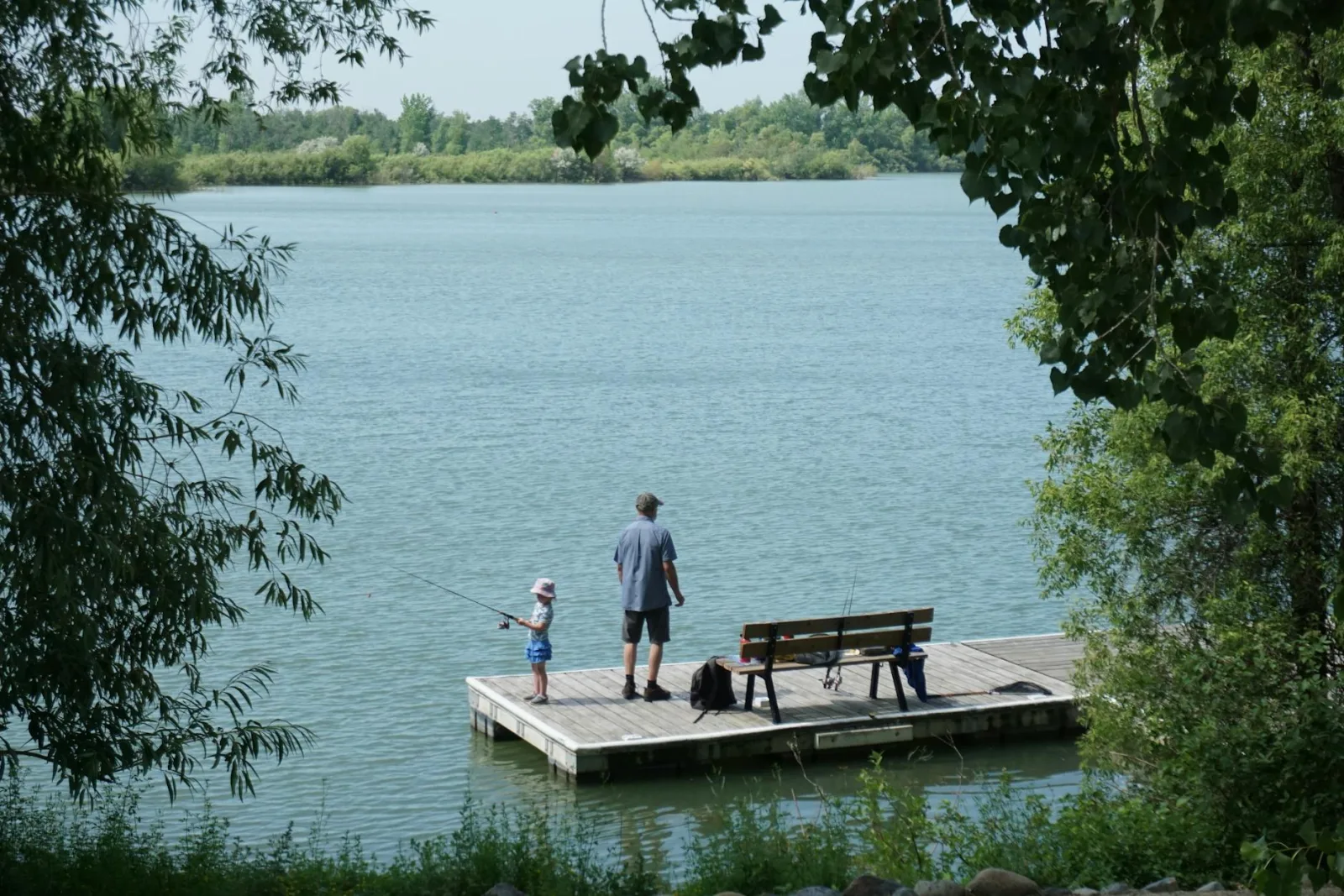
- A stable dock or clear shoreline: a flat, solid surface where a child can walk, sit and cast without slipping. Public docks with railings are perfect for little ones.
- Safe access: no slippery bank or steep drop to the water. You want to keep an eye on everyone without stress.
- Shallow water near the edge: easy-to-catch fish often live within a few metres of shore. No need to cast far.
- Abundant fish: yellow perch, pumpkinseed sunfish and brown bullhead bite easily, take a simple worm and keep kids hooked. A fish that bites beats a trophy that never comes.
- Room to move: children need to walk, dig through pebbles, take a break. A clear shoreline with a bit of grass around helps enormously.
The goal isn't performance, but creating a successful first experience that makes them want to come back. A trophy walleye can wait a few years.
A checklist to review before you go
Before choosing your spot, run through this short list. It spares you unpleasant surprises and turns a risky outing into a fun moment.
| Criterion | Why it matters |
|---|---|
| Nearby parking | Carrying rods, chairs, a cooler and kids over 500 m discourages everyone. Parking a few steps away changes everything. |
| Restrooms close by | With young children, access to restrooms (or at least facilities in the park) avoids cutting the outing short. |
| Stroller or wheelchair access | A flat path, with no steps or rough ground, lets you bring a stroller, a rolling cooler or someone with reduced mobility. |
| Dock or clear shoreline | A stable surface with no obstacles behind you avoids snagged hooks and falls, and makes casting easier. |
| Easy, abundant fish | Perch, sunfish and bullhead ensure frequent bites: nothing motivates a child like a fish that bites. |
| Shade or shelter | A tree, a pavilion or a shaded corner protects from the sun and lets you stay longer without overheating. |
Key takeaway — You don't need to check every box. A stable dock, easy fish and nearby parking are often enough for a successful first outing. The rest is a comfort bonus.
The types of places to favour
Rather than looking for a remote lake, head for sites designed for access. Three categories stand out.
Public and municipal docks
Public docks are often the best starting point. They offer a stable surface, sometimes a railing, and the water is usually deep enough for fish to come close. You'll find them in many waterfront towns, on lakes and along the river. Spot the ones near you on the interactive spots map.
Stocked ponds and lakes
Some stocked ponds are regularly supplied with trout, which hugely boosts the odds of a catch. These waters, often set up in parks or family areas, are perfect for beginners: fish density is high and access is simple. It's the ideal place for a child to feel that first bite.
Riverside parks and municipal rest areas
Riverside parks often combine every advantage: parking, restrooms, picnic tables, flat paths and developed water access. You can alternate fishing, snacks and play, which matches exactly the rhythm of an outing with kids. For concrete suggestions, also read where to take your kids fishing.
Finding the right spot near you
Quebec has thousands of accessible waters, and the best one for you depends on your region. Rather than relying on a random address, use the map to spot real sites, with their access type and the species present. Filter by what matters for your family and set off with peace of mind.
One last practical reminder: even with children, the accompanying adult must hold a valid fishing license (under-18s are exempt under supervision). Also check your zone's rules before leaving.
Going further
This article is part of our complete Quebec fishing guide. Prepare your next family outing, pick a dock or a pond near you, and above all savour the simple joy of watching a child reel in their first fish.
?Frequently asked questions
What type of spot is best for fishing with a child?
Which fish is easiest for a beginner to catch?
Do I need a license to take my child fishing?
How do I find an accessible spot near me?
Is a public dock a good choice to start?
What is a stocked pond?
What criteria should I check before choosing a family spot?
Do I need to go far to find good fish?
How do I make the outing enjoyable for young children?
Go further
Buyer’s guides