Walleye fishing in Québec: techniques, spots & seasons
— complete guide · the province's #1 sport fish
The walleye (doré) is Québec's most prized game fish — a low-light predator that rules dawn, dusk and the dark hours of summer nights. Catch it consistently and you understand light, depth and structure better than most. This guide covers where walleye hold, when they feed and the four core techniques that put fish in the boat, then breaks it down season by season. For legal limits and quotas, see our dedicated quota page.
Why the walleye
Understand the fish and the rest follows.
A low-light predator
Walleye see exceptionally well in low light thanks to a reflective eye layer (the tapetum lucidum). They hunt at dawn, dusk and after dark while their prey is half-blind.
Those glowing eyes
Bright sun pushes them deeper or into shade and stained water. Cloudy, windy or turbid conditions bring them shallow and active in daylight.
Worth the effort
Firm, white, mild flesh makes it the most sought-after table fish in Québec — which is exactly why structure gets fishing pressure and why finesse matters.
Where to find walleye
Walleye relate to structure and the edge between shallow and deep. Find these and you find fish.
Drop-offs and breaklines
The first sharp depth change off a flat or point is prime. Walleye stage on the edge and slide up to feed.
Rocky humps and shoals
Mid-lake rock humps topping out in 2–6 m hold roaming summer fish, especially with current or wind washing over them.
River mouths and inflows
Where a tributary or current line meets the main body, food collects and walleye stack — classic spring and fall spot.
River holes and current seams
In rivers, look for the deep pool below a rapid, the seam where fast water meets slow, and the tailout. Walleye sit in the slack and ambush.
Depth by season
Shallow (1–4 m) at low light and in spring; mid-depth on structure through summer days; deeper basins and steep breaks (6–12 m+) in the heat and in fall.
When they bite
Timing is half the game with walleye. Fish the windows.
Dawn, dusk & night
The golden windows. The hour either side of sunrise and sunset is best; warm summer nights can be excellent, especially shallow over rock.
Stained or windy water
A walleye chop or coloured water cuts light penetration and brings fish shallow and feeding through the day.
Post-spawn spring
After the spring spawn, fish recover near spawning areas — river mouths, rocky shorelines — and feed up. A reliable early-season pattern.
Summer depth
Through warm, bright midsummer days, fish go deeper to structure and basins. Slow down and fish vertical or troll the breaks.
Aggressive fall
As water cools, walleye feed hard to fatten for winter. Bigger baits and faster presentations on deep structure shine.
The four core techniques
Match the technique to the season and the structure.
1Jig + worm or minnow
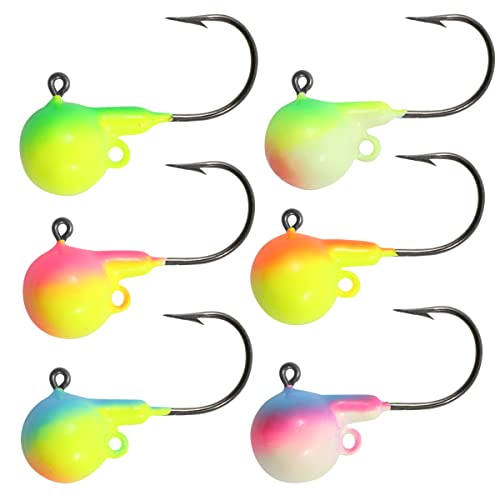
The bread-and-butter walleye method. A 1/8–1/2 oz jig head tipped with a nightcrawler, leech or minnow, hopped slowly along bottom over breaks and humps. Lighter in shallow or calm water, heavier with depth, wind or current.
Best when : All season, especially spring and finicky fish.
2Trolled worm harness
A spinner/worm harness (a Colorado or willow blade ahead of a beaded snell baited with a worm) trolled slowly behind a bottom bouncer covers water and finds active summer fish on flats and breaks.
Best when : Summer, covering water over structure.
3Crankbait on structure
Casting or trolling a minnow-profile crankbait along breaklines, rocky points and river current seams triggers aggressive fish, particularly in fall and in stained water.
Best when : Fall and active fish, low-light.
4Vertical jigging
Hold directly over fish on deep structure and work a jig, blade bait or jigging spoon straight up and down. The summer-deep and fall basin go-to — and the same presentation carries straight into ice fishing for walleye in winter.
Best when : Deep summer, fall basins, and ice season.
Season-by-season tips
Adjust depth, speed and bait as the year turns.
Spring
Post-spawn fish recover shallow near river mouths and rocky shores. Fish slow with a light jig and live bait; target the warmest stained water and the low-light windows.
Summer
Bright days push fish deeper to humps and breaks — troll harnesses or jig vertical. Then fish the evening and night shallow bite over rock.
Fall
Cooling water means aggressive feeding. Go bigger and faster with crankbaits and larger minnows on deep structure; some of the biggest walleye of the year come now.
Winter (ice)
Walleye stay catchable through the ice. Vertical jigging spoons and jigs at dawn and dusk over the same summer structure, with tip-ups baited with live minnows nearby.
Common mistakes
- ✕Fishing the middle of a bright sunny day in clear water instead of the low-light windows.
- ✕Working too fast — walleye usually want a slow, near-bottom presentation.
- ✕Ignoring the precise depth: a metre off the right band can mean no bites at all.
- ✕Staying shallow all summer instead of following the fish out to deep structure.
- ✕Skipping the wind: a walleye chop on a shoreline or hump is a feeding signal, not a reason to move.
- ✕Using line too heavy for clear water and spooking pressured, light-sensitive fish.
Buyer’s guides