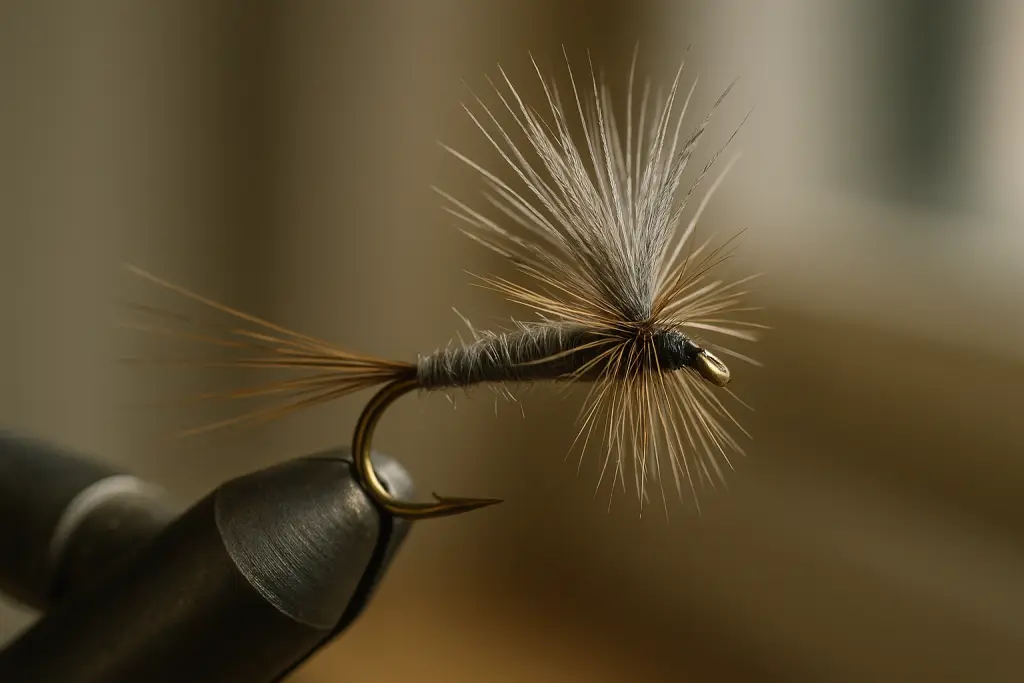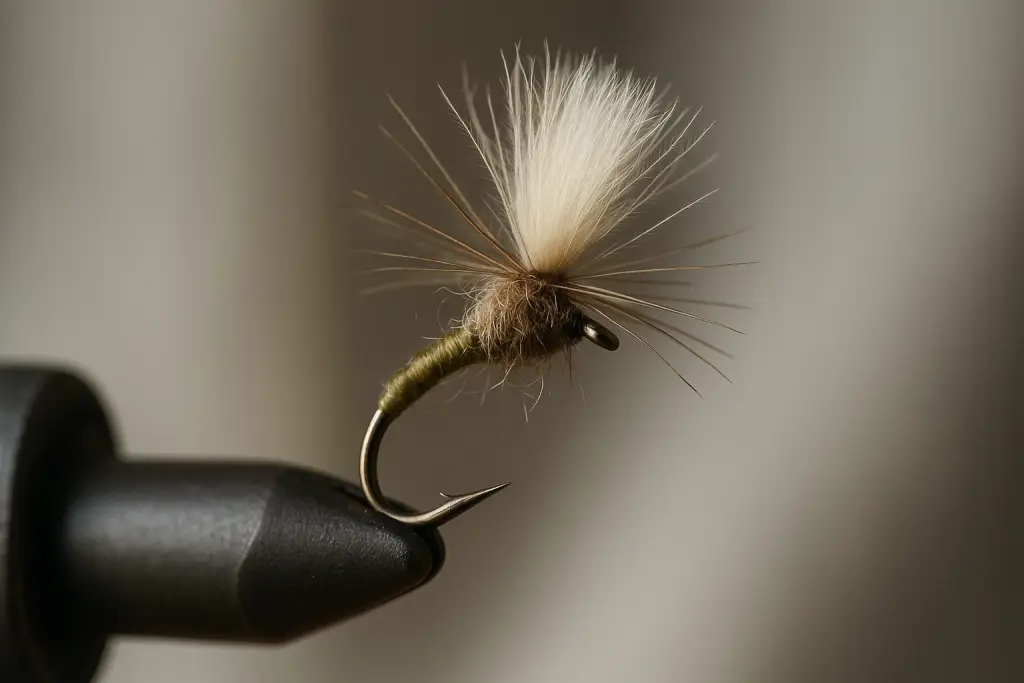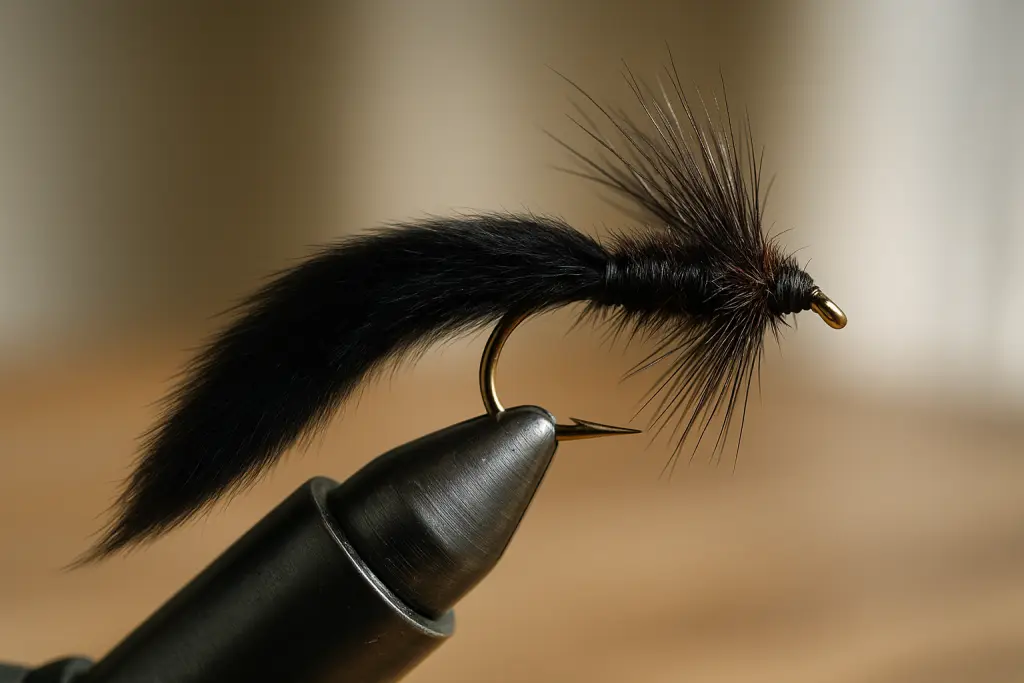
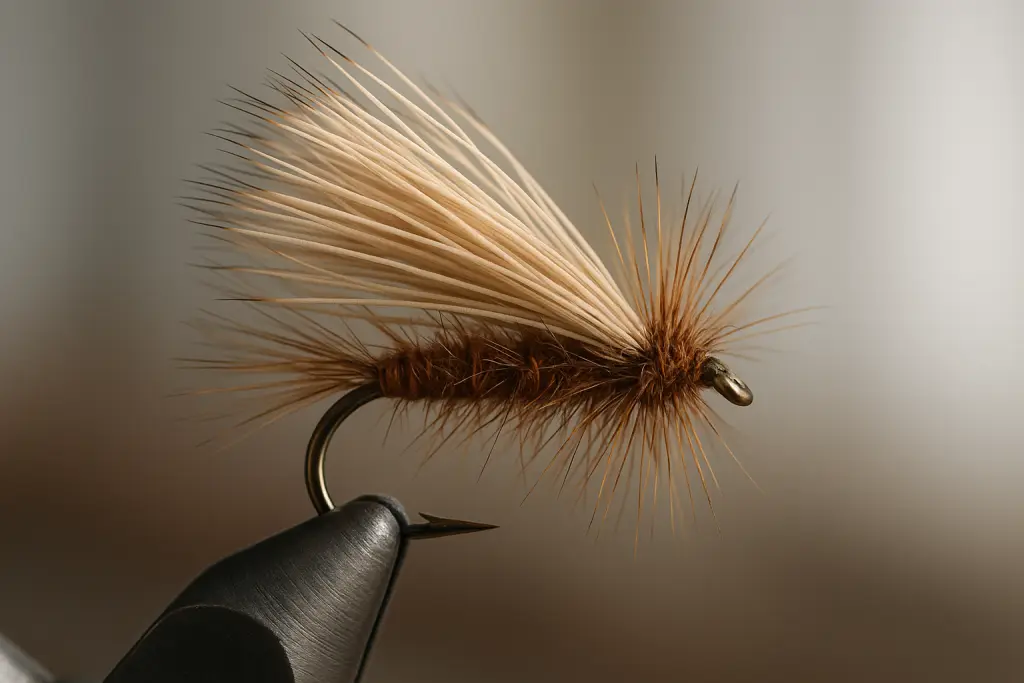
The Elk Hair Caddis is a versatile fly that’s renowned for its effectiveness across a variety of multi-species targets, making it a must-have in any angler's tackle box. What sets this fly apart is its buoyancy and realistic profile, mimicking the natural caddisfly during its hatch. This makes it particularly effective during the warmer months when insects are abundant.
Flies (fly fishing)
Elk Hair Caddis — fishing bait in Quebec
Perfect for trout in fast waters, brilliantly mimics mayflies.
Regulation
Check your zone's specific rules before use. Certain species are banned as bait in Quebec.
See full bait regulation →Level
All levels
When presenting the Elk Hair Caddis, consider two techniques for maximum effectiveness. First, try a dead drift presentation. Cast upstream and let the fly float naturally with the current, mimicking an emerging caddis. Use a 9-foot, 5-weight fly rod paired with a floating line for optimal control. The Rio Gold Floating Line is a great choice for this technique.
Another effective method is the skittering technique. Retrieve your fly with short, quick strips to create a more erratic movement, simulating an insect struggling on the water's surface. For this, a 4-weight rod with a Hatch Finatic Reel will provide the sensitivity needed to detect subtle strikes.
In Quebec, the Gaspé Peninsula offers some of the best conditions for using the Elk Hair Caddis, especially in the rivers flowing into the St. Lawrence. The combination of lush terrain and rich insect life creates an ideal environment for this fly.
For advanced anglers, consider varying your approach based on time of day; early mornings and late evenings are prime for caddis activity. Additionally, don’t hesitate to change your fly size based on the hatch—fish can be surprisingly selective, and a size #14 might outperform a size #12 during certain hatches.
Technical specifications
Hooks
Single
Material
Plumes + crochet
Rattle
No
Freshwater
✓
Saltwater
✓
Ideal conditions
Water clarity
ClearSlightly stained
Water temperature
ColdTemperate
Depth
Surface0-2 m
Current
LowMediumStrong
Light
OvercastDawnDusk
Animation techniques
Dead drift
Laisser la mouche dériver naturellement avec le courant — imitation parfaite.
Strip retrieve
Tirer la soie par petits coups — anime streamers et mouches noyées.
Skating
Faire glisser la mouche sèche en surface — top truite en rivière.
Season rating
Spring
8/10
Summer
10/10
Fall
8/10
Winter
1/10
Recommended gear
| Rod | Canne mouche 4-6 wt 9' |
| Reel | Réel mouche 4-6 wt |
| Line | WF floating fly line |
| Leader | 9′ 4-6X tapered |
Frequently asked questions
Q1.What fish does Elk Hair Caddis catch as a fishing bait in Quebec?
This fly (Elk Hair Caddis) is effective on multiple species. Per-species effectiveness rating is in the "Target species" section above.
Q2.When is the best season to fish with Elk Hair Caddis in Quebec?
See the season rating table above — effectiveness varies by spring / summer / fall / winter and by MFFP zone.
Q3.What color works best in murky water with Elk Hair Caddis?
Murky water: bright or contrasting colors (Fire Tiger, chartreuse, white-red). Clear water: natural shades (perch, baitfish silver, brown).
Q4.At what depth should I use Elk Hair Caddis?
The "Technical specifications" section gives the diving depth and buoyancy of this fly — they determine the optimal use depth.
Q5.Is Elk Hair Caddis allowed as fishing bait in Quebec?
Allowed in most MFFP zones. Check water-body exceptions at peche.faune.gouv.qc.ca/regpec, especially for salmon rivers and certain wildlife reserves where use is restricted.
Q6.What gear should I use with Elk Hair Caddis?
The "Recommended gear" section above details the rod, reel, line and leader best suited.