Pêcheur Québec
Published on June 30, 20263 min read
Rods rigged in advance, organized lure boxes, a livewell to keep fish alive, measuring tools, sonar, PFD and a game plan: the complete guide to prepping your fishing tournament gear.
A fishing tournament isn't won only on the water: it's won the night before, in the garage, when you prep your gear. Well-organized equipment saves precious minutes on game day and keeps you clear of penalties. This guide explains how to prepare your gear for a fishing tournament from A to Z. For context, first read our fishing tournament guide.
Key takeaway — Rig several rods ahead of time (one per technique), sort your lures into labeled boxes, keep fish alive in a well-oxygenated livewell to avoid penalties, and prep your measuring tools (pliers, scale, ruler) the night before. Scouting (pre-fishing) is still your best edge.
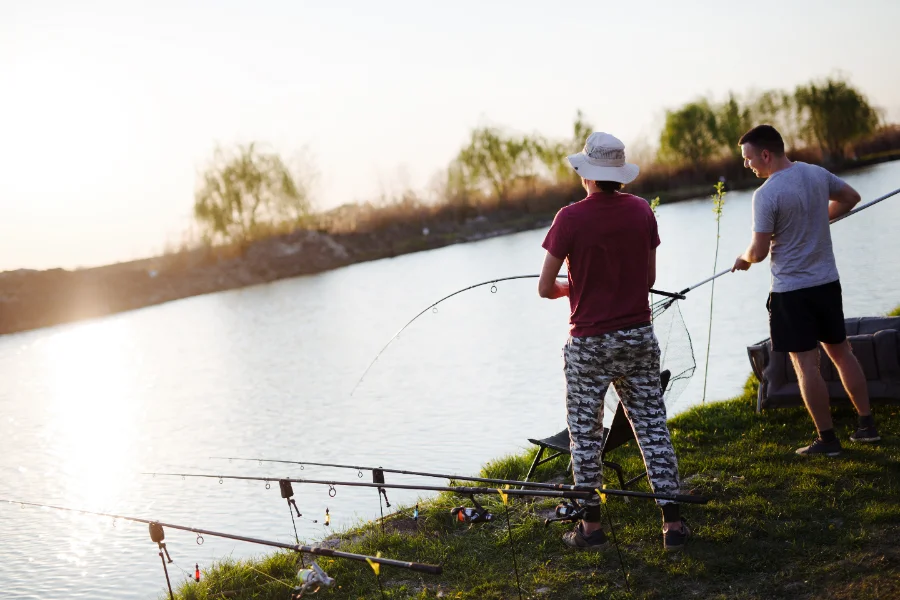
Several rods rigged in advance
This is the competitor's golden rule. In a tournament every second counts: you can't re-tie a rig while the fish are biting. Prepare 4 to 8 rods, each rigged for a different technique:
- a finesse rod (drop shot, ned rig) for tough days;
- a power rod (jig, texas rig) for heavy cover;
- a crankbait or spinnerbait rod to cover water fast;
- a topwater rod for dawn and dusk.
Store them ready to cast, line already through the guides. Change spots, grab the right rod, and fish immediately.
Organizing lures and boxes
A tidy box means a clear mind. Sort your baits and lures by category: soft plastics on one side, crankbaits on another, jigs and heads together. Use labeled boxes by technique or depth. Keep a "first choice" box with your 15-20 favorite lures for the day's water — the one you identified while scouting.
Livewell and fish care
This is the thing that sets serious competitors apart. In most tournaments a dead or dying fish means a weight penalty (often -100 to -250 g per fish), or even disqualification. Your livewell must:
- run recirculation and continuous aeration;
- stay cool (add bagged ice in hot weather);
- contain an additive to reduce stress and protect the fish's slime coat.
Handle fish with wet hands, limit time out of the water, and release them strong after weigh-in. Good fish care protects the resource and your score.
Measuring and handling tools
Prep these tools the night before and keep them handy:
- long pliers to unhook fish without injury;
- an official measuring board (bump board) to check legal size;
- a certified digital scale to estimate your bag;
- a line cutter, spare hooks and a first-aid kit.
Always check the minimum size in force: a short fish costs you points.
Electronics: sonar and GPS
Your sonar/GPS is your best ally to quickly relocate scouted structure. Fully charge your batteries the night before, save your waypoints (shoals, breaks, sunken wood) and make sure the transducer is clean. Technology doesn't replace reading the water, but it saves huge amounts of time.
Safety: the PFD first
No score is worth your life. The personal flotation device (PFD) is mandatory and the kill switch must be attached to the driver whenever the engine runs. Also pack: flares, bailer, rope, first-aid kit. Most organizations disqualify anyone caught without a PFD.
Game plan and scouting (pre-fishing)
Scouting, or pre-fishing, often makes the difference between the podium and mid-pack. In the days before the event, identify 3 to 5 productive spots, note depths, patterns and biting times. Then build a game plan: where to start, when to move, which technique to favor by weather. Always keep a plan B. For entry rules and format, see how to enter a tournament.
Equipment summary table
| Item | Role | Priority |
|---|---|---|
| Rigged rods (4-8) | Switch techniques without wasting time | Essential |
| Labeled lure boxes | Find the right lure instantly | Essential |
| Oxygenated livewell + additive | Keep fish alive, avoid penalties | Essential |
| Ruler / bump board | Check legal size | Essential |
| Pliers and line cutter | Unhook and handle without injury | High |
| Digital scale | Estimate bag weight | High |
| Charged sonar / GPS | Relocate structure and waypoints | High |
| PFD + kill switch | Mandatory safety | Essential |
| Written game plan | Optimize every move | Medium |
Ready for game day
With rigged rods, an organized box, a working livewell and a solid game plan, you reach the dock calm and efficient. Don't forget your valid fishing license, and to sharpen every technique, dive into our complete guide.
?Frequently asked questions
How many rods should you rig for a tournament?
Why is keeping fish alive so important?
How do I organize my lure boxes?
What is pre-fishing (scouting)?
Which measuring tools are essential?
Is a PFD mandatory in competition?
How do I prep my electronics the night before?
Do you need a fishing license for a tournament?
What is a tournament game plan?
Buyer’s guides