Pêcheur Québec
Published on June 30, 20263 min read
Auger, ice rods, tip-ups, shelter, sonar, bait, clothing and safety kit: the complete guide to ice fishing gear in Quebec, with a summary table and 9 FAQs.
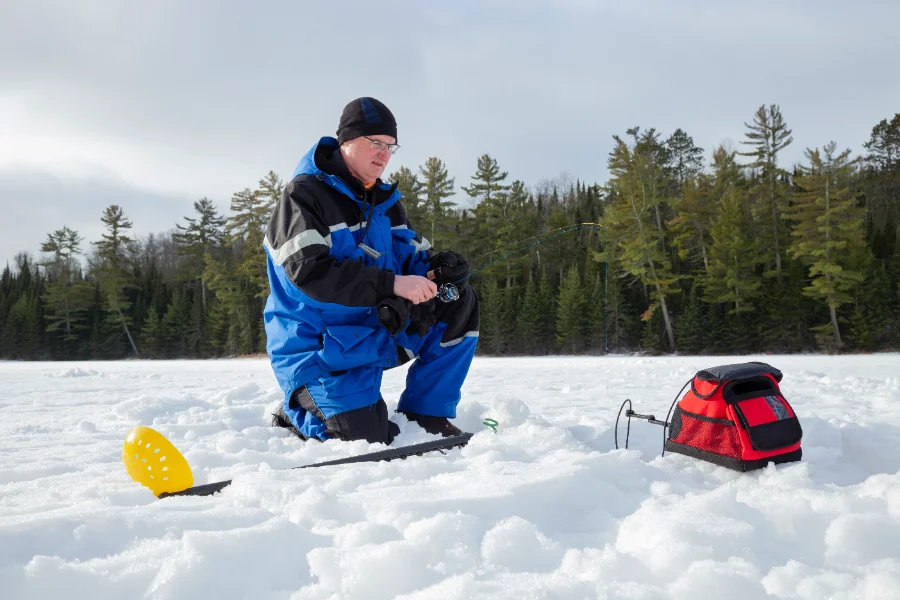
Ice fishing in Quebec requires very specific gear, quite different from summer. On a frozen lake, your comfort and safety depend on equipment built for cold, thick ice and long waits. This guide covers everything you need to drill, fish and stay warm. To understand what sets the two seasons apart, first read our winter vs summer fishing guide.
Key takeaway — It boils down to five jobs: drilling (auger), fishing (ice rod or tip-up, bait), locating (sonar), sheltering (tent or shanty) and staying safe (layered clothing, cleats, ice picks). Always confirm at least 10 cm of clear ice before venturing out.
Drilling the ice: the auger
The auger cuts the hole. Three options:
- Manual (hand) auger: light, quiet, cheap. Perfect for ice under 40 cm and mobile anglers. Requires some effort.
- Electric (battery) auger: fast, no noise or fuel. Ideal for thick ice and frequent trips. Pricier but now the standard.
- Gas auger: powerful for very thick ice, but heavy and loud.
A 15 to 20 cm diameter is enough for walleye, trout and perch. Bring a skimmer (slotted ladle) to clear ice and slush from the hole between catches.
Ice rods and tip-ups
Two complementary approaches:
- The ice rod: short (60 to 90 cm), used for active jigging with a jig or minnow. You feel every bite and work the bait. A small light reel completes it.
- The tip-up: a fixed rig set over the hole with a flag that pops up on a bite. It lets you cover several holes at once — great for pike and lake trout. The number of lines allowed varies by zone.
Combining an active rod with passive tip-ups multiplies your chances. To learn the basics of rigging and technique, see our article on ice fishing for beginners.
Shelter: tent or shanty
The shelter makes all the difference on windy days.
- Pop-up (portable) tent: light, set up in seconds, moves hole to hole. Insulated models handle deep cold.
- Ice shanty: a more permanent, sometimes heated structure set up for the season. Maximum comfort for family outings.
A small propane heater makes the shelter cozy but demands proper ventilation against carbon monoxide.
The sonar (flasher)
The sonar — often a flasher in ice fishing — shows in real time the depth, your bait's position and the fish. It turns a slow day into a productive one: you watch a fish rise to your jig and adjust your action. A GPS model with mapping also helps locate holes and shoals.
Bait and lures
Cold slows fish down: favor finesse presentations.
- Lead jigs: small, colorful, worked gently.
- Live minnows: irresistible for walleye and pike, on rod or tip-up.
- Larvae (maggots, mealworms): added to a jig for perch and trout.
- Jigging spoons: attract from afar with their flash.
Keep minnows in an insulated bait bucket to prevent freezing. See our selection on the our fishing bait page.
Clothing and safety
Staying warm and alive trumps everything else.
- Layered clothing: breathable base layer, insulating mid layer (wool or fleece), windproof and waterproof outer shell. Winter boots, toque, mittens.
- Ice cleats: essential on bare, slippery ice.
- Safety kit: ice picks (worn around the neck to pull yourself out if the ice breaks), a rescue rope, whistle, and a flotation suit are strongly advised.
- Insulated seat or bench: comfort during long waits.
Gear summary table
| Item | Role | Priority |
|---|---|---|
| Auger (manual/electric) | Drill the hole | Essential |
| Skimmer | Clear ice and slush | Essential |
| Ice rod | Active jigging | Essential |
| Tip-up | Cover several holes | Recommended |
| Sonar / flasher | Locate fish and bottom | Recommended |
| Shelter (tent/shanty) | Wind and cold protection | Recommended |
| Bait and lures | Attract fish | Essential |
| Layered clothing | Stay warm | Essential |
| Ice cleats | Prevent falls | Essential |
| Ice picks + rope | Ice safety | Essential |
| Insulated seat | Waiting comfort | Optional |
Key takeaway — Before investing, rent or borrow the heavy gear (auger, shelter) for a first trip. A rod, a few jigs, minnows and good clothing are enough to start.
Ready for the hard-water season?
With the right gear, ice fishing becomes accessible and safe. Don't forget your fishing license, valid year-round, and dive into our complete guide for everything about fishing in Quebec, summer and winter.
?Frequently asked questions
What basic gear do I need to start ice fishing?
Manual or electric auger: which should I choose?
What is a tip-up?
Do I really need a sonar (flasher)?
Which baits work best in winter?
Do I need a shelter to fish on the ice?
How should I dress for ice fishing?
What safety gear is essential on the ice?
Do I need a license for ice fishing in Quebec?
Buyer’s guides