Pêcheur Québec
Published on June 30, 20263 min read
Atlantic salmon regulations in Quebec: a separate licence, the tag system, catch-and-release and rules set river by river.
Atlantic salmon fishing in Quebec is governed by its own, stricter rules than for other sport species. Before your first cast, you need a mandatory salmon permit, you must know the annual quota, respect the catch-and-release imposed on many rivers, and check the rules specific to each waterway. This guide covers the essentials. For the full picture of the discipline, start with our guide to Atlantic salmon fishing.
Key takeaway — Salmon requires a separate permit (resident $59.76 annual; non-resident $191.72), a maximum of 4 salmon per year via tags, fly fishing only, and often mandatory release of large salmon. Rules vary by river and can change mid-season.
A separate, mandatory salmon permit
The standard sport fishing license does not cover Atlantic salmon: you need a separate salmon permit, personal and signed. The 2026 rates are:
| Salmon permit | Price |
|---|---|
| Resident — annual (with tags) | $59.76 |
| Resident — 3-day and catch-and-release | $26.04 |
| Non-resident — annual | $191.72 |
The annual resident permit includes the tags used to declare and limit kept fish. The "3-day and catch-and-release" permit at $26.04 suits beginners or release-only anglers. To choose well, see our dedicated article on the salmon fishing permit.
Maximum 4 salmon per year and tags
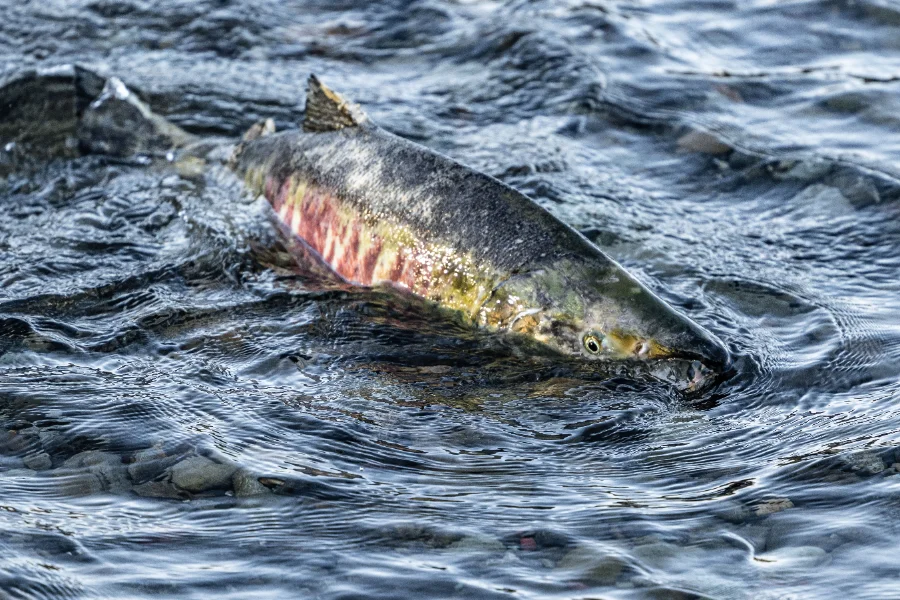
The harvest is capped at 4 salmon per year for a resident permit holder. Each kept salmon must be tagged immediately with one of the tags provided with the permit. Rivers often distinguish the small salmon (grilse), under 63 cm, from the large salmon, a key breeder for the population. On many rivers, only keeping small salmon is allowed, and large salmon must be released.
Fly fishing only
On Quebec's salmon rivers, fishing is fly fishing only: a fly on a hook, a fly rod and appropriate line. Lures, natural bait and worms are prohibited. Many sectors also require a barbless single hook to allow injury-free release. It is a technical constraint, but also what makes this fishing so beautiful and ethical.
Mandatory release of large salmon
To protect spawners, the release of large salmon is mandatory on a growing number of rivers, sometimes for the whole season, sometimes by period. A successful release means keeping the fish in the water, wetting your hands, handling it as little as possible, and releasing it facing the current. These measures, combined with quotas, aim to keep runs sustainable.
Quotas and draws
Some prestigious rivers operate on quotas: the number of anglers per day and per sector is limited. Access is then by reservation or lottery draw (sometimes months ahead) managed by the ZEC, outfitter or managing body. Other rivers offer un-quota'd rods available by the day. Check your river's access model before planning your trip.
Rules that vary by river
This is the most important point: for salmon, there is no single rule for all of Quebec. Each river has its own opening dates, quotas, sectors, release obligations and size limits. Managers can also change the rules mid-season — partial closure, switch to full catch-and-release — depending on river levels, water temperature or run status. For the general framework applying to all species, also review the general regulations.
Mandatory check — Because rules differ from one river to another and can be adjusted without notice, always verify your river's official rules right before you leave. Check the Quebec government site and the river's managing body the same morning: a river open yesterday may be under full catch-and-release or closed today.
Before you go
To know which rivers are open and under what conditions, read how to check river openings. And to place this fishing within Quebec fishing as a whole, keep our complete guide handy.
?Frequently asked questions
Do you need a special permit to fish salmon in Quebec?
How many salmon can you keep per year?
Can you fish salmon by any method other than fly fishing?
Is releasing salmon mandatory?
What are small and large salmon?
How does the lottery draw for salmon rivers work?
Are salmon rules the same everywhere in Quebec?
Can a river close mid-season?
Where to verify official rules before leaving?
Buyer’s guides