Chargement...
Complete guide
Common Carp
Overview
The common carp, although often misunderstood, is a fascinating fish that is gaining popularity among sport fishermen in Quebec. Native to Europe and Asia, it has been introduced into several bodies of water around the world, including here, where it is now well established. The carp is particularly appreciated for its hardiness and ability to survive in waters where other species may not thrive. As a sport fish, it offers an impressive fight, especially when it struggles to free itself. Its distribution in Quebec is extensive, mainly covering the watersheds of the St. Lawrence, where it can be found in slow rivers, lakes, and ponds. For anglers, the carp represents an interesting challenge, both in technique and in the patience required to catch it.
Angler indices
Identification
Identification
The common carp has a robust and elongated body, often slightly compressed laterally. Its color varies from golden brown to olive green, with metallic reflections that can be very attractive in the sunlight. It has large, visible scales, and its lateral line is well defined. The mouth is protractile, meaning it can extend to suck in food, and is bordered by four sensory barbels, two on each side. Its fins are generally grayish to brownish in color, with a long dorsal fin and a deeply forked caudal fin. Young carp resemble adults but are usually paler and less robust. During the spawning period, males may develop small protuberances, called nuptial tubercles, on their heads and pectoral fins, distinguishing them from females.
How to tell it apart
The common carp can be confused with other cyprinids.
| Criteria | Common carp | Herbivorous carp |
|---|---|---|
| Size | 50 to 100 cm | 60 to 110 cm |
| Barbels | Present | Absent |
| Mouth shape | Protractile | Terminal |
Distribution in Quebec
Distribution in Quebec
In Quebec, the common carp is primarily found in the St. Lawrence watershed, including the associated rivers and lakes. It is particularly abundant in areas where the water is calm and where aquatic vegetation is dense. It is often found in the Richelieu, Yamaska, and Outaouais rivers, and is also present in Lake Saint-Louis and Lake des Deux-Montagnes. Although its distribution is quite broad, it is less common in regions where the water is colder, such as in some parts of Northern Quebec. Its initial introduction was intentional, but it has since spread naturally into several suitable habitats.
Habitat
Habitat
The common carp prefers slow or stagnant waters with an abundance of aquatic vegetation. It is often found in lakes, ponds, and slow-flowing rivers. It can tolerate a wide variety of environmental conditions but prefers warm, shallow waters where the temperature ranges between 17 and 24 °C. Carp like to hide near submerged structures such as logs, rocks, and dense vegetation, which provide them with protection and food. They are also known to root around the bottom in search of food, stirring up sediments. Anglers should look for carp in areas where the water is warm and nutrient-rich.
Life cycle
Life cycle
The life cycle of the common carp begins with spawning, which typically occurs in spring when the water temperature reaches about 18 °C. Females lay thousands of adhesive eggs in aquatic vegetation, which hatch within a few days. Young carp, called fry, stay near spawning areas for several weeks before migrating to deeper waters. Growth is rapid in the first year, with sexual maturity reached between 3 and 4 years. The longevity of the carp is notable, with individuals often living up to 20 years or more. Here is a timeline of the life cycle:
Spring → Spawning and hatching → Summer → Rapid growth of fry → Fall → Young carp foraging for food → Winter → Adult carp slow down their activity
Behaviour
Behaviour
The common carp is generally social, forming schools, especially when young. As adults, they can become more solitary, although they are often seen in small groups. They are not particularly territorial but are sensitive to environmental changes such as noise and light variations. Carp are known to be active early in the morning and late in the evening, times when they feed the most. They are also influenced by weather conditions; overcast skies and calm weather are often conducive to activity. In the event of disturbances, they may take refuge in deeper or covered areas.
Diet
Diet
The diet of the common carp varies depending on its age and the season. Fry primarily feed on zooplankton and small invertebrates. As they grow, their diet becomes more varied, including aquatic insects, mollusks, crustaceans, and plant matter. Adult carp are omnivorous and continue to consume a wide range of food, including seeds and aquatic plants. In summer, when food is abundant, they are particularly active. In winter, their metabolism slows down, and their feeding decreases significantly, feeding on whatever they can find in the bottom sediments.
Seasons & best times
Seasons & best times
Spring is an active time for the common carp, as it is the spawning season. Warmer water temperatures encourage carp to move closer to the shores to breed. In summer, carp are very active early in the morning and late in the evening, trying to avoid the heat of the day. Ideal conditions for fishing are often overcast skies with little wind. In autumn, carp prepare for winter by feeding abundantly, making them more predictable and accessible to anglers. Winter is a period of low activity, as carp slow down their metabolism and congregate in deeper waters, making fishing more difficult.
Fishing techniques
Fishing techniques
Corn fishing
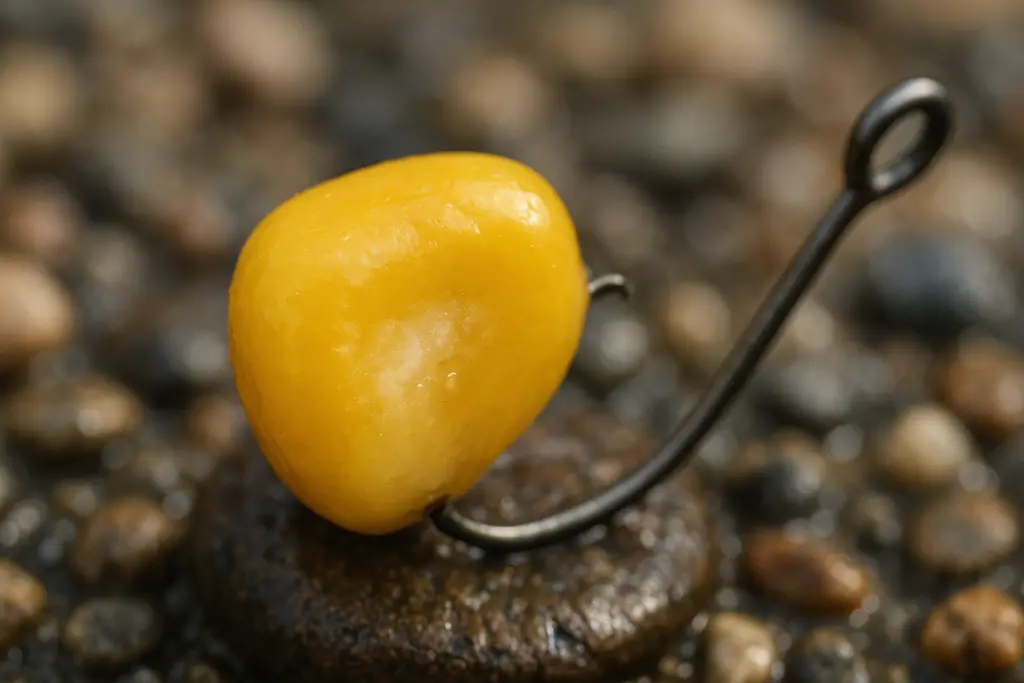
Often used in summer, this technique involves baiting carp with sweet corn, which is very attractive to them. Just cast the bait near the shores where carp are feeding. Be careful not to overload the hook, and be patient, as carp can be wary.
Boilie fishing
Very popular in Europe, it is gaining popularity here. The boilie, a round and dense bait, is effective for attracting carp in deeper waters. It is important to use a strong leader line, as carp can be quite heavy.
Dough ball fishing
This technique involves using homemade or commercial dough to attract carp. Apply the dough directly onto the hook and cast it into areas rich in vegetation. The dough dissolves slowly, releasing aromas that attract carp.
Float fishing
Ideal for shallow waters, this method uses a float to keep the bait at the right depth. Perfect for beginners, it allows for easy detection of bites. Make sure the float is well balanced for better sensitivity.
Bottom fishing
Used in deeper waters, it involves using a weight to keep the bait on the bottom. It is effective for carp that root around the bottom searching for food. Use heavy, smelly baits for better results.
Lures & colours
Recommended lures & flies
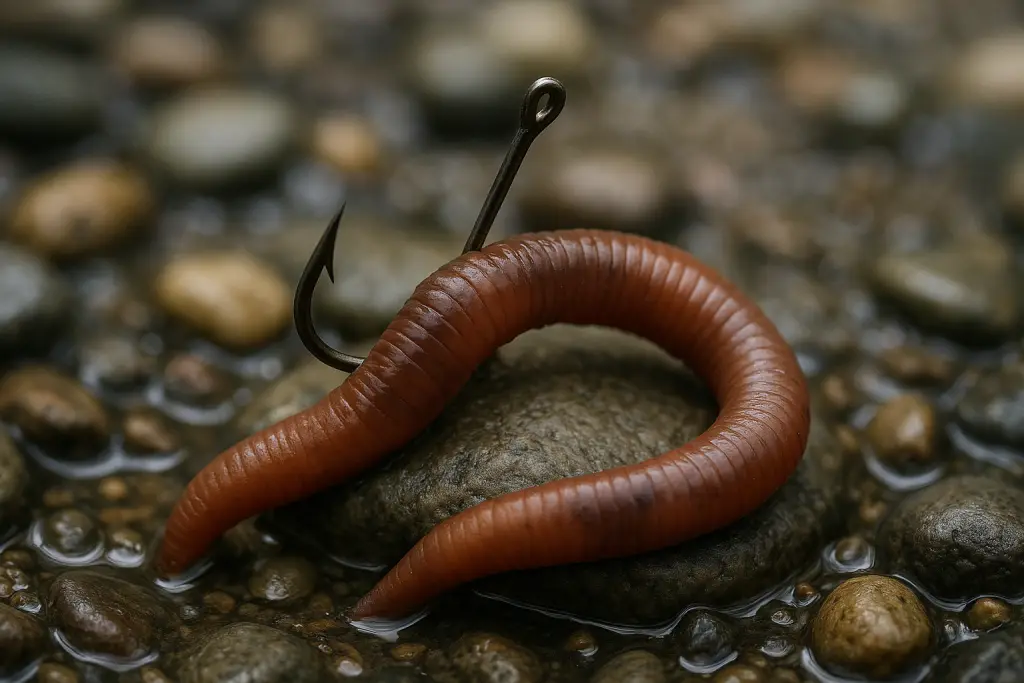
For the common carp, which mainly feeds on the bottom, lures are not as essential as for other species. However, using natural baits like corn or dough is common. In clear water, prefer natural colored baits like brown or green. In murky water, brighter colors like yellow or orange may be more effective. When it's sunny, baits that reflect light can attract carp's attention, while in overcast conditions, darker baits may be more discreet and reassuring for the fish.
Recommended gear
Recommended gear
To fish for common carp, a sturdy fishing rod of 2.7 to 3.6 meters is recommended, with a medium to heavy power to handle larger specimens. A fixed spool reel with good line capacity is essential, as carp can make long runs. Use a line rated for 15 to 30 lb for its strength, and hooks sized 4 to 8. Fluorocarbon leaders can be useful for their invisibility underwater. Make sure to have a solid weighing equipment, as carp can be heavy and difficult to manage.
Handling & release
Handling & release
Handling the common carp should be done with care, as it can be easily stressed. Use a landing mat to protect the fish during handling. For release, support the carp at the abdomen and pectoral fins. Be sure to properly re-oxygenate it before letting it go. If you take photos, do so quickly to minimize the time out of the water.
Predators
Predators
The main predators of the common carp in Quebec include certain predatory fish like pike and muskellunge, which may target young carp. Birds such as herons and ospreys can also capture fry or small carp. However, adult carp have few natural predators due to their size.
Conservation & status
Conservation & status
The common carp is not a threatened species in Quebec. It is considered an introduced species and can have negative impacts on local ecosystems by disturbing sediments and aquatic vegetation. Regulations often encourage catch-and-release or controlled management of its populations to prevent overpopulation and ecological imbalances.
Surprising facts
Surprising facts
- ›The common carp can live up to 20 years, which is exceptional for a freshwater fish.
- ›It was introduced to North America in the 19th century for commercial fishing.
- ›Carp can detect vibrations in the water through their lateral line.
- ›They can survive in waters that are very low in oxygen.
- ›The carp has an impressive memory, able to remember specific baits.
- ›It is often used in aquaculture systems for its rapid growth.
- ›Carp can jump out of the water to escape predators.
- ›They have the ability to root the bottom for food, stirring up sediments.
- ›Carp are known for their adaptability to different environments.
- ›They can reach a size of over 1 meter under ideal conditions.
- ›The common carp is sometimes called the "pig of the water" due to its feeding habits.
- ›They can develop bony protuberances during the spawning period.
- ›Carp are often used in fishing competitions for their strength and endurance.
- ›They play an important role in controlling aquatic plants in some ecosystems.
Frequently asked questions
Frequently asked questions
How to identify the common carp?+
Where to fish for carp in Quebec?+
What is the best season to fish for carp?+
What bait to use for common carp?+
Is carp edible?+
How to handle a carp properly?+
What is the maximum size a common carp can reach?+
Why is carp considered an invasive species?+
Is the common carp dangerous to other fish species?+
What are the main predators of carp?+
Is the common carp difficult to fish for?+
What equipment is recommended for carp fishing?+
Can the common carp jump out of the water?+
What is the impact of carp on aquatic ecosystems?+
Can common carp be fished year-round?+
How do you catch carp in a river?+
Can you find carp in lakes?+
Buyer’s guides
The gear we recommend


Member catches
No catches yet for this species. Be the first!
Have you caught common carp?
Share your photo with fellow anglers — show off your catch!
Be the first to share your catch of this species.
A photo, your first name and the spot are enough — no account needed.
Our picks
Gear for Common Carp

PLUSINNO Combo 24T
Discover the PLUSINNO fishing set, designed for enthusiasts of all levels. This complete kit is perfect for those loo…
65.97 $

Daiwa Crossfire LT
Discover a spinning reel that combines performance and lightweight design, perfect for fishing enthusiasts. This mode…
49.49 $

FishPro 126P
Discover a comprehensive fishing lure kit designed to meet the needs of anglers of all levels. Whether you are a begi…
19.99 $