Chargement...
Complete guide
Yellow Sturgeon
Overview
The lake sturgeon is an iconic fish of the freshwater waters of Quebec, prized by anglers for its impressive size and remarkable longevity. Although it is not particularly aggressive, its strength and ability to resist make it a formidable opponent for sport fishermen. It is mainly found in the large river basins of Quebec, such as the St. Lawrence River, as well as in some lakes and rivers. Its popularity lies not only in its weight and size but also in the challenge it represents. Additionally, the lake sturgeon is an excellent indicator of the health of aquatic ecosystems, making it a species of interest for biologists and conservation-minded fishing enthusiasts.
Angler indices
Identification
Identification
The lake sturgeon has an elongated fusiform body covered with five rows of bony plates called scutes, giving it a prehistoric appearance. Its color ranges from yellowish-brown to olive gray, with a lighter belly. Its head is elongated by a pointed snout, beneath which is a protractile mouth without teeth, ideal for digging the bottom in search of food. Four sensory barbels hang in front of the mouth, allowing it to detect its prey. Its dorsal and anal fins are located near the tail, while its caudal fin is heterocercal, meaning the upper lobe is longer than the lower lobe. Young sturgeons are often lighter and have more distinct patterns than adults. During spawning, males may be slightly smaller and more slender than females, which develop a rounder belly to hold the eggs.
How to tell it apart
The lake sturgeon can be confused with other species of sturgeons, but certain criteria allow for their distinction.
| Criterion | Lake sturgeon | Atlantic sturgeon |
|---|---|---|
| Size | Up to 2 meters | Up to 2.5 meters |
| Color | Yellowish-brown | Dark gray |
| Barbels | In front of the mouth | Closer to the snout |
| Scutes | 5 rows | 5 rows, more prominent |
Distribution in Quebec
Distribution in Quebec
In Quebec, the lake sturgeon is mainly present in large river systems such as the St. Lawrence River, the Ottawa River, as well as in some large lakes like Lake Saint-Pierre and Lake Témiscamingue. It is also encountered in some northern rivers, although less frequently. It prefers deep, calm waters with a muddy or sandy bottom, where it can feed by digging into the substrate. Its distribution is influenced by water quality, and it is often absent from waterways that are too polluted or heavily modified by human activity.
Habitat
Habitat
The lake sturgeon primarily inhabits large bodies of freshwater, including slow-flowing rivers, deep lakes, and estuaries. It particularly favors soft-bottom areas, such as sand or mud beds, where it can easily find food. It is often found at depths ranging from 3 to 20 meters, although it can go deeper in large bodies of water. It prefers waters with temperatures between 14 and 20 °C, but it can tolerate a wide range of environmental conditions, including slightly brackish waters near estuaries.
Life cycle
Life cycle
The lake sturgeon has a long and complex life cycle. Spawning occurs in the spring when water temperatures reach around 10 to 15 °C. Adults migrate to specific spawning areas, usually upstream in rivers, on rocky or gravel substrates. Females lay several thousand eggs that adhere to rocks and hatch after about a week. Young sturgeons spend their early years in protected habitats before joining adults in large bodies of water. They reach sexual maturity very late, between 14 and 25 years, and can live up to 100 years or more. Spring → Spawning and laying → Summer → Growth of young → Autumn → Preparation for winter → Winter → Slowed life under the ice.
Behaviour
Behaviour
The lake sturgeon is generally solitary, although it may be observed in small groups, especially during spawning. Non-territorial, it often shares its habitat with other aquatic species. It is relatively insensitive to noise and surface movements, but weather conditions, such as changes in barometric pressure, can influence its feeding behavior. It is more active at dusk and dawn, when it explores the bottoms for food.
Diet
Diet
The diet of the lake sturgeon varies with age and season. Young sturgeons primarily feed on zooplankton and small invertebrates. As they grow, they adopt a more opportunistic diet, including insect larvae, mollusks, crustaceans, and sometimes small fish. In winter, its metabolism slows down, and it becomes less active, feeding sporadically. Spring and autumn are the periods when it feeds most actively to accumulate reserves needed for spawning and winter.
Seasons & best times
Seasons & best times
In spring, the lake sturgeon becomes more active with the warming of the waters, preparing for spawning. It is then easier to locate in migration areas towards spawning sites. In summer, it stays in deep, cool waters but can be fished early in the morning or late in the evening. Autumn is a period of high feeding activity as it accumulates reserves for winter. During winter, the lake sturgeon slows its activity under the ice, but it is still possible to fish it on warmer days. Changes in atmospheric pressure and weather fronts can influence its behavior, making it more or less active.
Fishing techniques
Fishing techniques
Bottom Fishing
Ideal for sturgeon, this technique involves using a heavy weight to keep the bait on the bottom. Use natural baits like worms or shrimp. Be careful to adjust the tension of your line to detect subtle bites.
Slow Trolling
Practical in summer, this technique involves slowly dragging a natural bait or lure near the bottom. Be sure to maintain a constant speed and avoid underwater obstacles.
Dead Lining
Use natural bait on a hook placed on the bottom. This method is effective in slow current areas. Be patient, as sturgeons can be slow to bite.
Fly Fishing
Although unconventional, this method can be used with heavy nymphs in shallow waters. It requires patience and good technique.
Drift Fishing
Let your bait drift naturally with the current. This is a good method to cover a large area and find where sturgeons are feeding.
Lures & colours
Recommended lures & flies
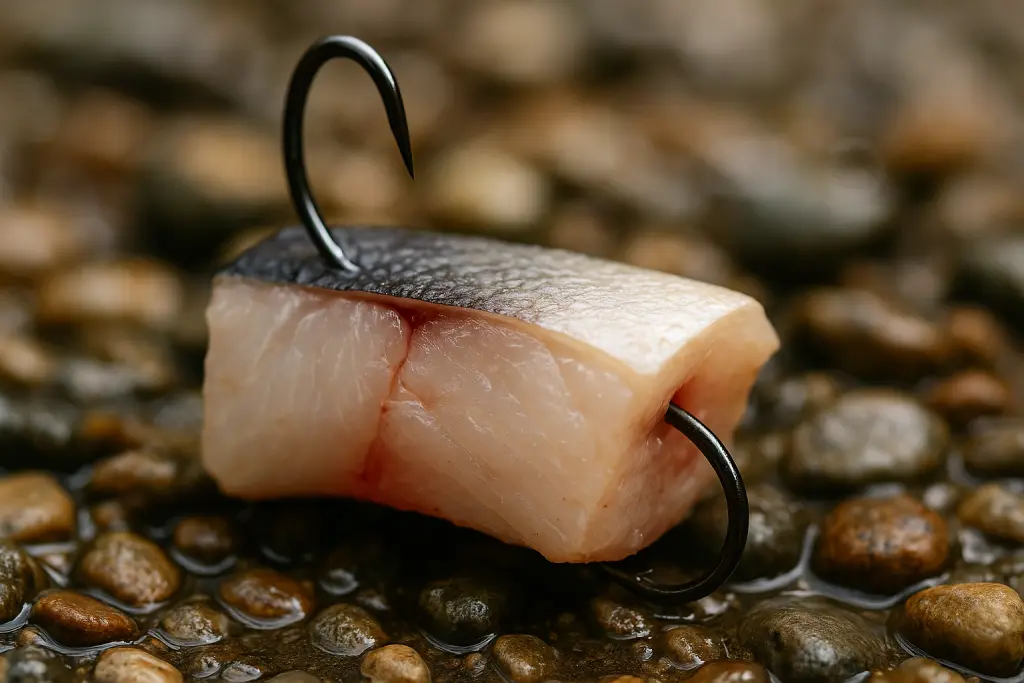
For lake sturgeon, prefer lures that mimic natural prey, such as worms or shrimp. In clear waters, use natural colors like brown or green. In murky water, brighter colors or fluorescent lures may be effective. On sunny days, muted colors work better, while on overcast days, brighter colors can attract attention.
Recommended gear
Recommended gear
Opt for a sturdy rod 2.4 to 3.6 meters long with heavy power and moderate action. A fixed spool or baitcasting reel capable of holding a 20 to 40 lb line is ideal. Use circle hooks sized 4/0 to 8/0, and a 50 lb fluorocarbon leader to withstand abrasion from the sturgeon's scutes.
Handling & release
Handling & release
Handle the lake sturgeon with care, supporting it well under the belly to avoid injury. Use fine-mesh nets to lift it out of the water. If you plan to release it, do so quickly and ensure it is well-oxygenated before letting it go. For a photo, hold it horizontally and avoid squeezing too tightly.
Predators
Predators
Adult lake sturgeons have few natural predators due to their size and tough skin. However, young sturgeons can be vulnerable to large predatory fish like pike and walleye. Piscivorous birds, such as ospreys, may also pose a threat to young sturgeons.
Conservation & status
Conservation & status
In Quebec, the lake sturgeon is considered a species of concern due to its late maturation and sensitivity to environmental disturbances. Fishing is regulated, and anglers are encouraged to practice catch and release to preserve populations. It is essential to respect quotas and fishing periods to ensure the sustainability of this species.
Surprising facts
Surprising facts
- ›The lake sturgeon can live over 100 years.
- ›It is one of the largest freshwater fish in North America.
- ›Its skin is covered with scutes, hard bony plates.
- ›The barbels under its snout are essential for locating food.
- ›It can reach a length of over 2 meters.
- ›Females lay several thousand eggs at each spawning.
- ›Sexual maturity occurs very late, between 14 and 25 years.
- ›It is considered a species of concern in Quebec.
- ›The lake sturgeon is an excellent indicator of water quality.
- ›It can tolerate slightly brackish waters.
- ›Young sturgeons are often lighter than adults.
- ›It primarily feeds at the bottom of rivers and lakes.
- ›Its caudal fin is heterocercal.
- ›It is often fished for its eggs, used for caviar.
Frequently asked questions
Frequently asked questions
What is the best time to fish for lake sturgeon?+
What type of bait should be used for lake sturgeon?+
Is the lake sturgeon dangerous to humans?+
Can lake sturgeon be consumed?+
Why is the lake sturgeon considered a species of concern?+
What is the maximum size of the lake sturgeon?+
How to differentiate a lake sturgeon from a Atlantic sturgeon?+
What are the main predators of the lake sturgeon?+
What is the ecological role of the lake sturgeon?+
What is the lifespan of the lake sturgeon?+
Does the lake sturgeon migrate?+
What are the signs of an active lake sturgeon?+
Can lake sturgeon be fished in winter?+
Why is the lake sturgeon so resilient?+
How to handle a lake sturgeon without injuring it?+
What is the best bait for sturgeon?+
What fishing rig is used for sturgeon?+
Buyer’s guides
The gear we recommend


Member catches
No catches yet for this species. Be the first!
Have you caught yellow sturgeon?
Share your photo with fellow anglers — show off your catch!
Be the first to share your catch of this species.
A photo, your first name and the spot are enough — no account needed.
Our picks
Gear for Yellow Sturgeon

YUMEOWL Fishing Pliers
Discover fishing pliers designed to meet the demands of the most discerning anglers. These versatile tools are perfec…
16.61 $

Plano 2-Tray
Discover an ideal storage solution for all your fishing accessories with this functional and stylish tackle box. Desi…
27.96 $

UCEC 150pcs Circle Hooks
Discover the UCEC fishing hook set, perfect for freshwater and saltwater fishing enthusiasts. These high carbon steel…
16.98 $