Chargement...
Complete guide
Sockeye Salmon
Overview
The red salmon, also known as sockeye, is an anadromous fish prized by sport fishermen for its fighting ability and the quality of its flesh. Although less common than Atlantic salmon in Quebec, it still attracts sport fishing enthusiasts, especially in regions where it is present. Its distribution is mainly limited to rivers connected to the Pacific basin, but it has been introduced into certain lakes for fishery management reasons. Its fishing is a challenge due to its sensitivity to murky water and fishing pressure, making it even more rewarding to catch.
Angler indices
Identification
Identification
The red salmon has a fusiform and slender body, covered in silver scales when in the sea. As it approaches spawning, its coloration changes dramatically: it displays a bright red back, a white belly, and a green head. Males develop a pronounced dorsal hump and fangs on the jaw, while females maintain a more slender appearance. The fins are generally dark, with a forked tail. The young, called fry, are often duller, with dark bands on the sides, which distinctly sets them apart from adults. These color changes are part of their reproductive cycle and facilitate the identification of individuals during spawning.
How to tell it apart
The red salmon can be confused with other salmonids, but certain distinctive traits help to recognize it.
| Criterion | Red salmon | Atlantic salmon |
|---|---|---|
| Size | 50 to 80 cm | 70 to 100 cm |
| Color during spawning | Bright red | Brownish |
| Tail | Forked | Slightly concave |
Distribution in Quebec
Distribution in Quebec
In Quebec, the red salmon is primarily found in the lakes and rivers of the Pacific basin, although some lakes have benefited from introductions to enhance local biodiversity. It is mainly found in the Canadian West, but reintroduction efforts have been made in some lakes in the Laurentians and Mauricie for fishery management reasons. Although it is not as abundant as Atlantic salmon, it offers unique opportunities for anglers looking to diversify their catches.
Habitat
Habitat
The red salmon prefers clear and well-oxygenated waters, often in deep lakes or rivers with moderate currents. During its life in the sea, it thrives in cold waters but returns to freshwater for spawning. Spawning grounds are generally located in rivers with gravel bottoms, where the water is cool and well-oxygenated. In summer, it is common to find it in deeper areas of lakes to avoid the heat, while during spawning, it ascends rivers.
Life cycle
Life cycle
The life cycle of the red salmon begins with the laying of eggs in the gravel of rivers. After hatching, the fry remain in the gravel until they are ready to swim freely. They then spend several months to a year in freshwater before migrating to the ocean. After 2 to 3 years in the ocean, they return to their natal river to spawn. The red salmon typically dies after spawning, marking the end of its life cycle.
Spring → Fry emergence → Summer → Growth in freshwater → Autumn → Migration to the ocean → Winter → Staying in the sea → Return to freshwater for spawning.
Behaviour
Behaviour
The red salmon is a social fish that often forms large schools, especially at sea. It is less territorial than other salmonids, which sometimes makes it easier to catch in groups. Sensitive to changes in light and temperature, it prefers low-light periods for feeding. Weather conditions, such as rain or wind, can influence its activity, making it sometimes more active during changes in atmospheric pressure.
Diet
Diet
The diet of the red salmon varies according to its life stage. Fry primarily feed on zooplankton and small aquatic invertebrates. In the sea, adult red salmon feed on small fish, crustaceans, and plankton. During the spawning period, it stops feeding, concentrating all its energy on reproduction. The diet also varies with the seasons, being more active in spring and summer.
Seasons & best times
Seasons & best times
Fishing for red salmon is generally more fruitful in late summer and early autumn, when the fish ascend rivers to spawn. The best fishing hours are often early in the morning or late in the afternoon, when the light is less intense. Cloudy or slightly rainy days can also favor salmon activity, while sunny or very hot days may make them more shy and difficult to catch.
Fishing techniques
Fishing techniques
Fly fishing
Ideal for targeting red salmon during its upstream migration. Uses flies that imitate aquatic insects. Make sure to adjust your cast to avoid disturbing the schools of fish.
Lake trolling
Effective for locating dispersed red salmon in lakes. Employ spoons or crankbait lures. Be sure to vary the fishing depth to adapt to the day's conditions.
Light casting
Useful in rivers with moderate currents. Use light lures to avoid spooking the fish. Be careful to observe the movements of the salmon to adjust your cast.
Trolling
Traditional method for following schools of salmon. Choose bright lures to attract attention in deeper waters. Adjust the trolling speed according to the activity of the fish.
Surface fishing
Practiced when red salmon is active near the surface. Use poppers or surface lures. Be attentive to splashes and signs of activity to adjust your approach.
Lures & colours
Recommended lures & flies
In clear waters, favor lures with natural colors like silver or blue. In murky water, brighter colors like red or chartreuse are effective. Sunny days call for metallic lures that reflect light, while on overcast days, darker colors may be more visible. Finally, adjust the size and type of lure to the depth at which you are fishing, with diving lures being preferable in deep water.
Recommended gear
Recommended gear
To fish for red salmon, a fishing rod of 2.4 to 3 meters in length with a moderate to fast action is recommended. A medium-sized open-face reel, spooled with 10 to 15 lb line, offers a good balance of strength and sensitivity. Use hooks size 4 to 6, and a fluorocarbon leader for its stealth under the water.
Handling & release
Handling & release
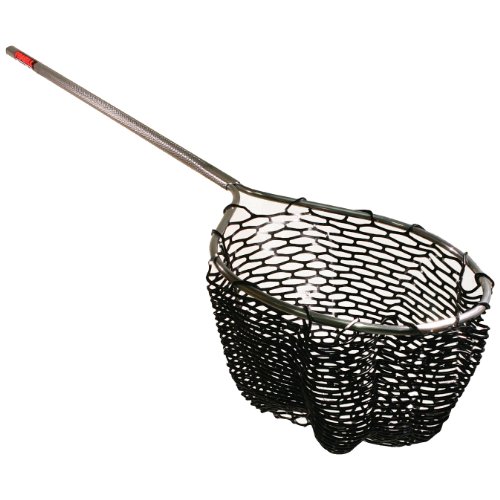
Handle the red salmon carefully to avoid injuring the fish. Use a fine-mesh, wet net to lift it out of the water. If you wish to release it, minimize the time out of the water and support its belly well. For a photo, make sure the fish is well-supported and quickly returned to the water.
Predators
Predators
The predators of red salmon include birds such as the bald eagle and mammals like the black bear. In aquatic environments, larger fish like pike and rainbow trout can prey on young salmon.
Conservation & status
Conservation & status
Red salmon is not critically endangered in Quebec, but its management requires special attention to maintain populations. Regulations often include catch quotas and specific seasons for fishing. Catch and release is encouraged to preserve stocks.
Surprising facts
Surprising facts
- ›The red salmon is capable of changing color dramatically, from bluish-silver to bright red during spawning.
- ›It is one of the few fish that can survive in both freshwater and saltwater, thanks to its anadromous life cycle.
- ›The red salmon can travel over 1600 km to return to its birthplace to spawn.
- ›Its flesh is highly prized for its high content of omega-3.
- ›The males develop fangs and a hump on their backs during the spawning period.
- ›Young red salmon, or fry, remain hidden in the gravel for several months after hatching.
- ›Red salmon primarily feed on plankton in the sea, which is unusual for a salmon.
- ›During spawning, red salmon stop feeding, focusing solely on reproduction.
- ›Their return to the natal river is guided by their exceptional sense of smell.
- ›The world record weight for a red salmon is around 5.4 kg.
- ›Red salmon is often introduced into lakes to help control plankton populations.
- ›Due to its life cycle, red salmon plays a crucial role in the nutrient transfer between the ocean and freshwater ecosystems.
- ›Their bones and scales are often used to make jewelry and handicraft decorations.
Frequently asked questions
Frequently asked questions
What is the best time to fish for red salmon in Quebec?+
Is red salmon good to eat?+
What is the average size of a red salmon in Quebec?+
Can you fish for red salmon year-round?+
What are the main predators of red salmon?+
Can red salmon live in freshwater its whole life?+
How can you differentiate a male red salmon from a female?+
What is the lifespan of a red salmon?+
Is red salmon sensitive to pollution?+
What types of lures are effective for fishing red salmon?+
Is red salmon present in all regions of Quebec?+
Why does red salmon change color?+
Does red salmon migrate in groups?+
Is red salmon threatened in Quebec?+
Can red salmon be caught in winter?+
What equipment is recommended for fishing red salmon?+
Buyer’s guides
The gear we recommend


Member catches
No catches yet for this species. Be the first!
Have you caught sockeye salmon?
Share your photo with fellow anglers — show off your catch!
Be the first to share your catch of this species.
A photo, your first name and the spot are enough — no account needed.
Our picks
Gear for Sockeye Salmon

Piscifun Carbon X II
Experience fishing excellence with the Carbon X II reel, designed for enthusiasts seeking both lightweight and high p…
85.49 $

FishPro 126P
Discover a comprehensive fishing lure kit designed to meet the needs of anglers of all levels. Whether you are a begi…
19.99 $

Reaction Tackle Blue Camo
Experience unparalleled fishing with Reaction Tackle's blue camo braided fishing line. Designed for serious anglers,…
20.09 $