Pêcheur Québec
Published on June 30, 20264 min read
River walleye fishing in Quebec: reading current, spotting pools and the foot of rapids, and picking the right rig.
River walleye fishing is a discipline of its own: unlike a lake, here the current dictates everything. Walleye hold at precise stations, save energy and ambush prey in broken-current zones. Learning to read the water becomes skill number one — well before lure choice. Before heading out, scout promising waters in our guide to the best walleye spots.
Key takeaway — In rivers, walleye hold behind obstructions, in deep holes, at the base of rapids and dams and in eddies. A rig that keeps bottom contact despite the current (heavy jig, drifting three-way rig) almost always beats a too-light presentation that lifts off the bottom.
Reading the current: where walleye hold
Walleye hate fighting the current for nothing. They look for spots where they can sit still while watching the flow deliver food. Four stations come up again and again:
- Behind obstructions: a large boulder, sunken log or bridge piling creates a calm pocket downstream. Walleye sit there, nose into the current, ready to grab whatever drifts by.
- Holes: depressions where the current slows concentrate walleye, especially in daylight and bright conditions.
- The base of rapids and dams: oxygenated, churning water draws baitfish, and predators follow. The transition between white water and slow water is a walleye magnet.
- Eddies: where the main flow spins back upstream, walleye enjoy a conveyor belt of food with no effort.
Also watch the current seams: the visible boundary between fast and slow water. Walleye often patrol along that line. To find rivers where you can apply all this, check the spots map.
Rigs built for current
An effective river rig must stay on the bottom despite the push of the water. Three approaches cover most situations.
The heavy jig
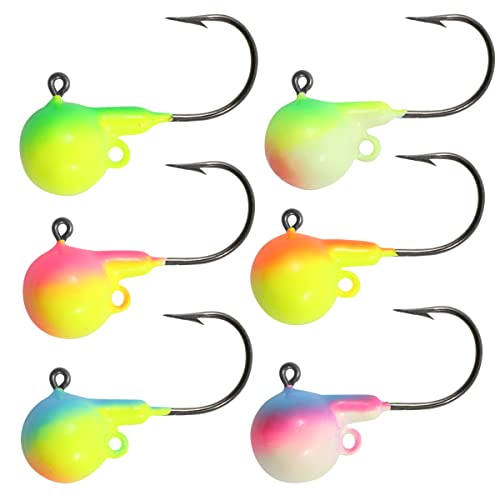
The jig is king in rivers, provided you weight it correctly. Move from 1/4 oz (lake style) to 3/8, 1/2 or even 3/4 oz depending on current speed and depth. The right weight is the one that lets you feel the jig regularly tick the bottom on a controlled drift. Too light and it lifts off, losing contact; too heavy and it snags constantly. Rig it with a plastic (grub, shad) or live bait.
The drifting three-way rig
The three-way rig is the classic current tool. On the bottom ring, a short dropper with a sinker that touches bottom; on the other ring, a longer leader carrying the baited hook (worm, minnow) or a small floating crankbait. The sinker holds bottom while the bait swims freely just above, right at walleye height. Match the sinker weight to current strength. If you are starting these techniques from shore, our article on how to fish walleye from shore complements this section.
Back-trolling against the current
From a boat, slow trolling into the current (back-trolling) lets you slow the presentation and keep a weighted lure or a worm harness just above bottom, at the exact speed walleye tolerate. You work slowly up holes and hole edges, the motor holding the boat almost in place against the flow.
Vertical jigging over holes
Once you locate a hole on the sonar, vertical jigging is deadly. Position directly over the station, drop a heavy jig or a jigging spoon to the bottom, then work it with small lifts while keeping the line vertical. In rivers the current pushes the boat: you often correct with the electric motor to stay truly vertical, otherwise the line angles off and you lose the bottom. It is a surgical technique, ideal for working a compact school of walleye at the bottom of a hole.
Safety on the river and in the boat
The current that concentrates walleye also makes a river more dangerous than a lake. A few rules are non-negotiable:
- Wear your PFD (personal flotation device) at all times. In moving water a fall quickly becomes critical.
- Respect dams: keep your distance both upstream and downstream. Reverse rollers below a dam can trap a boat, and flow can rise without warning during a water release.
- Anchor from the bow, never the stern. A boat anchored from the stern facing the current can be swamped in seconds as water pours over the transom. Anchoring from the bow lets water slide along the hull.
- Beware submerged obstacles and changes in flow, especially in spring and during storms.
Key takeaway — On a river, safety beats the catch: PFD worn, distance from dams, anchor from the bow. Reading the current serves as much to find walleye as to avoid danger.
In short
Rivers reward anglers who read the water: find the broken-current stations, keep your rig on the bottom with the right weight, work vertical over holes and navigate carefully. Before your next outing, make sure you hold the fishing license and brush up on the basics with our complete guide.
?Frequently asked questions
Where do walleye hold in a river?
What jig weight should I use for river walleye?
What is a three-way rig?
How do I read current to find walleye?
What is back-trolling?
How do I vertically jig walleye in a river?
Why anchor from the bow in a river?
Is it dangerous to fish near a dam?
Do walleye bite better in rivers or lakes?
Buyer’s guides