Chargement...
Complete guide
Maskinongé
Overview
The muskellunge, often referred to as the "king of freshwater fish," is an iconic species for sport fishermen in Quebec. Its popularity comes from its impressive size and fierce fight when hooked. Anglers particularly appreciate its power and speed, making it a formidable opponent. Known for its aggressiveness, the muskellunge is a top predator, often sought after in clear waters and submerged structures. In Quebec, it is mainly found in the St. Lawrence River, the lakes of the Laurentians and the Outaouais. Catching one is a true challenge, but it provides great satisfaction to skilled anglers.
Angler indices
Identification
Identification
The muskellunge is distinguished by its long, slender body, often compared to that of a torpedo. Its color ranges from gray-green to brown, with patterns of darker vertical bars that can sometimes merge into spots. Its mouth is wide and equipped with sharp teeth, typical of predators. The fins are generally pointed, and its tail is forked, allowing it to propel quickly. The scales are small and smooth, contributing to its hydrodynamic shape. Young muskellunge display more distinct patterns than adults, which may have a more uniform appearance. During spawning, females are often larger and bulkier than males.
How to tell it apart
The muskellunge can be confused with the northern pike, but certain criteria allow for easy distinction.
| Criterion | Muskellunge | Northern Pike |
|---|---|---|
| Size | Generally over 1 m | Less than 1 m |
| Vertical bars | Present | Absent or blurred |
| Tail | Forked | Less forked |
Distribution in Quebec
Distribution in Quebec
In Quebec, the muskellunge is mainly found in the St. Lawrence River, the watersheds of the Outaouais and Mille-Îles rivers, as well as in some large lakes of the Laurentians. Although its distribution is relatively limited, it is abundant where it is found, especially in areas rich in submerged structures and aquatic vegetation. It is absent from more northern regions where temperatures are less favorable. This species prefers clear, slightly alkaline waters where it can hunt effectively.
Habitat
Habitat
The muskellunge favors large bodies of water with an abundance of structures such as submerged tree trunks, rocks, and weeds. It is often found in shallow areas in summer, where it can hunt more easily. In winter, it tends to move to deeper waters to enjoy more stable temperatures. The ideal water temperature for muskellunge is between 15 and 24 °C. Anglers should look for these fish near the edges of weeds and depth breaks, where they patiently wait for their prey.
Life cycle
Life cycle
The muskellunge's spawning period occurs in spring, typically between April and June, when the water temperature reaches about 10 °C. Females lay their eggs in shallow, weedy areas, often near the shores. Once the eggs hatch, the fry feed on plankton before switching to a more carnivorous diet. Their growth is rapid, sometimes reaching up to 30 cm in the first year. Sexual maturity is reached between 3 and 5 years. Muskellunge can live between 15 and 30 years, reaching their maximum size towards the end of their life. Spring: Spawning → Summer: Growth → Fall: Preparing for hibernation → Winter: Slowed metabolism
Behaviour
Behaviour
The muskellunge is a solitary and extremely territorial fish. It patrols its domain vigilantly, reacting aggressively to intruders. Sensitive to changes in light, it is more active early in the morning and late in the afternoon, when light levels are lower. Weather conditions such as wind and atmospheric pressure also influence its hunting behavior. In overcast weather or when pressure drops, the muskellunge is more likely to move and feed actively.
Diet
Diet
The diet of the muskellunge evolves with age. Fry start by consuming zooplankton, quickly moving on to larger prey such as small fish and aquatic insects. Adults are opportunistic predators, primarily feeding on fish like perch and walleye, but also on frogs and occasional aquatic birds. In winter, their metabolism slows down, and they feed less frequently, preferring easy-to-catch prey.
Seasons & best times
Seasons & best times
In spring, the spawning period makes muskellunge less active, but it is still possible to catch them by targeting spawning areas with slow lures. In summer, the best times to fish are early in the morning and late in the afternoon when temperatures are cooler. Wind and cloud cover can increase activity. In fall, before winter, muskellunge become more aggressive, seeking to store energy, making it a good time for fishing. In winter, although muskellunge are less active, they can sometimes be caught through ice fishing, but with variable results depending on ice and temperature conditions.
Fishing techniques
Fishing techniques
Surface casting
Ideal in the morning or at dusk, this technique uses surface lures to provoke spectacular strikes. The animation should be lively and erratic. Avoid pulling too fast; let the lure pause to mimic an injured prey.
Trolling
Effective in summer, especially in large lakes. Use diving lures or heavy spoons. Maintain a slow speed to allow the lure to descend to the desired depth. Be cautious of snags on the bottom.
Vertical jigging
Useful in fall and winter, especially in deep waters. Use heavy jigs and animate them with small jerks. Avoid abrupt movements that could scare the fish.
Fly fishing
For challenge enthusiasts, use large streamer flies. This technique requires skill to mimic the movement of baitfish. Practiced in shallow waters with little vegetation.
Suspended lure
Perfect for clear, warm waters. Use suspending jerkbaits, animated by pulls and pauses. Avoid overly fast animations that may appear unnatural.
Lures & colours
Recommended lures & flies
In clear waters, natural colors like green, blue, and silver are preferred to mimic baitfish. In overcast weather, brightly colored lures like orange or chartreuse can attract attention. In murky waters, prioritize noisy or vibrating lures in contrasting colors like black and yellow to compensate for the lack of visibility. Large lures are often more effective in attracting big muskellunge, especially in depth.
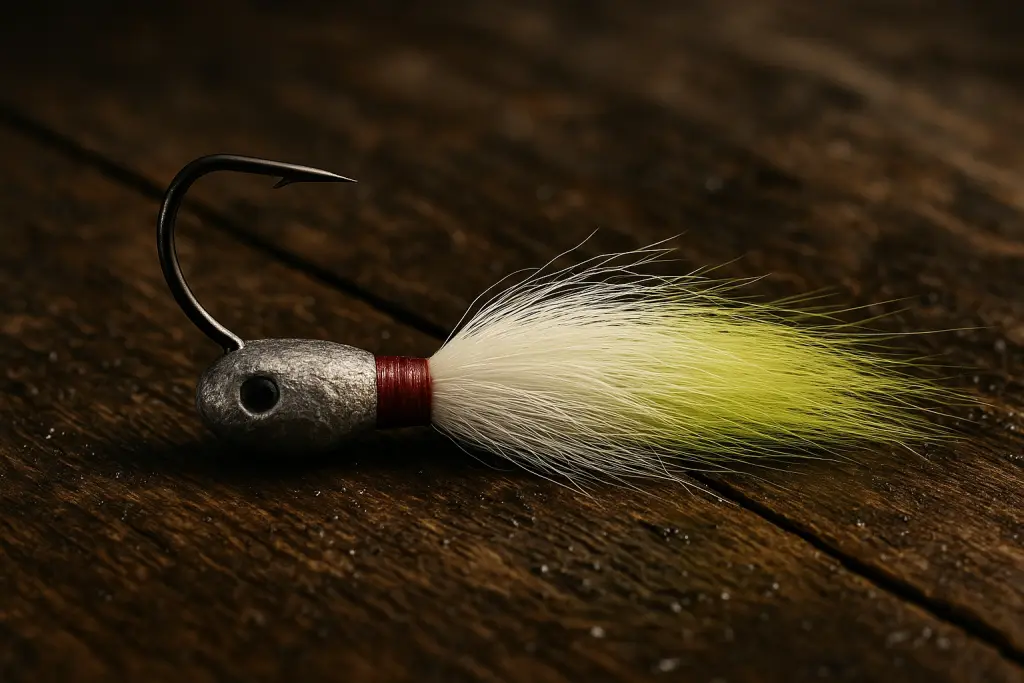
Bucktail jig
The bucktail jig attracts pike, yellow perch, and muskie, ideal for shallow waters.
★★★★★
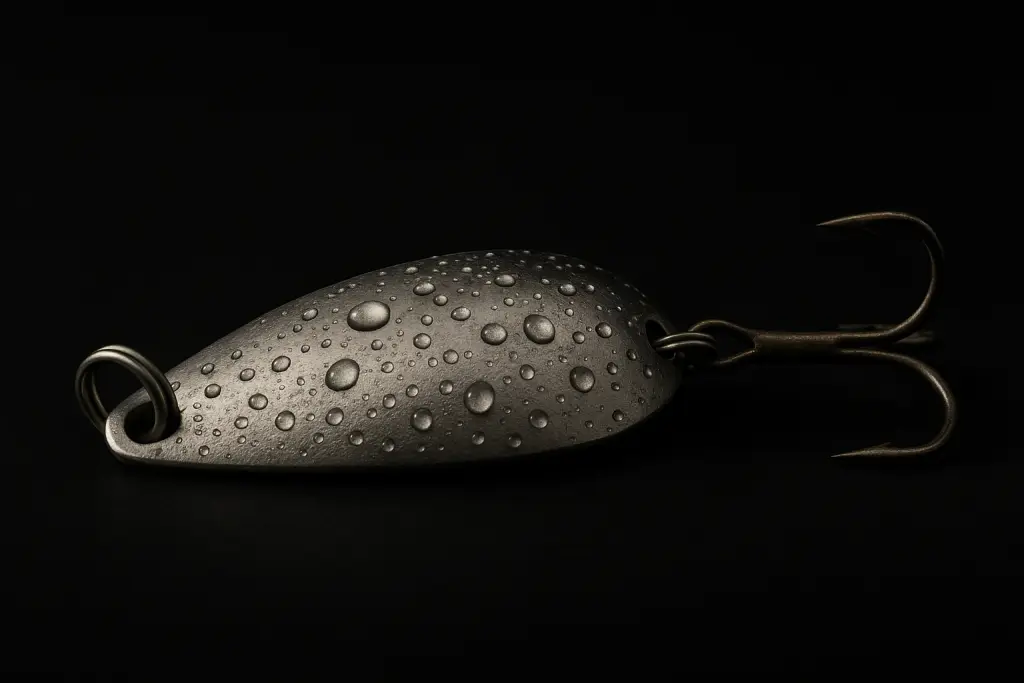
Casting spoon
Ideal for pike and musky, this wobbling spoon attracts in deep waters.
★★★★
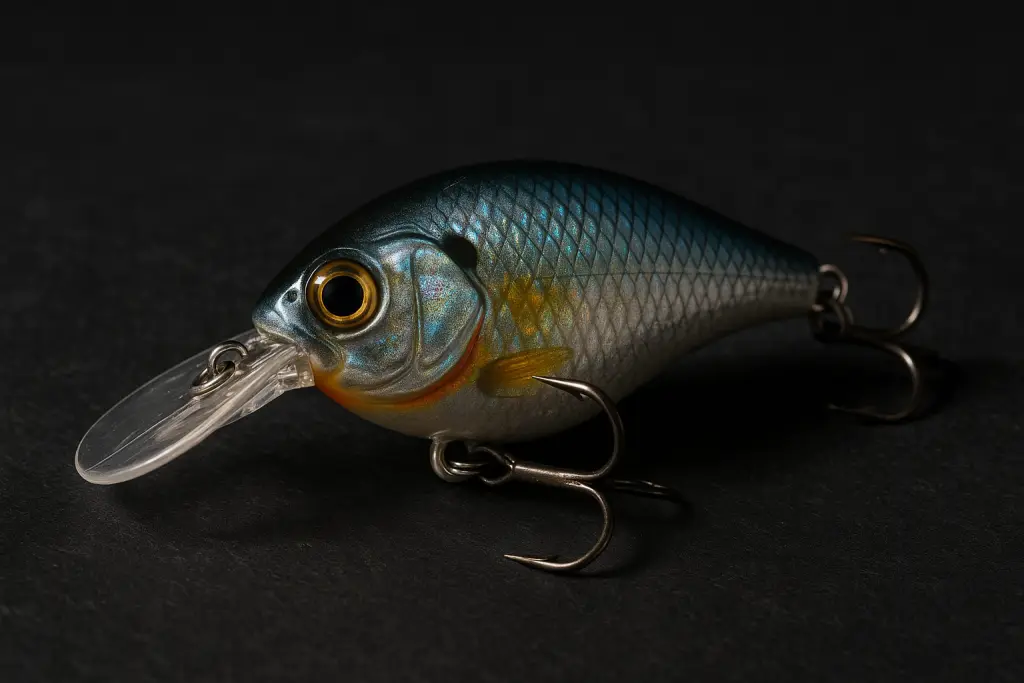
Crankbait
A hard plug shaped like a small fish with a diving lip. Built to cover water and find active fish.
★★★★★
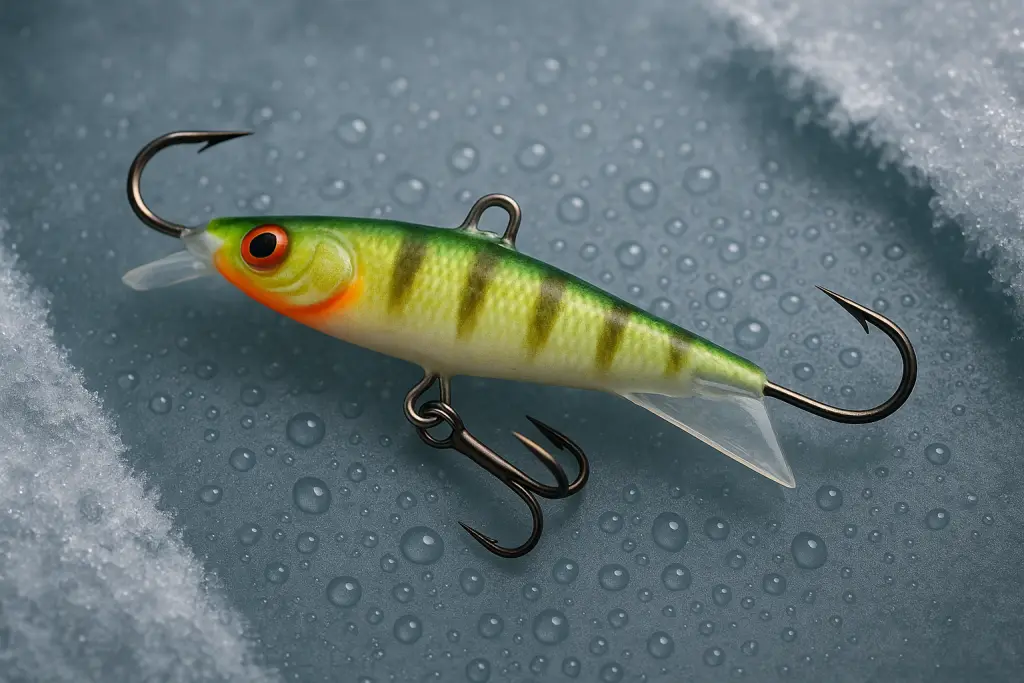
Jigging Rap
The #1 lure for ice-fishing walleye. Horizontal circle motion mimicking a wounded falling baitfish.
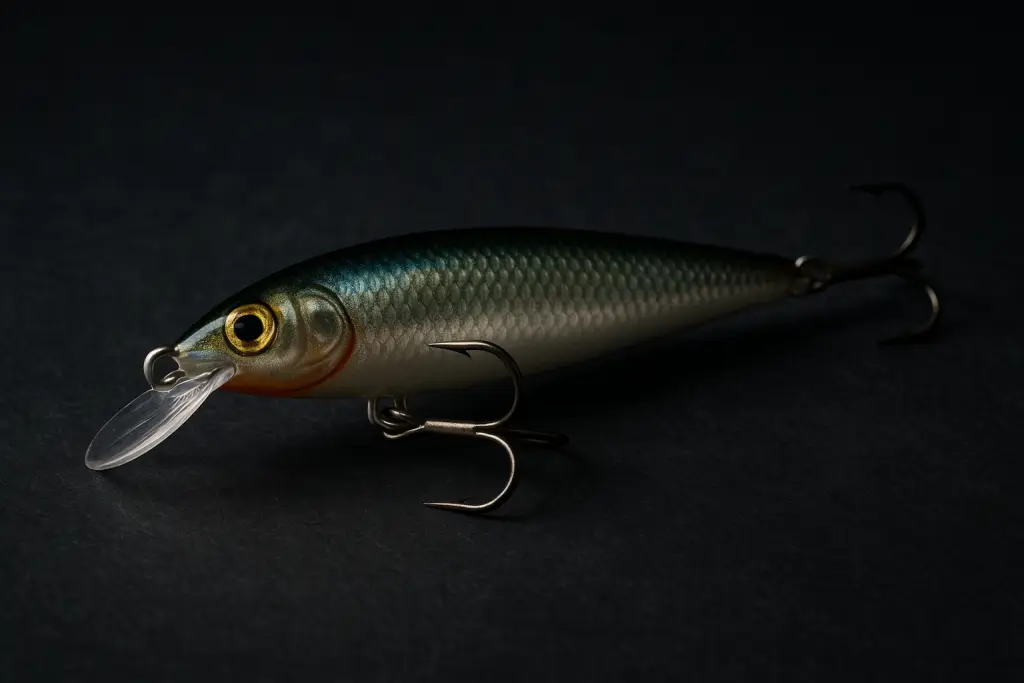
Minnow
The live baitfish that mimics everything predators eat. Essential for walleye, pike and bass.
★★★★
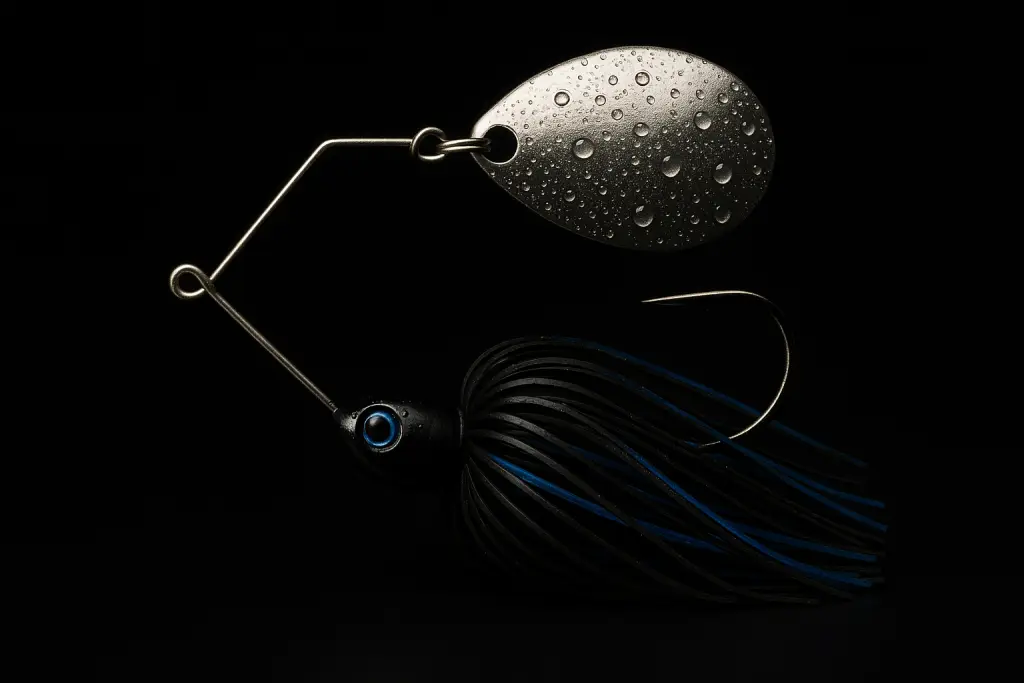
Spinnerbait
The go-to pike weapon. One or two flashing blades + a silicone skirt. A Quebec staple.
★★★★★
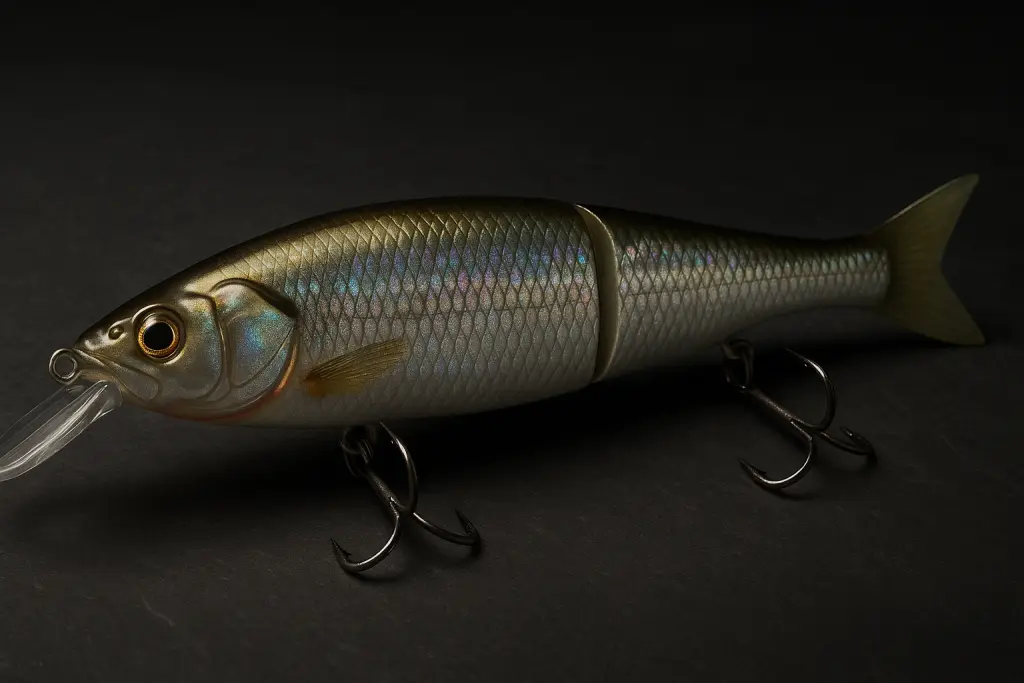
Hard swimbait
Multi-section hard fish imitation — for trophy fish.
★★★★
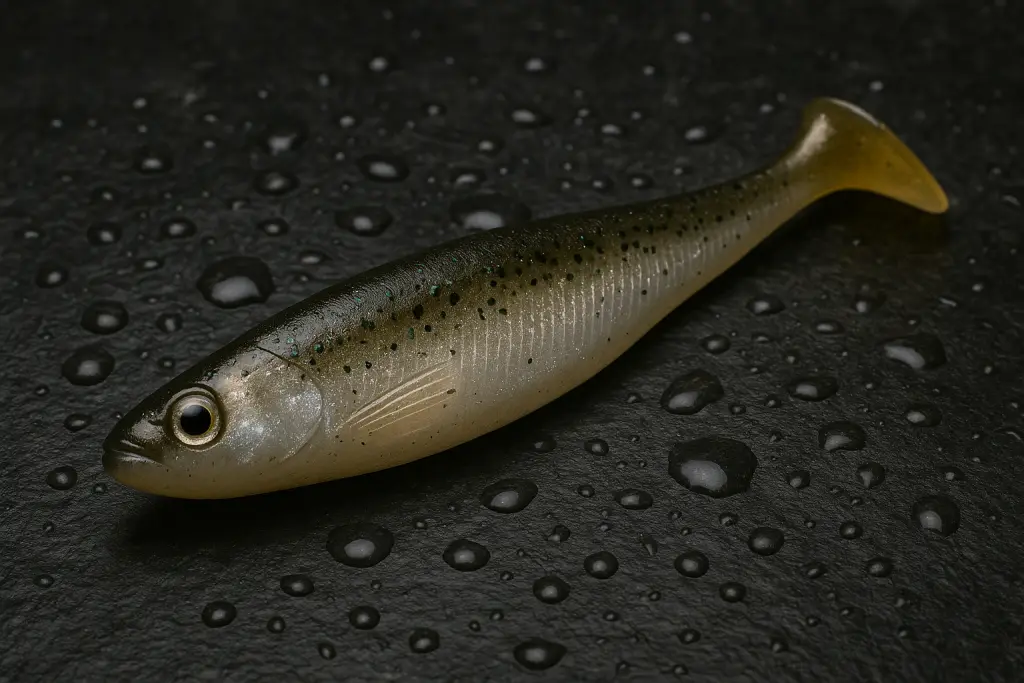
Swimbait souple
Soft swimbait ideal for pike and musky, perfectly mimics an injured fish.
★★★★★
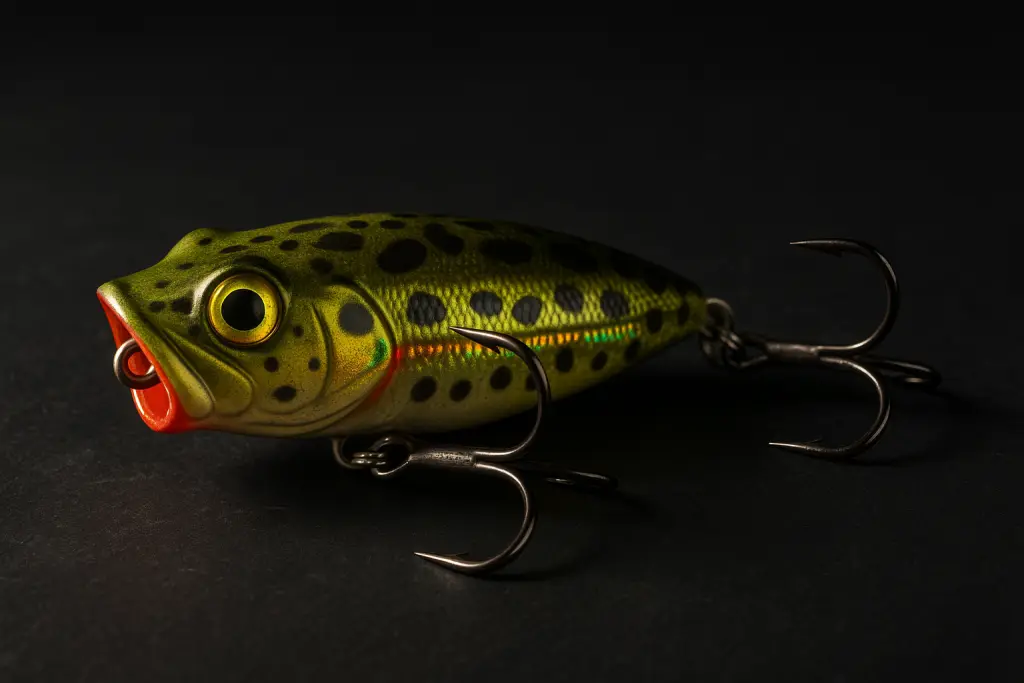
Topwater
The surface lure — the most spectacular strike in fishing. For bass and pike at dawn and dusk.
Recommended gear
Recommended gear
For muskellunge fishing, a sturdy rod about 2.4 to 3 meters (8 to 10 feet) long, with heavy power and fast action, is ideal. A sturdy reel with a line capacity of at least 150 meters is recommended. Use a braided line of 50 to 80 lb to withstand the sharp teeth of the muskellunge. Fluorocarbon or steel leaders of 30 to 50 lb are essential to avoid cuts. Treble hooks in sizes 4/0 to 6/0 are often used to maximize catch chances.
Handling & release
Handling & release
Handling a muskellunge carefully is essential to ensure its survival after release. Use pliers to remove hooks and support the fish by the belly and under the head. Avoid holding it vertically by the gills. For a photo, keep the fish horizontal and close to the water. Ensure that the release is quick, keeping the fish in the water until it is ready to swim away by itself.
Predators
Predators
Adult muskellunge have few natural predators due to their size, but young ones can fall prey to large fish like walleye and northern pike. Birds of prey, such as the osprey, can also capture young muskellunge. Humans represent a significant threat through sport fishing.
Conservation & status
Conservation & status
The muskellunge is generally healthy in Quebec, but its management is crucial to maintain viable populations. Regulations include minimum size limits and possession limits. Catch and release is strongly encouraged for large specimens to preserve broodstock. Educating anglers on proper handling also contributes to the conservation of this iconic species.
Surprising facts
Surprising facts
- ›The muskellunge is the largest member of the Esocidae family.
- ›It can reach a length of over 1.5 meters.
- ›The muskellunge is often called "the fish of ten thousand casts" due to its difficulty of capture.
- ›It has multiple rows of sharp teeth, perfect for grasping its prey.
- ›The coloration of the muskellunge can vary depending on its habitat, providing effective camouflage.
- ›Females are generally larger than males.
- ›During spawning, a female muskellunge can lay up to 200,000 eggs.
- ›Despite its size, the muskellunge can be difficult to see, as it moves silently in the water.
- ›It is known for its ability to leap out of the water to catch prey.
- ›The muskellunge can live up to 30 years under optimal conditions.
- ›It is often used as an indicator of water quality in aquatic ecosystems.
- ›Sport anglers particularly appreciate its power and fighting ability.
Frequently asked questions
Frequently asked questions
What is the best time to fish for muskellunge in Quebec?+
Is the muskellunge dangerous to humans?+
What type of lure is most effective for muskellunge?+
How do you differentiate a muskellunge from a northern pike?+
Is the muskellunge a cold-water fish?+
What is the minimum size limit for muskellunge in Quebec?+
Can muskellunge be fished with a fly rod?+
What is the best time of day to fish for muskellunge?+
Do muskellunge move in schools?+
Is the muskellunge sensitive to changes in atmospheric pressure?+
What is the average lifespan of a muskellunge?+
Are muskellunge protected in Quebec?+
Can muskellunge be fished in winter?+
Is the muskellunge edible?+
Member catches
No catches yet for this species. Be the first!
Have you caught maskinongé?
Share your photo with fellow anglers — show off your catch!
Be the first to share your catch of this species.
Our picks
Gear for Maskinongé

Piscifun Lunker
Experience the exceptional performance of the Piscifun Lunker braided fishing line, designed for discerning anglers.…
20.99 $

3-Layer Multipurpose Storage Box W/Tray
Discover the ultimate organizer for all your storage needs! This practical and versatile storage box is designed to m…
32.99 $

Sidomma Pro Fishing Gear
Discover the complete Sidomma fishing tool set, designed to meet the needs of anglers at all levels. Whether you are…
40.99 $