Chargement...
Complete guide
Omble chevalier
Overview
The arctic char is a prized fish among sport fishermen for its beauty and vigorous fight. This salmonid is mainly found in the cold, clear waters of Northern Quebec, particularly in subarctic lakes and the rivers that feed them. Although it is less known than its cousin, the brook trout, the arctic char offers an exceptional fishing experience due to its fighting spirit and ability to resist for a long time on the line. Its distribution is mainly limited to northern regions, where the climatic and aquatic conditions suit it perfectly. Due to its relative rarity and specific habitat, its capture is often considered a trophy for passionate salmonid anglers.
Angler indices
Identification
Identification
The arctic char has a slender and elongated body, ideal for fast swimming in cold waters. Its coloration varies with the season and habitat, but it generally features an olive-green to bluish back with silver sides and a white belly. Males, during the spawning period, display brighter hues with an orange-red belly. The fins are often bordered in white, a common trait among members of the Salmonidae family. The scales are small and smooth, giving it a shiny and lustrous appearance. Young arctic chars have light vertical bands on their sides, which fade as they grow. Males can be distinguished from females by a more prominent and hooked lower jaw, especially visible during spawning.
How to tell it apart
The arctic char can be confused with the brook trout, but certain traits allow for their distinction.
| Criterion | Arctic Char | Brook Trout |
|---|---|---|
| Size | 40 to 80 cm | 30 to 60 cm |
| Spawning Coloration | Orange-red belly | Reddish belly |
| Fins | Pronounced white borders | Less marked borders |
Distribution in Quebec
Distribution in Quebec
The arctic char is mainly present in Northern Quebec, particularly in the regions of Nunavik and the Côte-Nord. It is found in deep, cold lakes as well as in the rivers that feed them. This species is absent from the more southern regions of Quebec, as it requires cold temperatures to survive. Its distribution is limited to high latitudes, where the climatic conditions are harsh but ideal for this species. Due to these strict environmental criteria, the arctic char is not abundant, but it is well established in the areas where it is found.
Habitat
Habitat
The arctic char prefers deep, cold lakes with clear, well-oxygenated water. It is often found at depths of 10 to 30 meters, where the water temperature remains stable and cool. Underwater structures such as rocky reefs and transition areas between sandy and rocky bottoms are preferred habitats. During the summer, it generally stays near cold water sources or tributaries to escape the relative heat. In winter, it can be caught under the ice, in areas where the water remains oxygenated. Anglers should therefore target varied bottoms and rocky areas to maximize their chances of capture.
Life cycle
Life cycle
The reproduction of the arctic char generally occurs in the fall, when temperatures begin to drop. Adults migrate to specific spawning areas, often gravel-bottom rivers or shallow coastal areas of lakes. Females dig nests, called 'redds', where they lay their eggs, which are then fertilized by males. The eggs incubate over the winter and hatch in the spring. Young fry remain in shallow areas to feed on zooplankton and aquatic insects before migrating to deeper waters as they grow. The arctic char reaches sexual maturity between 3 and 5 years and can live up to 12 years. Timeline: Spring → Egg hatching → Summer → Growth of young → Autumn → Adult spawning → Winter → Egg incubation.
Behaviour
Behaviour
The arctic char is rather solitary, although young individuals may form small groups. It is territorial, especially during spawning, when males become aggressive to defend their breeding territory. Sensitive to variations in light, it is more active at dawn and dusk when light levels are low. Weather changes also influence its behavior; it tends to be more active before a change in atmospheric pressure or before a storm. Excessive noise can make it wary, so it is best to fish quietly.
Diet
Diet
The diet of the arctic char varies according to its age and the season. Fry primarily feed on zooplankton and small aquatic insects. As they grow, their diet expands to include crustaceans, mollusks, and smaller fish such as sticklebacks. Adults are opportunistic predators that actively hunt fish and aquatic invertebrates. In summer, they consume more fish to compensate for the increased energy expenditure due to rising temperatures. In winter, their metabolism slows down, and their diet mainly consists of available prey under the ice.
Seasons & best times
Seasons & best times
In spring, the arctic char is more active as temperatures rise, making it a good time for fishing. The best hours are early in the morning and late in the afternoon. In summer, it takes refuge in deeper, cooler waters, and trolling can be effective. In autumn, before spawning, it becomes more aggressive and actively feeds to build up reserves. Cloudy conditions and days with light winds are ideal for fishing. In winter, ice fishing is possible, especially in areas where the water remains well oxygenated. Calm, cold days are often the most productive. Low atmospheric pressure before a storm can make fish more active.
Fishing techniques
Fishing techniques
Fly Fishing
Ideal in spring and autumn, fly fishing mimics surface insects. Use dry flies or emergers. Avoid sudden movements to not scare the fish.
Trolling
Effective in summer in deep waters. Use spoons or streamers. Maintain a slow speed to follow the thermoclines where the chars are located.
Light Casting
Useful in rivers or shallow coastal areas. Use light lures to avoid spooking fish in clear waters.
Ice Fishing
Practiced in winter, often with jigs or natural baits. Look for areas with good oxygen supply to maximize capture chances.
Vertical Jigging
Effective in deep waters. Use colorful jigs to attract attention. Avoid shaking too much to not scare the fish.
Lures & colours
Recommended lures & flies
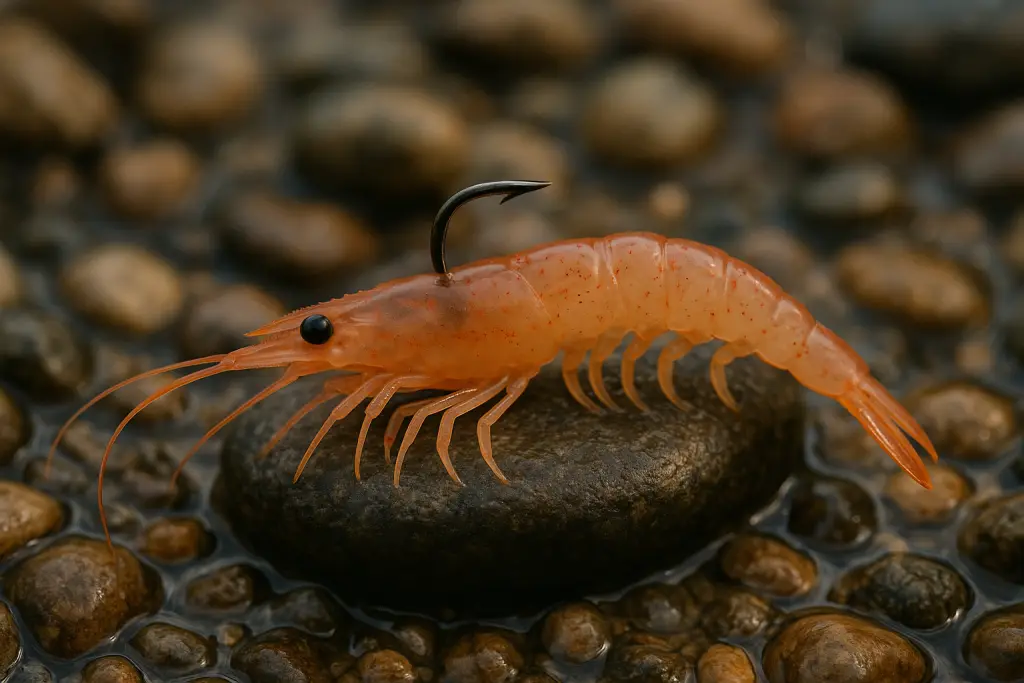
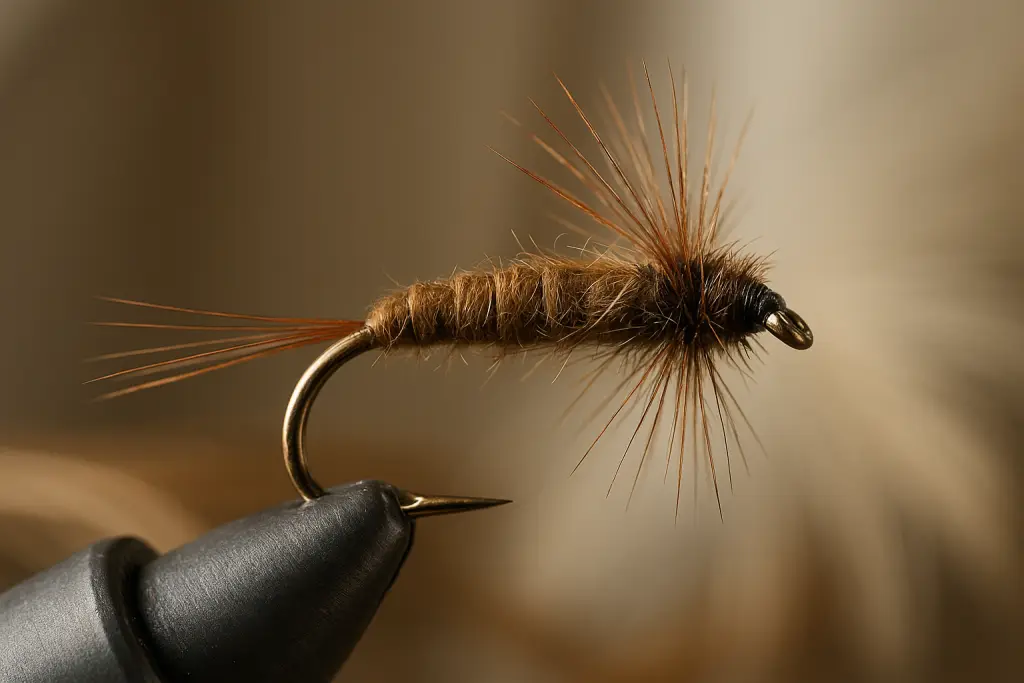
In clear water, prioritize lures in natural colors like olive green or brown to mimic natural prey. In overcast conditions or murky water, bright colors like orange or red may be more visible. In depth, use lures with reflective patterns to capture ambient light and attract the attention of the arctic char. Spoons with holographic patterns are particularly effective for their shimmering reflections.
Recommended gear
Recommended gear
For arctic char, a rod between 7 to 9 feet with medium power and fast action is ideal for precise casts and good sensitivity. An open-faced reel size 2500 to 3000 is recommended, spooled with braided line of 8 to 12 lb for its strength and low stretch. Use fluorocarbon leaders of 6 to 8 lb for their discretion in clear water. Hooks size 6 to 10 are suitable for the size of the arctic char's natural prey.
Handling & release
Handling & release
Handle the arctic char with care to avoid damaging its delicate skin. Use a rubber net to minimize injuries. For a successful release, keep the fish in the water as much as possible and avoid squeezing it too tightly. Take a quick photo while supporting the fish with both hands, then gently release it, ensuring it recovers before letting it go.
Predators
Predators
The predators of the arctic char in Quebec include larger fish like the lake trout and the pike. Birds of prey, such as the bald eagle, can also capture arctic chars, especially when they are near the surface.
Conservation & status
Conservation & status
The arctic char is considered a vulnerable species in certain parts of its range in Quebec, due to its sensitivity to climate change and pollution. Stock management includes catch quotas and specific fishing seasons to protect its population. Catch and release is encouraged for large specimens to conserve breeding individuals in the ecosystem.
Surprising facts
Surprising facts
- ›The arctic char is often considered the most northern freshwater fish in the world.
- ›It can live in arctic lakes where water temperatures never exceed 4 °C.
- ›Due to its remote habitat, it is sometimes nicknamed the ghost of northern lakes.
- ›The arctic char can survive in waters where oxygen concentration is very low.
- ›Males develop a hooked lower jaw during spawning, known as a kype.
- ›Arctic char populations can be anadromous, migrating between freshwater and saltwater.
- ›They are capable of changing color depending on their environment and the season.
- ›The arctic char is a member of the Salmonidae family, which also includes trout and salmon.
- ›It is often used as an ecological indicator due to its sensitivity to environmental changes.
- ›Artificial flies are particularly effective for fly fishing for arctic char.
- ›The arctic char is sometimes confused with the brook trout, although they have different habitats and behaviors.
- ›Arctic chars can reach depths of over 100 meters in certain lakes.
Frequently asked questions
Frequently asked questions
What is the best time to fish for arctic char?+
Is arctic char sensitive to pollution?+
Can you fish for arctic char in summer?+
How can you distinguish arctic char from brook trout?+
What lures are effective for arctic char?+
What is the average size of an arctic char in Quebec?+
Can you eat arctic char?+
Does arctic char migrate?+
Is arctic char difficult to fish?+
What is the weight record for an arctic char in Quebec?+
What is the lifespan of an arctic char?+
Can you fish for arctic char under the ice?+
What are the natural predators of arctic char?+
Is arctic char endangered in Quebec?+
Member catches
No catches yet for this species. Be the first!
Have you caught omble chevalier?
Share your photo with fellow anglers — show off your catch!
Be the first to share your catch of this species.
Our picks
Gear for Omble chevalier

Piscifun Pliers Pro
Enhance your fishing experience with Piscifun pliers, designed for performance and convenience. These essential tools…
31.99 $

Plano 2-Tray
Discover an ideal storage solution for all your fishing accessories with this functional and stylish tackle box. Desi…
27.96 $

UCEC 150pcs Circle Hooks
Discover the UCEC fishing hook set, perfect for freshwater and saltwater fishing enthusiasts. These high carbon steel…
16.98 $