Chargement...
Complete guide
Atlantic salmon
Overview
The Atlantic salmon, or Salmo salar, is one of the most sought-after fish by sport anglers in Quebec. Known for its strength and endurance, the Atlantic salmon provides an unforgettable fight for those lucky enough to hook one. Its distribution is mainly concentrated in the rivers of Gaspésie, Côte-Nord, and Basse-Côte-Nord, where cold, well-oxygenated waters are ideal for its survival and reproduction. Due to its popularity and the beauty of its fight, the Atlantic salmon is often considered the king of sport fish in the province. Anglers appreciate not only its fighting spirit but also the challenge of catching it, which requires precise technique and a good understanding of its behavior.
Angler indices
Identification
Identification
The Atlantic salmon has a streamlined body, ideal for swimming in fast water. Its color varies from blue-green on the back to shiny silver on the sides, with a white belly. These fish display small black spots in the shape of an X on their back and sides, often above the lateral line. Young salmon, called parr, have darker vertical stripes on their sides. The mouth of the Atlantic salmon is wide, with a slightly protruding lower jaw. The fins are generally dark, and the tail fin is slightly forked. During spawning, males develop a hook on the lower jaw, called a kype, and their coloration can become brighter, with reddish hues. Females generally remain more silver, even during spawning.
How to tell it apart
Differentiating the Atlantic salmon from other salmonids is crucial for anglers.
| Criteria | Atlantic salmon | Chinook salmon |
|---|---|---|
| Size | 50 to 80 cm | 70 to 150 cm |
| Weight | ≈ 3 to 7 kg | ≈ 7 to 20 kg |
| Spots on the body | Black X-shaped spots | Rounder black spots |
| Color during spawning | Reddish for males | Bright red for males |
Distribution in Quebec
Distribution in Quebec
In Quebec, the Atlantic salmon is primarily found in the rivers of Gaspésie, Côte-Nord, and Basse-Côte-Nord. These regions provide ideal conditions with cold, clear, and well-oxygenated waters. Famous rivers for salmon fishing include the Bonaventure River, the Matapédia River, and the Moisie River. Although its presence is more limited in other areas, the Atlantic salmon can occasionally be found in some tributaries of the Saint Lawrence. It is absent from areas where the water is too warm or polluted, limiting its distribution to preserved and well-managed zones.
Habitat
Habitat
The Atlantic salmon prefers rivers with cold, clear, and well-oxygenated waters. It particularly enjoys areas with moderate to fast currents, where it can hide behind rocks or in deep pools. During spawning, it ascends rivers to find clean gravel areas to lay its eggs. Outside of the spawning season, it can be found in calmer waters, often near river mouths or in lakes connected to river systems. The ideal water temperature for Atlantic salmon is between 10 and 16 °C, making the northern regions of Quebec its preferred habitat.
Life cycle
Life cycle
The life cycle of the Atlantic salmon begins with the laying of eggs in the fall, in gravel nests called 'redds'. After hatching, the fry remain in the gravel until spring, then become parr. These young salmon typically spend between two and four years in the river before migrating to the ocean, where they become adults. After a stay at sea of one to three years, adult salmon return to their natal river to spawn. The longevity of Atlantic salmon generally varies from four to seven years.
Spring → Egg hatching → Summer → Parr growth → Fall → Migration to the ocean → Winter → Stay at sea.
Behaviour
Behaviour
The Atlantic salmon is primarily a solitary fish, especially outside of the spawning period. During spawning, it becomes territorial and aggressive to protect its breeding territory. Sensitive to changes in light, it is more active at dawn and dusk. The salmon reacts strongly to noise and disturbances, making it cautious and sometimes difficult to catch. Weather conditions also influence its behavior; it is often more active in overcast or slightly rainy weather.
Diet
Diet
The diet of the Atlantic salmon varies according to its life stage. Fry mainly feed on zooplankton and small insect larvae. As they grow, parr consume aquatic insects, crustaceans, and small fish. Once at sea, adult salmon feed on fish such as herring, capelin, and sandlance, as well as crustaceans like shrimp. Their diet also varies with the season; in the fall, before spawning, they generally stop feeding.
Seasons & best times
Seasons & best times
In spring, as the ice melts, the Atlantic salmon begins to ascend rivers to prepare for spawning. This is an excellent time for fishing, especially early in the morning or late in the afternoon. In summer, fishing can be more challenging, especially in hot or sunny weather, although cloudy or rainy days increase the chances of success. In the fall, although the salmon is less active in feeding, it is more concentrated in specific areas for spawning, which can make it easier to locate. In winter, the Atlantic salmon is absent from rivers, being either at sea or migrating.
Fishing techniques
Fishing techniques
Fly fishing
Ideal in spring and early summer, this technique mimics aquatic insects. Use dry or wet flies depending on the depth. Pay attention to presentation and natural movement to avoid spooking the salmon.
Wobbler spoon
Effective in rivers, especially on cloudy days. Vary the retrieval speed to simulate an injured fish. Use a silver or copper spoon to attract salmon in deeper waters.
Trolling
Practiced in lakes or at river mouths, it uses lures that mimic fish. Vary speed and depth to target moving salmon. Avoid sudden speed changes.
Light casting
Especially effective for parr in rivers. Use small lures or spoons. Cast upstream and let the current bring the lure naturally.
Heavy casting
Used to reach deep pools in rivers. Favor heavy and colorful lures. Be patient and attentive to subtle bites.
Lures & colours
Recommended lures & flies
For Atlantic salmon fishing, choose silver or copper lures on sunny days, as they reflect light well. In overcast weather or in murky waters, opt for bright colors like pink or orange that attract the salmon's attention. In deeper water, lures with holographic or phosphorescent reflections can be very effective, as they catch any available light.
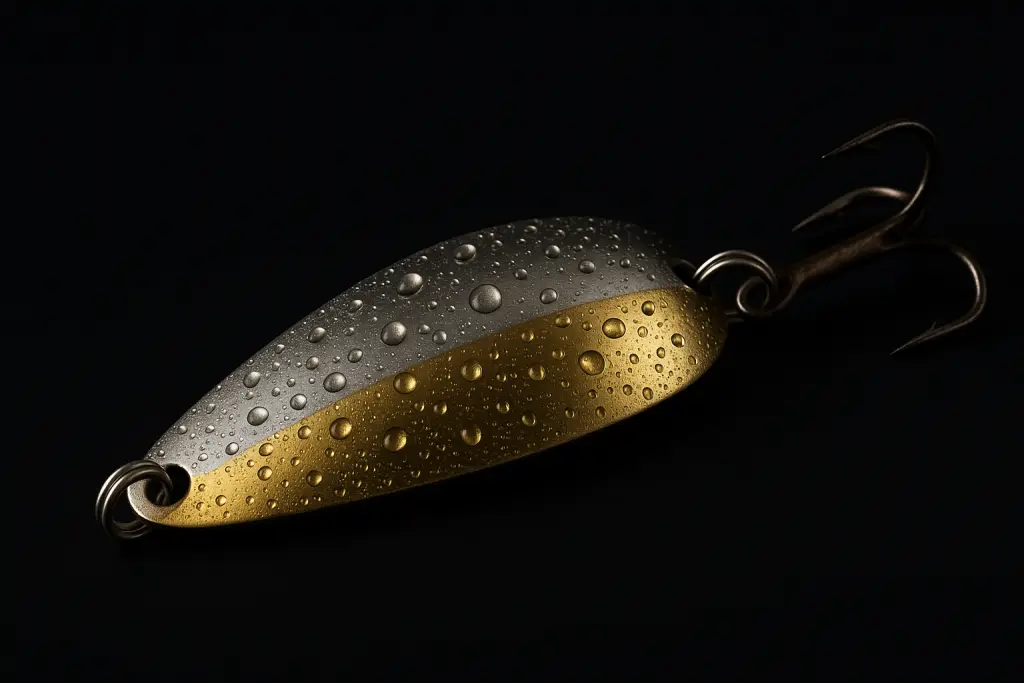
Wobbling spoon
A curved metal blade that flashes and undulates. Timeless classic for trout, char and pike.
★★★★★
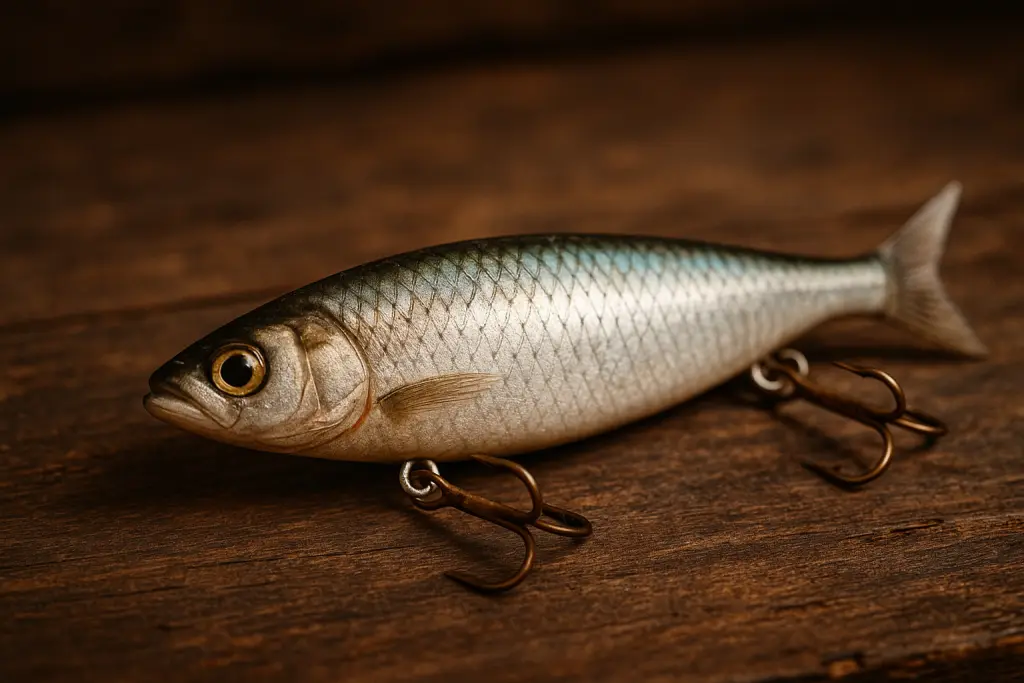
Hareng
Irresistible bait for salmon, walleye, and pike, ideal in freshwater or brackish water.
★★★★
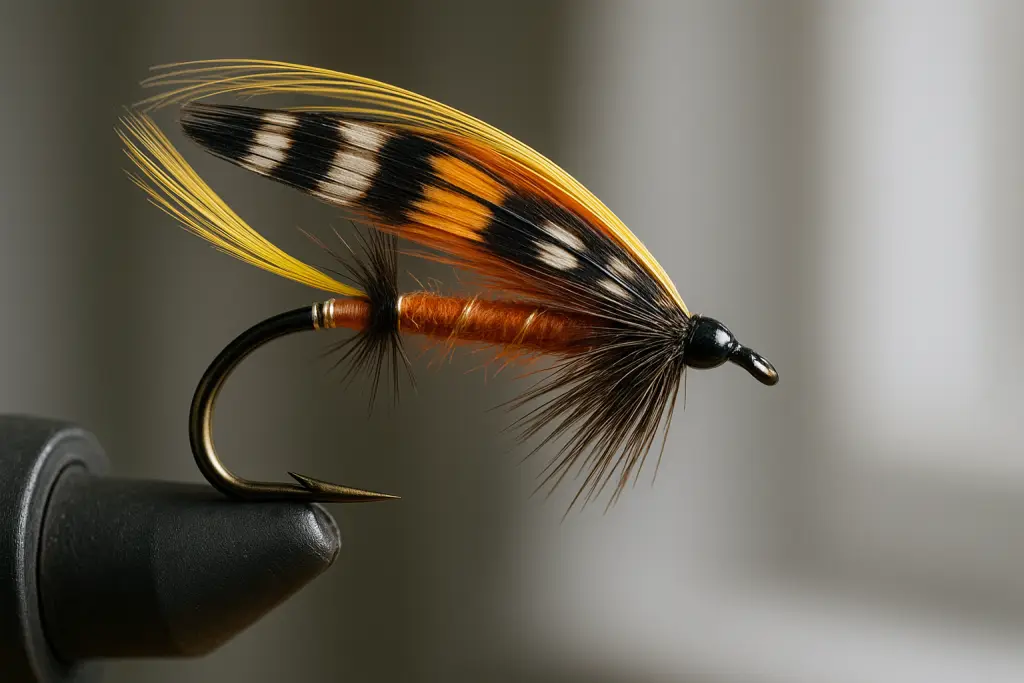
Salmon fly
Salmon-specific flies — Bombers, Cosseboom, etc.
★★★★★
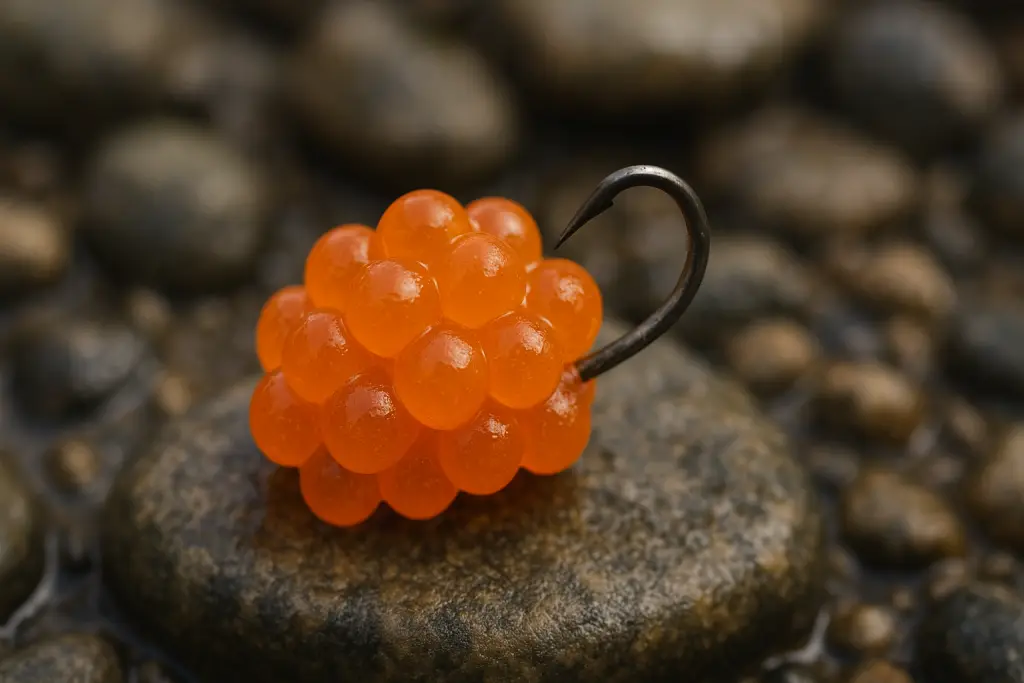
Oeufs de poisson
Attract salmon, brook trout, and ouananiche with irresistible freshwater eggs.
★★★★★
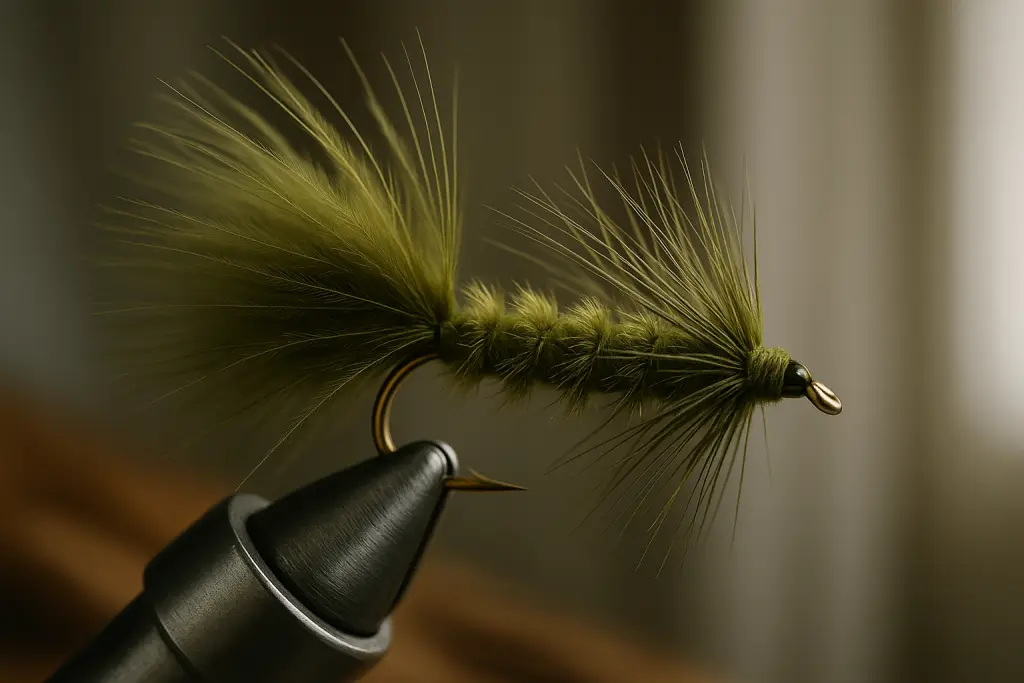
Streamer
The fly that imitates a baitfish. Most effective for big trout and char, in lakes and rivers.
★★★★
Recommended gear
Recommended gear
To fish for Atlantic salmon, a rod between 9 and 11 feet with medium to heavy power is recommended. A fast action helps in effectively hooking the fish. Use a sturdy reel with a line of 12 to 20 lb, depending on the size of the targeted fish. Hooks should be strong, generally size 4 to 6. A fluorocarbon leader of 10 to 15 lb can be useful for discretion in clear water.
Handling & release
Handling & release
When you catch an Atlantic salmon, handle it carefully to minimize stress. Use a fine-mesh net and wet your hands before touching the fish. For a successful release, let the salmon recover by holding it in the water, head facing into the current. If you take a photo, be quick and keep the fish close to the water.
Predators
Predators
Natural predators of the Atlantic salmon include seals and birds of prey like the osprey. In some rivers, large pike may also target young salmon. Cormorants are also known to consume young parr.
Conservation & status
Conservation & status
The status of Atlantic salmon in Quebec is concerning in certain rivers due to overfishing and habitat degradation. Strict management measures, such as catch quotas and closed seasons, are in place to protect populations. Catch and release is encouraged, especially for large breeding specimens.
Surprising facts
Surprising facts
- ›The Atlantic salmon can travel thousands of kilometers to return to its natal river.
- ›It uses its sense of smell to find its home river.
- ›The hook on the males' jaw, called a kype, develops during spawning.
- ›Young parr can remain several years in the river before migrating to the ocean.
- ›The Atlantic salmon is an anadromous fish, living in the sea but spawning in freshwater.
- ›It can leap over falls several meters high.
- ›Predictions of salmon returns are often based on oceanic conditions.
- ›The scales of Atlantic salmon can reveal its age.
- ›The silver color of salmon is due to specialized cells called chromatophores.
- ›The world record for Atlantic salmon is over 30 kg.
- ›In captivity, some salmon can be raised for breeding.
- ›Salmon rivers are often protected to preserve this ecosystem.
- ›The Atlantic salmon has cultural significance for several Indigenous communities.
- ›It is often considered the king of sport fish in Quebec.
Frequently asked questions
Frequently asked questions
What is the best season to fish for Atlantic salmon in Quebec?+
Can you fish for Atlantic salmon year-round?+
What type of lure is most effective for Atlantic salmon?+
How do you differentiate an Atlantic salmon from a Chinook salmon?+
Is the Atlantic salmon present in the Saint Lawrence River?+
How to handle an Atlantic salmon for release?+
What are the predators of Atlantic salmon?+
Why is Atlantic salmon important for the ecosystem?+
What are the main threats to Atlantic salmon?+
What equipment is recommended for Atlantic salmon fishing?+
Is fly fishing difficult for Atlantic salmon?+
Can you consume Atlantic salmon from Quebec?+
Does the Atlantic salmon change color during spawning?+
How long does Atlantic salmon spend at sea?+
Why is Atlantic salmon considered a sport fish?+
Is the Atlantic salmon anadromous?+
Member catches
No catches yet for this species. Be the first!
Have you caught atlantic salmon?
Share your photo with fellow anglers — show off your catch!
Be the first to share your catch of this species.
Our picks
Gear for Atlantic salmon

XTRAseal 3700
Enhance your fishing experience with our XTRAseal waterproof storage box, designed to keep your gear in top condition…
45.97 $

UCEC 150pcs Circle Hooks
Discover the UCEC fishing hook set, perfect for freshwater and saltwater fishing enthusiasts. These high carbon steel…
16.98 $

Catfish Casting Rod 8'
If you are passionate about catfishing, this 8-foot rod is the perfect tool to enhance your fishing sessions. Designe…
52 $