
Does the moon really affect fishing?
Yes, and it's measurable. Two mechanisms:
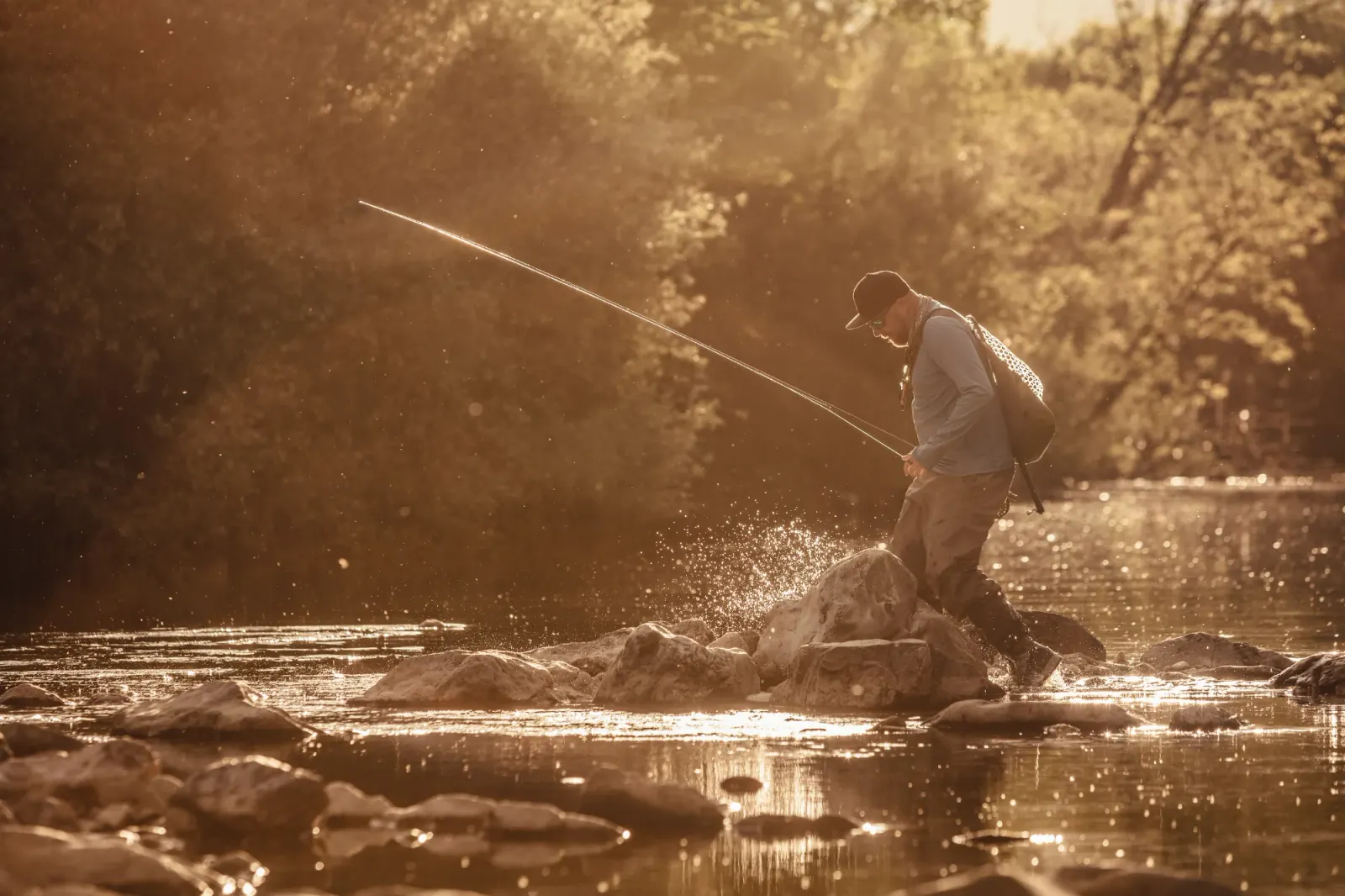
Full moon and new moon are the best fishing days of the month. Here's how to read the lunar calendar for your outing.
Yes, and it's measurable. Two mechanisms:
The month’s four markers, calculated automatically. New moon and full moon are the two best windows; the quarters give moderate activity.
Today
Gibbeuse décroissante
90 % lit · moon age 17.7 days
Instants computed to the minute (Meeus algorithm) and shown in Quebec time. Recalculated on every render: no date is hard-coded.
Trophy fishing records disproportionately cluster around full moon and new moon.
A full lunation has eight phases, not four. Four are precise markers — the two quarters, the new moon and the full moon — and four are the transitions between them. For fishing the extremes matter most, but reading the in-between phases keeps you from picking the wrong window.
Here is the full cycle, in order, as seen from Quebec:
| Phase | What you see | Fishing |
|---|---|---|
| New moon | Disc invisible | Peak daytime activity |
| Waxing crescent | Thin crescent, right side | Transition, activity climbing |
| First quarter | Half lit, right side | Moderate activity |
| Waxing gibbous | More than half, right side | Rising night activity |
| Full moon | Whole disc lit | Strong night activity |
| Waning gibbous | More than half, left side | Still good at night |
| Last quarter | Half lit, left side | Moderate activity |
| Waning crescent | Thin crescent, left side | The flattest of the cycle |
Two simple markers so you never get it wrong from the northern hemisphere: when the lit part is on the right, the moon is waxing; when it is on the left, it is waning. And a gibbous moon — more than a quarter but less than a full disc — always frames the full moon, waxing gibbous before, waning gibbous after.
The moon's age, which apps often display, is simply the number of days since the last new moon, out of the 29.5 days of the cycle. It is the fastest number to read to place yourself.
The solunar system (popularised by John Alden Knight in 1926) predicts 4 activity windows per 24 hours:
Apps like Solunar.org and Fishing Calendar Pro show these windows for your GPS location.
Full moon = lit night, active hunting. Walleye come up to flats. Use jerkbaits or white spinnerbaits.