Pêcheur Québec
Published on June 30, 20263 min read
Why children and pregnant or breastfeeding women are more sensitive to mercury, how to pick the right species and water bodies, and 9 FAQs. The benefits of fish stay real.
Families who fish often ask the same question: can I safely feed my kids the fish we catch? The answer is nuanced. Fish is a genuinely excellent food — rich in quality protein and omega-3s — but some species accumulate mercury, a contaminant to which children and pregnant or breastfeeding women are more sensitive. The good news: it is not about giving up fish, but about choosing the right species and the right water body. To understand the basics, start with our mercury and consumption guide.
Key takeaway — Children and pregnant or breastfeeding women should favour low-mercury species and smaller individual fish, and limit large predators. For precise advice tailored to your situation, always refer to the official Consumption Guide.
Why are children more sensitive to mercury?
Mercury — in its methylmercury form — mainly affects the developing nervous system. That is exactly why young children are more vulnerable: their brain and nervous system are still forming. For the same body weight, a given amount of fish represents a higher relative dose in a child than in an adult.
Pregnant and breastfeeding women fall under the same logic of caution: methylmercury can cross the placenta and pass into breast milk, exposing the fetus or infant during a critical window of development. This is why health authorities issue more cautious recommendations for these groups than for the general population.
The benefits of fish are very real
It would be a shame — and counterproductive — to strike fish from the family menu. Fish remains a valuable source of nutrients:
- complete, easy-to-digest protein;
- omega-3s (notably DHA), useful for a child's brain and vision development;
- vitamin D, iodine and other micronutrients.
The goal is not to avoid fish, but to choose wisely: favour the right species, from the right water bodies, in portions suited to the child's age. That is exactly the logic of the official consumption guide.
Favour low-mercury species
Not all fish accumulate mercury the same way. As a rule, small fish and those low in the food chain contain less. Conversely, large predators — which live a long time and eat other fish — build up more over the years. To see which species are most affected, read which fish accumulate the most mercury.
For children and pregnant or breastfeeding women, a cautious approach is to:
- favour species known to be low in mercury (for example farmed trout, char, or small panfish);
- choose smaller individuals rather than trophy-size fish from the same water body;
- limit large predators such as northern pike, muskellunge or big walleye;
- vary sources rather than always eating the same fish from the same lake.
Choose the right water body too
Mercury levels depend not only on the species but also on the water body. A walleye from one lake may hold more or less mercury than a walleye from another. That is why Quebec publishes a consumption guide giving benchmarks by species, size and sector, with separate recommendations for the general population and for sensitive groups (children, pregnant or breastfeeding women).
Before regularly serving caught fish to a young child, the safest habit is to check that guide for the water body in question. It is the only source that provides binding, group-specific benchmarks.
A few simple habits at home
Beyond the choice of species and water body, a few habits reduce exposure and make fish healthier for the whole family:
- remove the skin, fat and viscera before cooking: some contaminants concentrate there;
- vary the menu by alternating caught fish with store-bought fish;
- adjust portions to the child's age;
- keep a record of the water body and size of the fish you keep, for later reference.
Key takeaway — No general rule replaces official advice. Frequency and portion benchmarks differ by species, size, water body and group (child, pregnant or breastfeeding woman). When in doubt, consult the Consumption Guide or a health professional.
Making fishing a great family experience
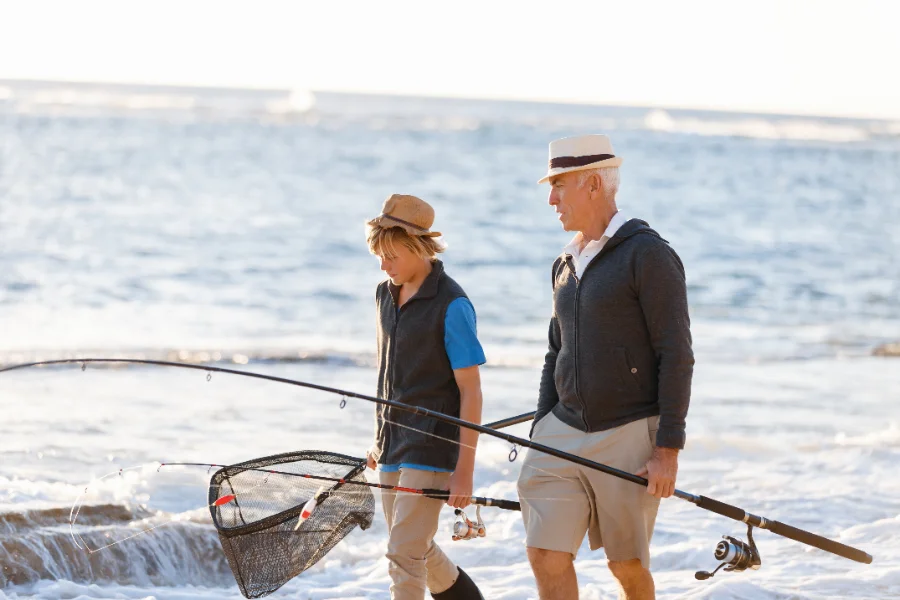
Well informed, parents can keep sharing fishing with their children with peace of mind: it is a formative activity that teaches patience, respect for nature and the pleasure of eating what you catch. The key is to choose thoughtfully what ends up on younger children's plates.
To plan kid-friendly outings, discover our family fishing guide. And to master every aspect of fishing in Quebec — licences, species, techniques and regulations — browse our complete guide.