Pêcheur Québec
Published on June 30, 20264 min read
Access, gear, technique, fish behaviour, safety and comfort: everything that changes between open-water summer fishing and winter ice fishing in Quebec, with a comparison table and FAQ.
Fishing in Quebec is a completely different activity depending on the season. Between July on an open lake and January on 40 cm of ice, almost everything changes: how you reach the water, your gear, your technique, the fish's behaviour and the safety rules. This guide compares both worlds point by point to help you move from one to the other. For an overview, see our winter vs summer fishing guide.
Key takeaway — In summer you fish from a boat with a long rod, covering ground (drifting, trolling). In winter you walk on the ice, drill a hole and fish vertically with a short ice rod or a tip-up. The fish, being cold-blooded, is far slower under the ice: discreet presentation and patience.
Access to the water: boat vs walking on ice
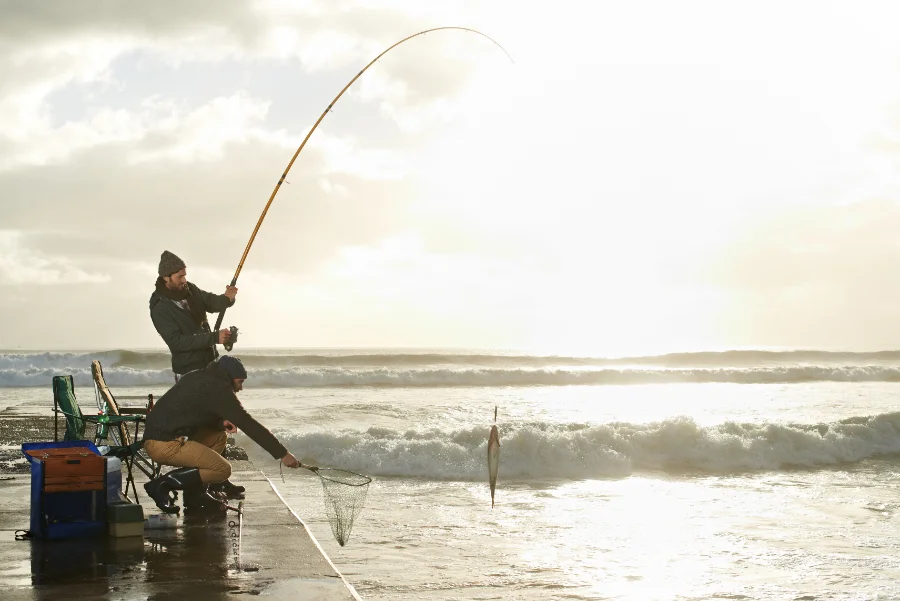
In summer, you reach holes and shoals by boat, pontoon or kayak. Mobility is a huge advantage: you move from structure to structure, follow the fish, cover kilometres of shoreline in one outing. A launch ramp and a motor are enough.
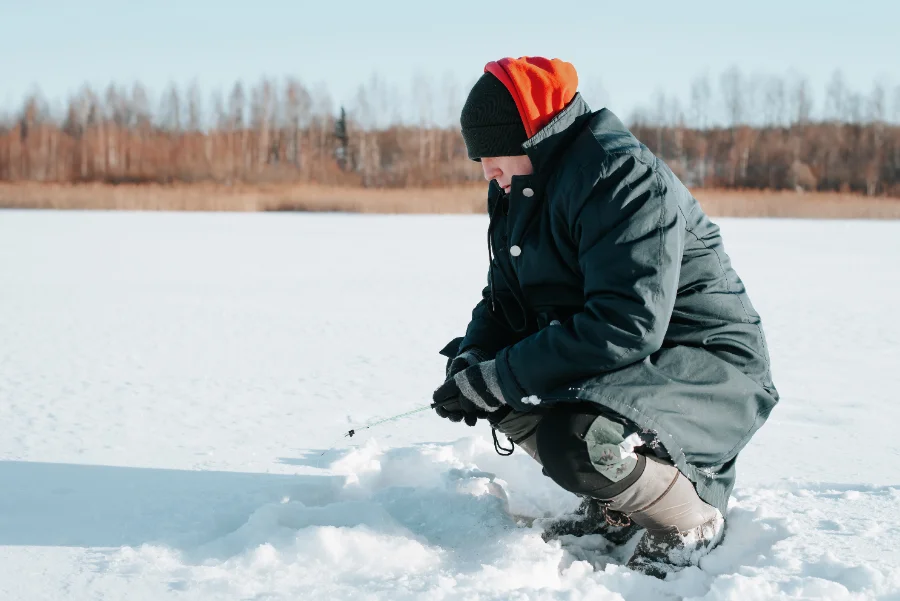
In winter, the water becomes a solid surface you walk on, dragging a sled, or riding an ATV or snowmobile. Access depends entirely on ice thickness and quality. You no longer follow the fish by moving fast: you drill several strategic holes and wait. The logistics change completely — no ramp, but a marked trail or a village of ice huts.
Gear: long rod vs ice rod and tip-up
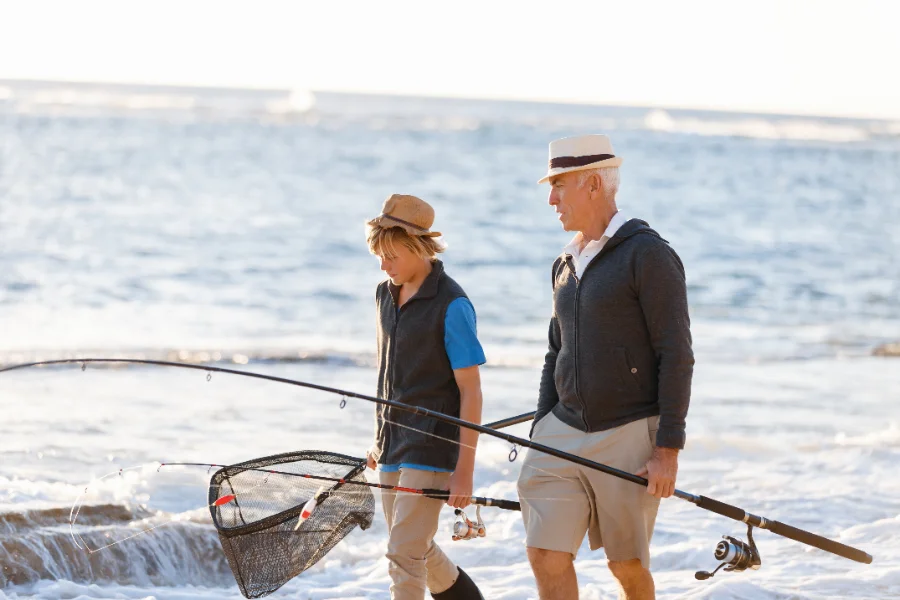
Summer gear favours casting reach and power: 6-to-7-foot rods, spinning or baitcasting reels, longer lines to cover distance.
Winter gear is miniaturized and specialized:
- Short ice rod (24 to 36 inches) to fish right above the hole;
- Tip-up, a mechanical trap that raises a flag when a fish bites, letting you watch several holes at once;
- Hand or powered auger to drill the ice;
- Shelter (ice tent) and heater for comfort;
- Flasher sonar to see the fish rise toward the bait in real time.
For a shopping breakdown, see winter fishing equipment.
Technique and presentation: covering ground vs fishing vertical
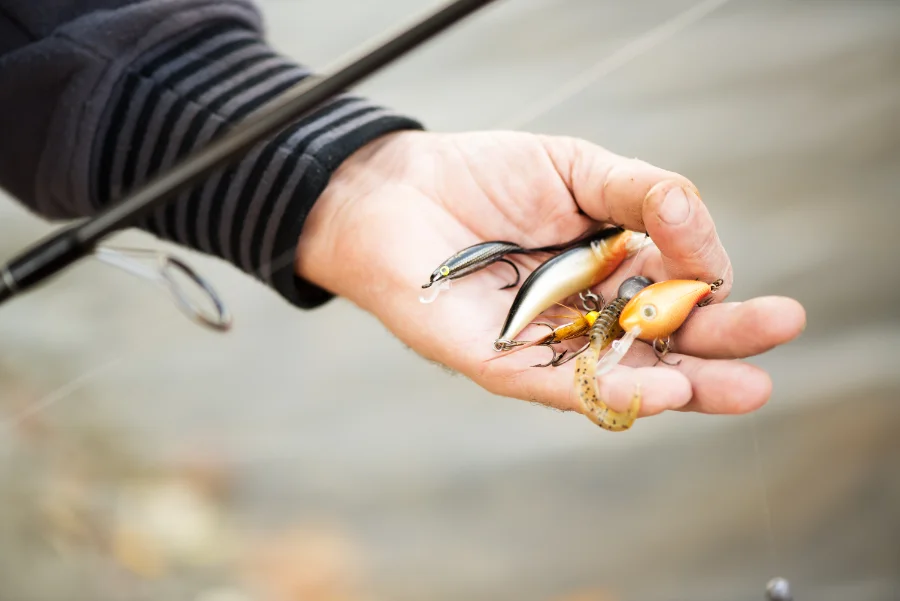
This is perhaps the biggest difference. In summer, you cover territory: repeated casts toward structure, drifting with the wind, trolling behind the boat to present a lure over a long distance. You actively search for fish.
In winter, fishing is vertical and static. You drop your presentation straight down the hole, make it dance (jigging) a few centimetres off the bottom, or leave it still under a tip-up. The fish doesn't travel far: it's up to you to place the bait exactly at its depth, often revealed by the sonar. Movements are slower and subtler.
Behaviour and metabolism of the fish
Fish are cold-blooded: their metabolism follows water temperature. In summer, warm water speeds up digestion, they hunt actively and strike hard. Under the ice, water sits near 4 °C: the fish becomes lethargic, feeds less often and bites with far less conviction. Hence the need in winter for a discreet, slow, precise presentation — a big noisy lure that works in July will spook a sluggish walleye in February. The active species also change with the season: discover which species to fish in winter.
Safety: drowning vs ice
The risks are not the same. In summer, the main danger is drowning and cold-water shock: always wear a personal flotation device (PFD), watch the weather and the waves.
In winter, the danger comes from the ice itself. Never venture onto less than 10 cm of clear solid ice (15 cm for a group, 25 cm or more for a vehicle). Carry ice picks around your neck to pull yourself out, a rope, and always tell someone your route. Early- and late-season ice, or ice near currents and river mouths, is treacherous even when it looks thick.
Comfort, season and atmosphere
Summer offers open-air freedom, long days and simple logistics. Winter demands more clothing (layers, insulated boots), but the heated shelter turns the outing into a friendly social event. Each season also has its own calendar: always check the opening dates by season before you go, since some species and waters close or open depending on the period.
Comparison table
| Aspect | Summer | Winter |
|---|---|---|
| Access | Boat (rowboat, kayak) | Walking on ice, sled, snowmobile |
| Rod | Long (6-7 ft), casting | Short ice rod (24-36 in), tip-up |
| Technique | Casting, drifting, trolling | Vertical fishing, jigging, tip-up |
| Movement | Mobile, follow the fish | Static, drill holes |
| Fish | Active, fast metabolism | Lethargic, soft bites |
| Safety | Drowning → PFD | Thin ice → picks, thickness |
| Comfort | Open air, long days | Heated shelter, layers |
| Key gear | Motor, sonar | Auger, shelter, flasher |
Moving from one season to the other
Mastering both seasons doubles your annual fishing time and makes you a better angler: understanding fish in slow motion under the ice sharpens how you read their summer behaviour. Start with one season, adapt your gear, and jump into the other when you feel ready.
Going further
This guide is part of our complete guide to fishing in Quebec. Dig deeper with winter fishing equipment and which species to fish in winter.
?Frequently asked questions
What is the main difference between summer and winter fishing in Quebec?
Do fish bite less in winter?
Can I use the same gear in summer and winter?
What is a tip-up?
How thick must the ice be to fish safely?
Which species do you fish in winter in Quebec?
Is the vertical technique really different from summer?
What are the dangers specific to each season?
Do I need a different license for each season?
Go further
Buyer’s guides