Pêcheur Québec
Published on June 30, 20264 min read
Which lures for trout in Quebec? Casting and spinning spoons, crankbaits and streamers, with the colours that actually work.
Trout is arguably the most sought-after fish in Quebec's lakes and rivers, and choosing the right lure often makes the difference between a blank outing and a full creel. This guide reviews the most effective lures for brook trout, rainbow trout and brown trout, with ideal conditions, colours and sizes to favour. For the fundamentals of technique, keep our brook trout fishing guide handy.
Key takeaway — In clear water, use small lures (2 to 5 g) in natural colours with a slow retrieve. In tinted or murky water, increase the size and switch to bright colours (chartreuse, orange, silver) to maximize visibility and vibration.
Spoons: the reliable choice
The casting spoon (Little Cleo, Krocodile, Williams) is a trout-fishing staple. Its slow "S" wobble mimics an injured baitfish, triggering strikes from wary trout. It casts far, sinks well and lets you cover a lot of water quickly — ideal early in the season when fish are scattered.
Favour 3 to 7 g models for brook trout in streams, and up to 10-14 g for rainbow or brown trout in big lakes. Silver and gold finishes are versatile; add a touch of red or orange on overcast days. A slow retrieve broken up with pauses lets the spoon "flutter" toward the bottom — a moment when strikes are frequent.
Spinners: irresistible vibration
Spinners like Mepps (Aglia, Black Fury) and Panther Martin produce vibrations and flash that excite trout even in stained water. The blade spins from the first turn of the handle, making them perfect for beginners and for moving rivers alike.
For stream trout, a Mepps size 0, 1 or 2 is plenty; in lakes or for bigger specimens, move up to size 3. Black with yellow dots, silver or gold bodies cover most situations. In very clear water, downsize and pick a subtler blade; in tinted water, a gold or fluorescent blade clearly boosts catches.
Small crankbaits and jerkbaits
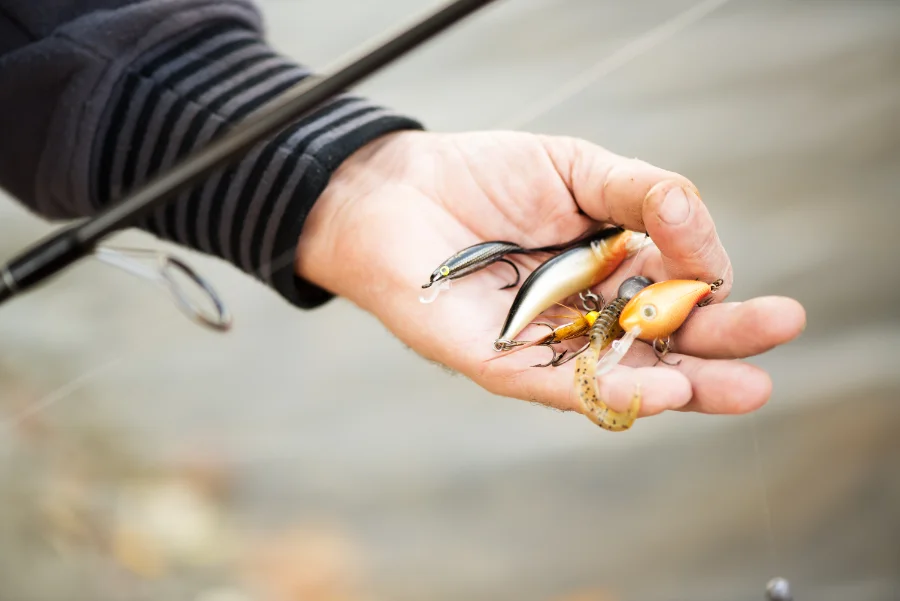
Minnow-style lures (Rapala Original Floater, Countdown or X-Rap crankbaits and jerkbaits) perfectly imitate a minnow or shiner, the natural prey of larger trout. In floating versions, twitch them on the surface along the banks; in sinking versions, work the deeper holes.
Choose 5 to 9 cm models in natural patterns: olive-green back, silver flanks, pale belly. "Trout" and "minnow" patterns are deadly. A twitch retrieve (small rod-tip jerks followed by pauses) often draws strikes from the biggest brown trout. These lures shine especially in spring and fall, when trout actively hunt small fish. They complement the best natural baits well as the water warms.
Streamers and flies
In fly fishing, streamers (Woolly Bugger, Muddler Minnow, Mickey Finn) imitate fry, leeches and larvae, and take both brook and rainbow trout. Black, olive or white patterns remain the most versatile. Fish them with a jerky retrieve just under the surface or near the bottom depending on activity.
Dry flies (Adams, Elk Hair Caddis) deliver spectacular fights during insect hatches, especially on summer evenings. If you're targeting the rainbow trout profile, know that this scrappy species responds particularly well to streamers worked with changes of pace.
Lure summary table
| Lure | Conditions | Colour / size |
|---|---|---|
| Casting spoon (Little Cleo, Williams) | Lake, early season, prospecting | Silver/gold, 3-14 g |
| Spinner (Mepps, Panther Martin) | River, current, beginners | Black-yellow/silver, size 0-3 |
| Floating minnow lure (Rapala Original) | Banks, surface, warm water | Minnow/trout pattern, 5-9 cm |
| Sinking minnow lure (Countdown, X-Rap) | Deep holes, big fish | Silver/olive, 5-9 cm |
| Streamer (Woolly Bugger, Muddler) | Fly, fry and leeches | Black/olive/white, #6-#10 |
| Dry fly (Adams, Caddis) | Hatches, summer evening | Natural, #12-#16 |
Matching the lure to conditions
Three factors guide the choice: water clarity, light and temperature. In clear water on a sunny day, trout see everything: downsize, choose natural colours and slow the retrieve. In tinted water, in the rain or under overcast skies, increase the size, pick bright colours and lures that vibrate strongly to offset the poor visibility.
Key takeaway — A slow retrieve is the golden rule for trout. A lure reeled too fast passes over inactive fish; instead, vary the rhythm with pauses and let the lure sink between turns of the handle.
In cold spring water, slow down even more: trout are lethargic and strike easy prey. In summer, fish early morning, evening or in deep, cool zones. A good assortment — a few spoons, two or three minnow lures and a handful of streamers — prepares you for almost any situation.
Ready to hit the water?
Before heading out, make sure you have a valid fishing license and check your zone's regulations. To learn everything about species, techniques and the best spots in Quebec, see our complete guide.
?Frequently asked questions
What is the best lure for trout in Quebec?
What lure size for brook trout?
What lure colour in clear water?
What lure colour in tinted or murky water?
How fast should you retrieve a trout lure?
Do Mepps and Panther Martin really work?
What lure for rainbow trout?
What setup for lure fishing for trout?
Lures or natural bait for trout?
Go further
Buyer’s guides