Pêcheur Québec
Published on June 30, 20263 min read
Complete 2026 guide to ice fishing for beginners in Quebec: license, choosing a body of water, ice thickness, minimal gear, where to find fish, safety and ice fishing villages.
Ice fishing — la pêche blanche — is one of the finest ways to embrace a Quebec winter. Accessible, social and often inexpensive, it draws thousands of beginners onto frozen lakes and rivers every year. This guide covers where to start, the minimal gear you need, how to drill and find fish, and above all how to stay safe. Before you head out, read our comparison: winter vs summer fishing guide to understand what changes once the water turns to ice.
Key takeaway — A valid license from age 18, ice at least 10 cm thick to walk on, warm layered clothing and an auger: that is the essential kit for a safe, successful first outing.
Where to start
The fishing license
Ice fishing requires the same license as summer fishing. From age 18 you must hold a valid sport fishing license. Get it in minutes online or from a retailer — full details on our fishing license page. Also check the winter opening dates, which vary by zone and species.
Choosing a safe body of water
For a first time, pick a well-known, busy lake, ideally an ice fishing village run by an outfitter. These sites offer heated cabins, pre-drilled holes and marked trails on verified ice — by far the most reassuring way to begin.
Checking the ice thickness
Never trust appearances. Drill or have the thickness checked: you need at least 10 cm of clear, solid ice to walk, more for a group or a vehicle. Beware of ice near inlets, currents and snow-covered areas, which is often thinner.
Minimal gear
You don't need to buy everything to start. Here's the essential:
- An auger (manual to begin) to drill through the ice.
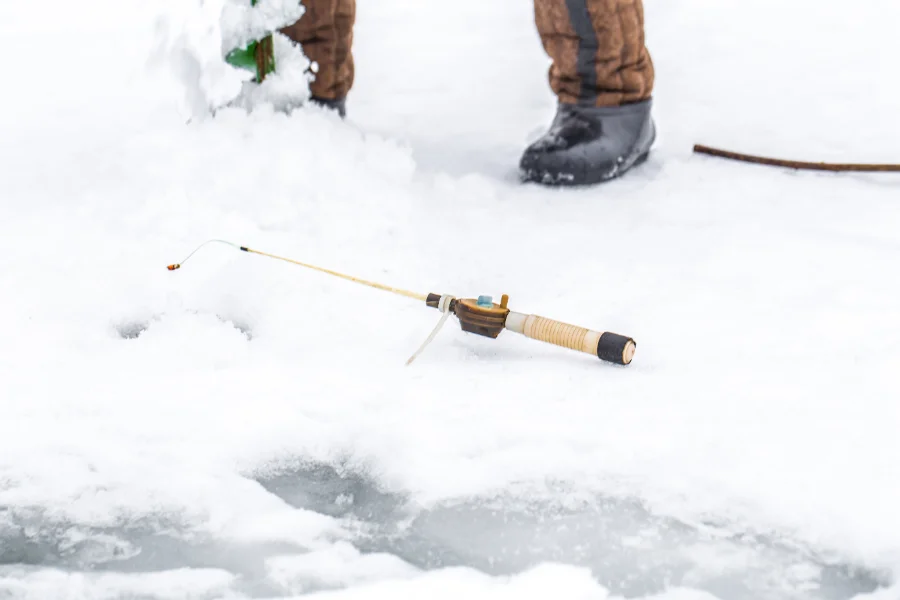
- An ice rod or tip-up (a rig that signals a bite).
- Bait and lures: worms, minnows, small spoons or jigs.
- A skimmer to clear slush from the hole.
- A seat or an upturned bucket, and a windbreak.
- Warm layered clothing: insulated boots, mittens, a toque and a snowsuit.
For a full look at the ideal kit, see winter fishing equipment. And to know what to target once you're out there, our guide which species to fish in winter will help you aim for the right catch.
How to drill and find fish
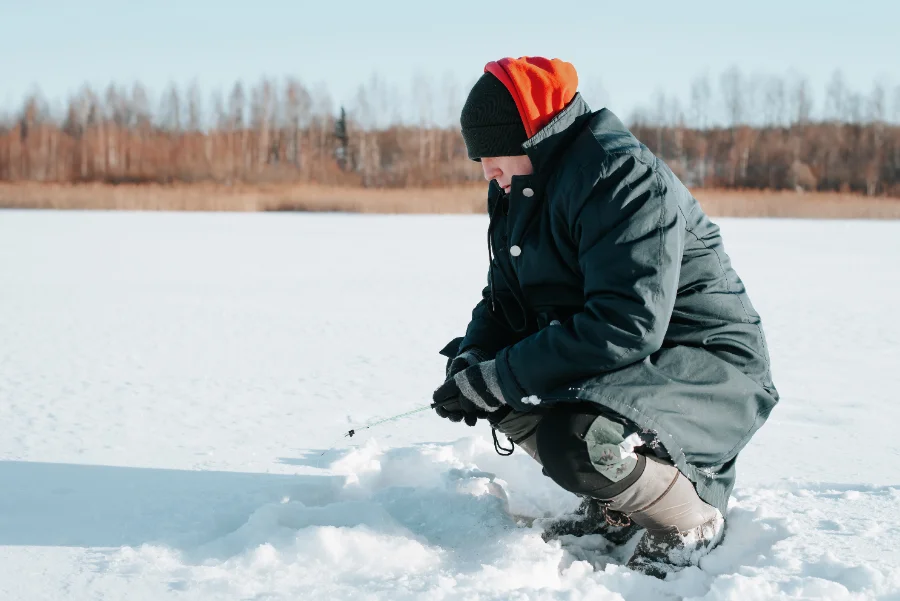
Drill several holes to explore different depths — this is called prospecting. Winter fish often hold near structure: drop-offs, holes, submerged weed beds, rocky points. Walleye bite early morning and dusk in 4 to 8 metres of water; trout like deeper, oxygenated zones; yellow perch move in schools and bite all day.
Lower your lure near the bottom, then raise it slowly with small jigging motions to draw attention. Patience and mobility pay off: if nothing bites after 20 minutes, move to another hole.
Safety first
Safety is not optional on the ice:
- Thickness: minimum 10 cm on foot, over 20 cm for a snowmobile, 30 cm+ for a vehicle.
- Ice cleats under your boots so you don't slip.
- Ice picks around your neck: essential to pull yourself out after a fall.
- Never go alone: tell someone and fish with company.
- Keep a charged phone, a rope and dry spare clothes.
If in doubt about the ice, turn back. No catch is worth an accident.
Outfitters and ice fishing villages
Quebec is full of ice fishing villages: the Saguenay Fjord (tomcod), Lac Saint-Pierre, the Baskatong Reservoir and the Mauricie. Outfitters rent heated cabins, augers and gear, and guide beginners on safe ice — the ideal option for a stress-free first outing with family or friends.
Ready for your first outing?
With a license, the right gear and respect for safety rules, ice fishing becomes a pleasure open to everyone. To dig deeper into every technique and discover all facets of the sport, dive into our complete guide.
?Frequently asked questions
How thick must the ice be to fish safely?
Do you need a license for ice fishing in Quebec?
What minimal gear do you need to start ice fishing?
Which fish can you catch through the ice?
Where do you find fish under the ice?
How do you drill a hole in the ice?
Is ice fishing dangerous for a beginner?
Where can you ice fish in Quebec?
How much does an ice fishing outing cost?
Go further
Buyer’s guides