Pêcheur Québec
Published on June 30, 20263 min read
How to find an ice fishing spot in Quebec: ice fishing villages, outfitters, public lakes and the river, how to read a good location, check the ice and use a map or sonar.
Ice fishing is a winter institution in Quebec, but the beginner's first question is always the same: where to ice fish? The province has thousands of frozen lakes and rivers, but not all are accessible, safe or open. This guide explains how to find a good spot, how to read it and, above all, how to do it safely. To understand the differences between the two seasons, start with our winter vs summer fishing guide.
Types of ice fishing sites
There are several ways to experience ice fishing in Quebec, from the most guided to the most independent.
Organized ice fishing villages
These are turnkey sites: an operator sets up heated huts on the ice, drills the holes, checks the thickness and rents you all the gear. It's the simplest way to start, because safety and access are handled for you. You'll often find services (washrooms, food, jigging-rod rental) and nearby parking.
Outfitters with huts
Many outfitters offer ice fishing with lodging and huts on waters they know intimately. The advantage: experienced staff point you toward productive zones and maintain the ice. It's ideal for a family outing or a multi-day stay.
Frozen public lakes and rivers
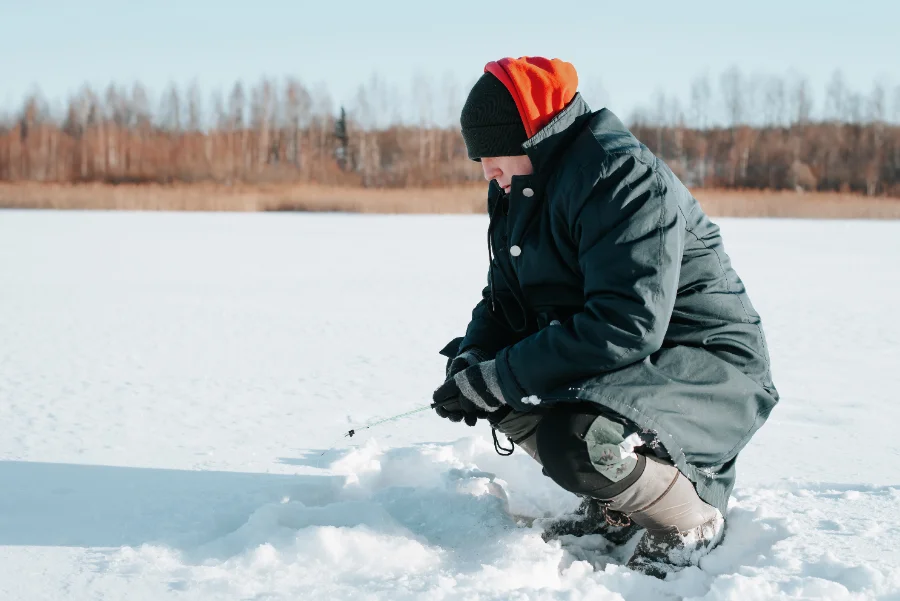
On many public waters, you can ice fish for free, provided you follow local regulations. Here you are entirely responsible for your own safety: it's the freest option, but also the one that demands the most preparation and knowledge.
The river for smelt
The St. Lawrence River and some of its tributaries are famous for smelt and tomcod fishing (the famous "little fish of the channels"). These sites, often organized as hut villages, offer a unique and very social experience popular with families.
How to spot a good location
Finding fish under the ice means understanding where they hold in winter. A few essential cues:
- Structure: holes, rocky points, shoals, tributary mouths and weed edges concentrate fish.
- Depth: depending on the species, fish move to deeper zones in winter. Walleye and trout often stay near the breaks between shallow and deep.
- The presence of other anglers: on public water, a cluster of huts or holes is no accident. It usually signals a productive zone and, generally, ice that has already been tested.
A good spot combines these three elements. To discover Quebec's waters without guessing, check the interactive spots map, which groups fishing locations by region and species.
Checking ice thickness and access
This is the most important point, and it's non-negotiable. No fish is worth your life. Before venturing out:
- Check the ice thickness. As a rough guide, clear solid ice should be at least 10 cm to walk on, more for a vehicle. Ice is never uniform.
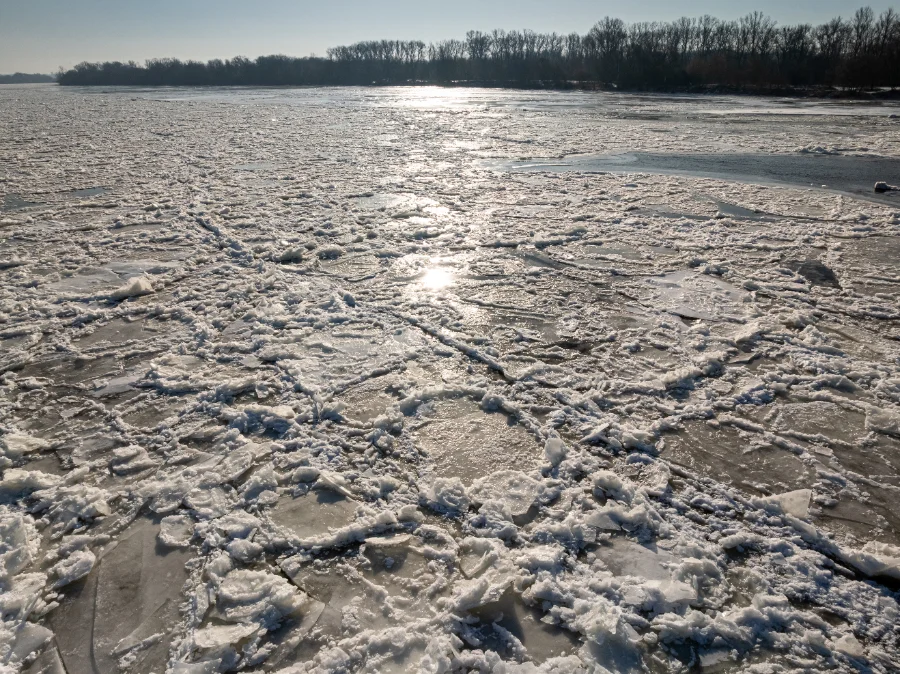
- Beware of risk zones: mouths, currents, springs, dock edges and snow-covered ice that hides weak spots.
- Confirm access: authorized parking, a safe access route, right of way. On an organized site, all of this is already handled.
- Never go alone and tell someone your route.
If you're just starting out, begin with a guided site. Our ice fishing for beginners guide details the safety gear and first moves to know.
Using a map and a sonar
Two tools change everything. A bathymetric map (showing depth) lets you target structure before you even drill a hole. On site, a portable sonar (fish finder) or an underwater camera confirms depth and shows whether fish are present and active. Combined, they save you from drilling at random and make every outing more efficient.
Ready to find your spot?
Ice fishing rewards preparation. First choose your site type based on your level, always check the ice, then locate structure with a map or sonar. Don't forget your fishing license, mandatory on the ice as in open water. To go further, explore our complete guide and find the best waters on the interactive map.
?Frequently asked questions
Where can you ice fish in Quebec?
How do you find a good ice fishing spot?
Do you need a license to ice fish in Quebec?
How thick should the ice be to fish safely?
Is ice fishing free in Quebec?
What is an ice fishing village?
How do you spot structure under the ice?
Where can you ice fish for smelt in Quebec?
Can you ice fish as a beginner?
Go further
Buyer’s guides