
Four Quebec fish, for real
One has a mirror in its eye. One is a cod that lives in fresh water. One guards its eggs like a father. One eats ducklings.
Why only four, when the site lists 209?
Because only these four have been checked one by one against the ministry’s own youth capsules. Our other species sheets carry figures filled in batches — the same average size repeated on 165 species — which is fine for browsing and useless for teaching. We would rather give a class four true sheets than 209 shaky ones. The photographs, those are ours and they are real.
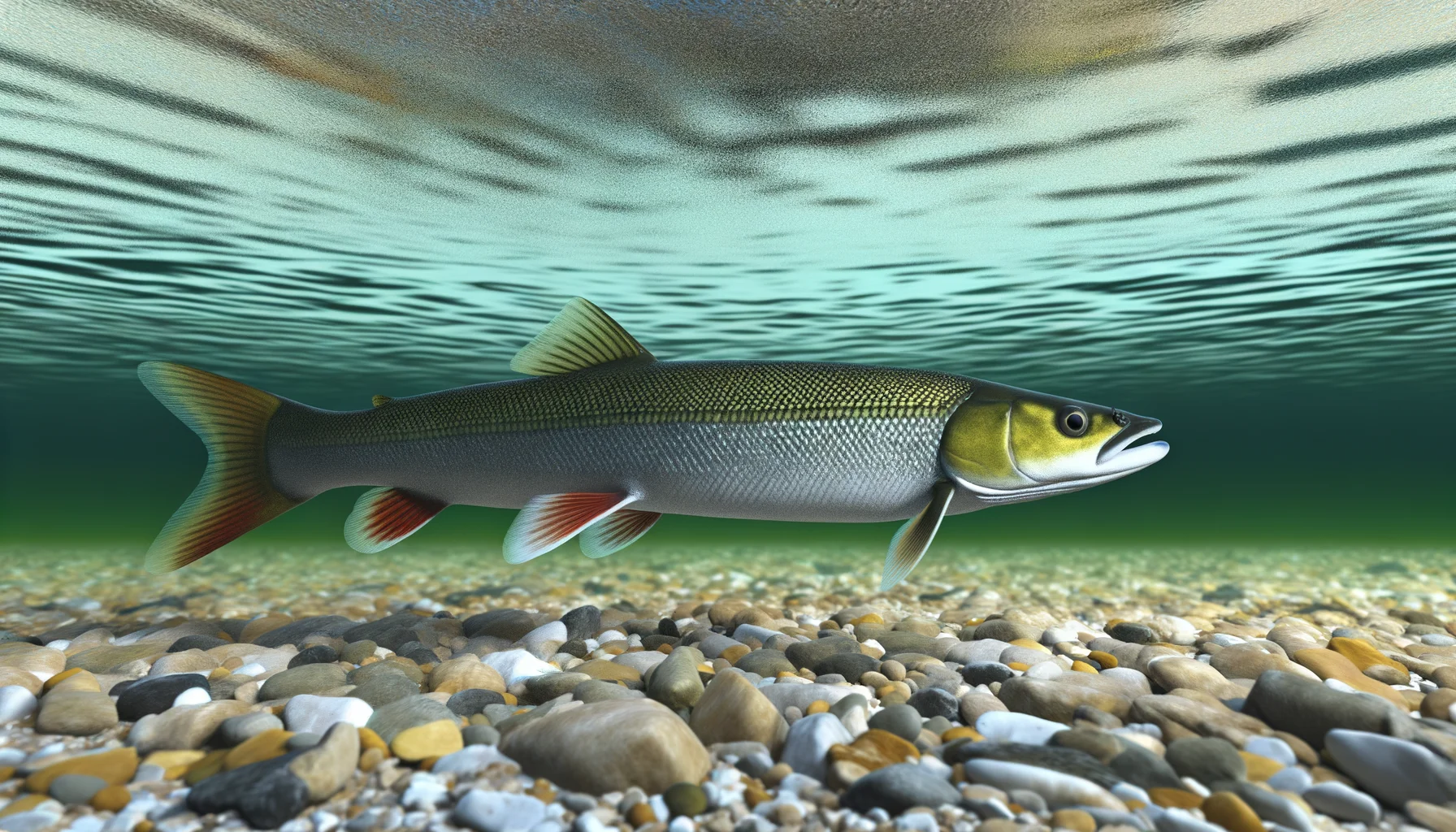
Walleye
Sander vitreus
- Where it lives
- In cool water, between 10 and 24 °C. It grows best between 18 and 22 °C. In broad daylight it stays in cover or deep, away from the light.
- What it eats
- Other fish. It is piscivorous — and if it finds no perch, it will eat its own kind.
- How to tell
- A white patch on the lower tail, and no black spots on the dorsal fin. That is what tells it apart from the sauger, which looks much like it. Two canines at the tip of the lower jaw: take care unhooking.
The fact that sticks
It has a mirror in its eye. Behind the retina, a layer of reflective cells — the *tapetum lucidum* — sends the light back through a second time. So it sees in a gloom where we see nothing. That is why it avoids bright sun and hunts at the end of the day.
Source: Spotlight on… walleye fishing — MFFP (youth section)
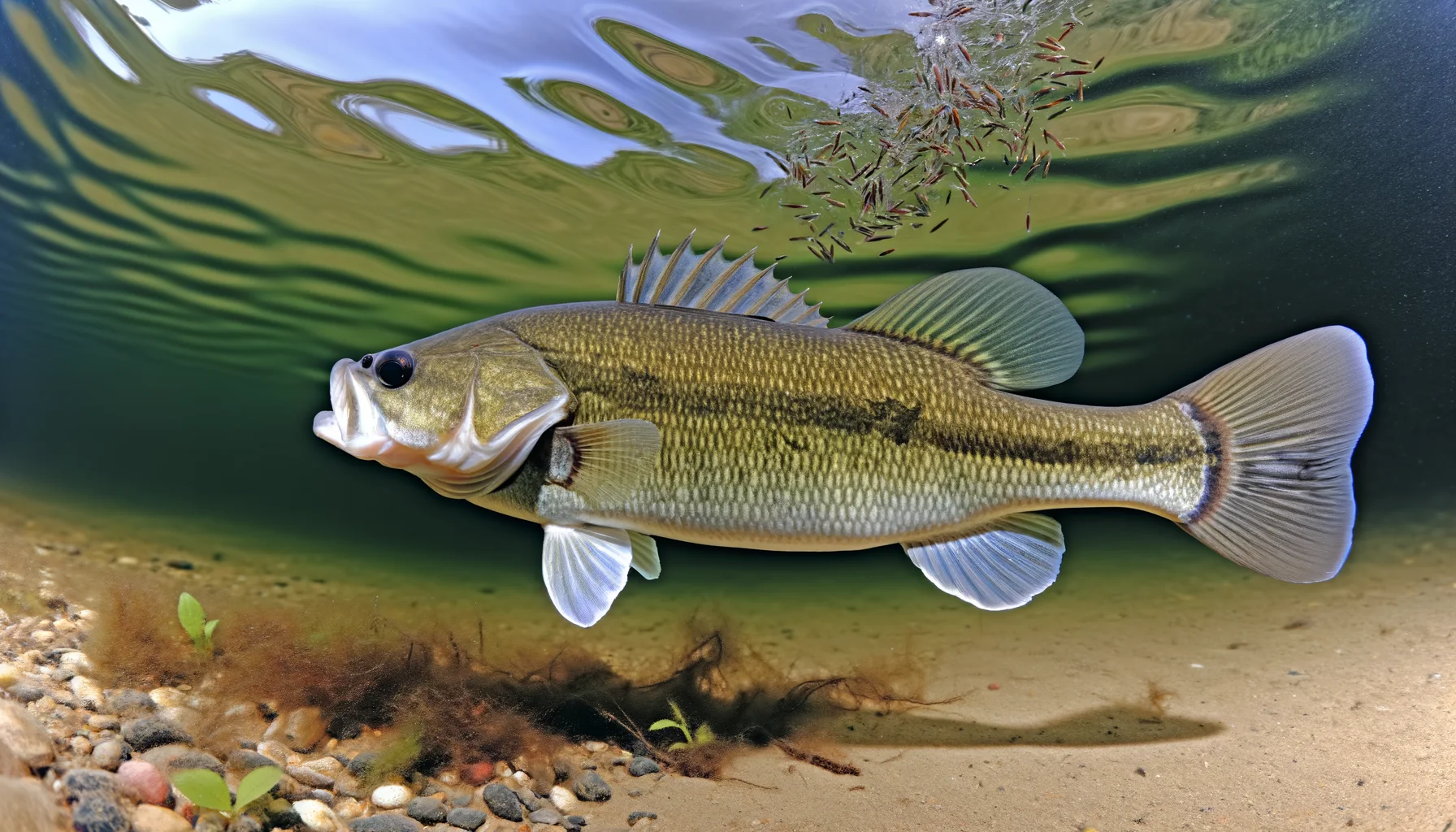
Bass
Micropterus dolomieu / salmoides
- Where it lives
- Two species, two habitats. The smallmouth prefers cool water around 20 °C, shallow, with moderate current, over rock or sand. The largemouth likes warmer water around 26 °C and dense vegetation.
- What it eats
- As young, plankton and insects. Growing up: small fish, frogs, tadpoles, crayfish. Carnivores, with many fine teeth.
- How to tell
- On the smallmouth, the upper jaw does not reach past the eye. On the largemouth, the two dorsal fins are almost completely separated.
The fact that sticks
It is the father who guards the eggs. The male digs the nest — 30 to 160 cm across — and after hatching he stands guard for weeks, attacking anything that comes near. The female may lay in several different nests.
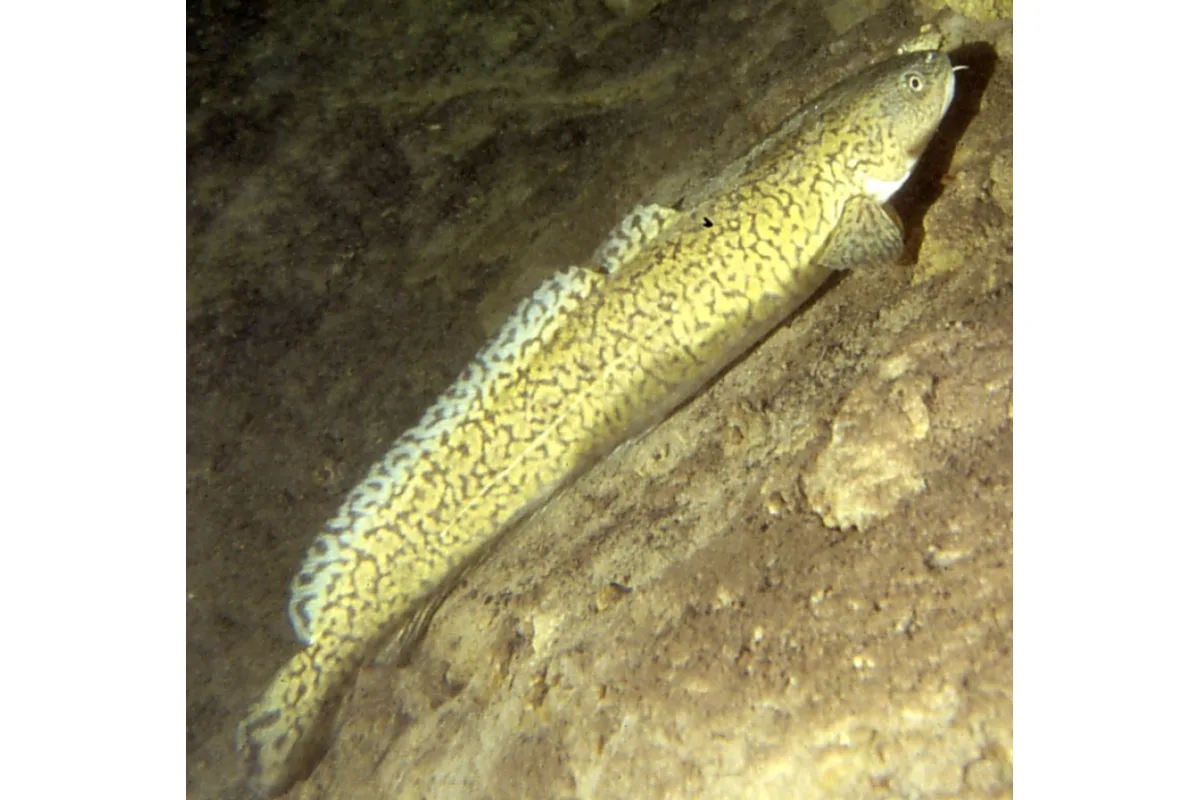
Burbot
Lota lota
- Where it lives
- In big cold rivers and on the bottom of lakes.
- What it eats
- A voracious predator that hunts its prey at night.
- How to tell
- Barbels on its nose and under its chin — like a beard. Its English name, burbot, comes from the Latin barba.
The fact that sticks
It is a freshwater cod. It belongs to the cod family, the Gadidae, and it is the ONLY member living in fresh water. It spawns at night, in winter, under the ice — one of very few species that do. The fish form a ball and roll along the bottom.
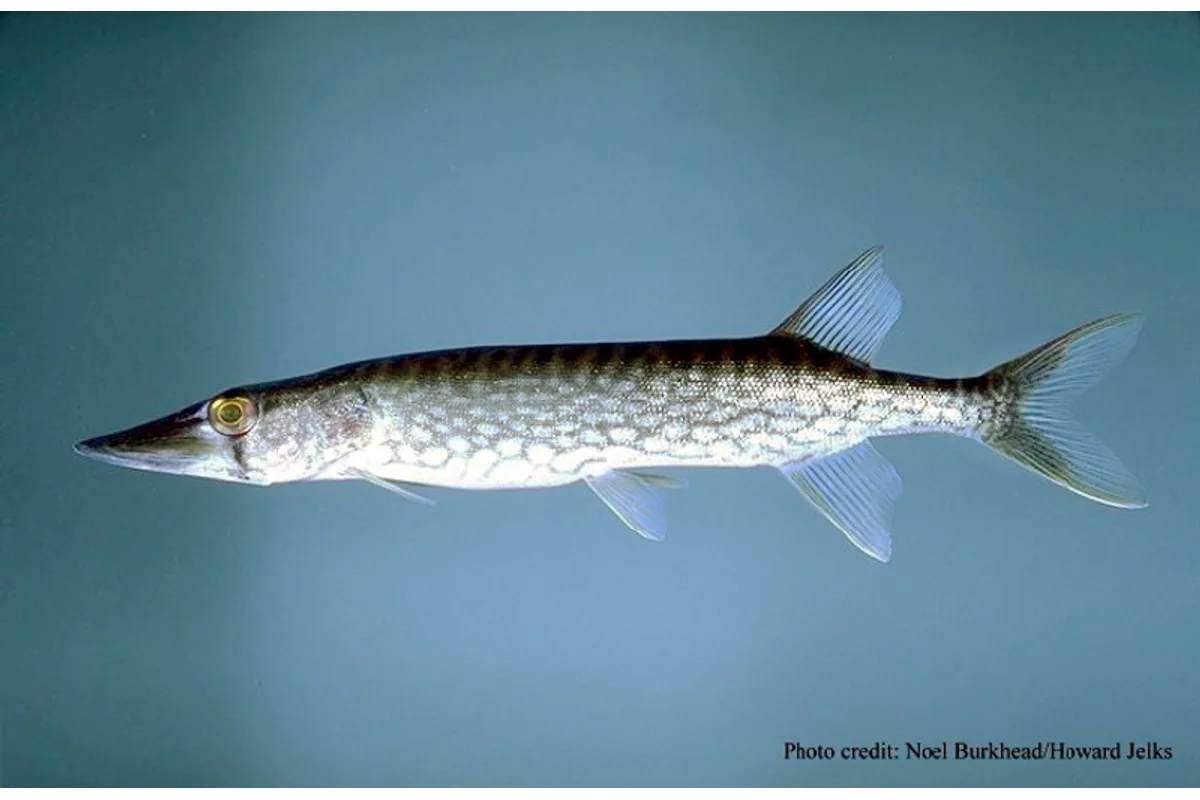
Chain pickerel
Esox niger
- Where it lives
- In warm, calm, shallow water where vegetation is thick: rivers, lakes and ponds. In winter it stays active, but deeper.
- What it eats
- More or less anything that passes: minnows, bullheads, perch, sunfish, crayfish, insects, snakes, frogs — even ducklings. Only the size of its mouth limits the size of its prey.
- How to tell
- Dark chain-link markings along its flanks — that is where its name comes from. And an exact count: 4 sensory pores on each side of the lower jaw, against 10 for the northern pike and 12 to 18 for the muskellunge.
The fact that sticks
It is an ambush hunter: motionless in the weeds, it waits for prey to pass, then its long body lets it reach high speed in almost no distance. It defends its territory and attacks even smaller members of its own species.
Source: Spotlight on… chain pickerel fishing — MFFP (youth section)
Four questions the four of them answer together
No single sheet answers these. Put side by side, the four do.
- Are there different fish in a lake and in a river?
- Yes — and it is not the lake or the river that decides, it is what is inside. The burbot wants cold water and a deep bottom. The smallmouth bass wants rock and some current; the largemouth wants weeds and warm water. The same lake can hold both, in two different corners.
- Is it better to fish in the morning, the afternoon or at night?
- It depends on the fish, not the hour. The walleye avoids light: it is most active at the end of the day or when the water is murky. The burbot hunts at night. The chain pickerel lies in ambush — it eats when something passes.
- Does a fish eat steak?
- No — but several eat meat, which amounts to the same thing. The walleye eats other fish. The chain pickerel eats frogs, snakes and sometimes ducklings. The bass starts life on plankton and ends up eating crayfish. What changes is the size of the mouth.
- How does a fish see in dark water?
- The walleye has a mirror behind its retina, the tapetum lucidum: light crosses its eye twice instead of once. Cats do the same. The chain pickerel relies instead on sensory pores along its jaw.
For the teacher
- Start with the question “does a fish eat steak?”. The answer is no and almost yes at once, and that is where the thinking happens.
- The burbot is the one to dwell on: a cod that lives in fresh water, spawning at night under the ice in a rolling ball. It breaks every expectation a child has about fish.
- The male bass guarding the nest for weeks is a good counterweight to what pupils usually assume about who looks after the young.
- Four sheets, not 209 — and the page says why. Showing a class that a source can be weak is itself a lesson about sources.