Chargement...
Complete guide
Ouananiche
Overview
The ouananiche, or freshwater Atlantic salmon, is an iconic species of Quebec, prized for its fighting spirit and delicious taste. This fish is a non-migratory version of the Atlantic salmon, living exclusively in freshwater. Its popularity stems from its ability to provide epic battles for anglers, even though its size is relatively modest compared to other salmonids. It is mainly found in the lakes and rivers of Quebec, particularly in the Saguenay-Lac-Saint-Jean and Côte-Nord regions. The ouananiche attracts sport fishermen for its energetic struggle and ability to make spectacular jumps out of the water, making each catch memorable.
Angler indices
Identification
Identification
The ouananiche is distinguished by its fusiform and elongated body, adapted for fast swimming. Its coloration generally consists of a blue-green back, silver sides, and a white belly. Distinct black spots dot its back and sides, but they do not extend below the lateral line. Its mouth is wide, with a prominent lower jaw, especially in adult males. The fins are generally clear, with a slight pinkish hue on the pectoral and pelvic fins. Its tail is slightly forked, aiding in its fast movements. Young ouananiches resemble adults but often display dark vertical bars called "parr marks" that disappear with maturity. During spawning, males develop brighter colors and hooks on the lower jaw, while females retain a more subdued appearance.
How to tell it apart
The ouananiche is often confused with other salmonids.
| Criterion | Ouananiche | Atlantic Salmon |
|---|---|---|
| Size | ≈ 40-70 cm | 60-100 cm |
| Habitat | Freshwater | Fresh and saltwater |
| Migration | Non-migratory | Migratory |
| Tail | Slightly forked | Strongly forked |
Distribution in Quebec
Distribution in Quebec
In Quebec, the ouananiche is mainly present in the Saguenay-Lac-Saint-Jean, Côte-Nord regions, and in certain lakes of the Laurentians. It is particularly abundant in Lake Saint-Jean and its tributaries, where it has found an ideal habitat to thrive. It is also found in some lakes in the Charlevoix region. Its absence is notable in areas where access to deep, cool waters is limited, such as in southern Quebec. Generally, the ouananiche prefers clear, well-oxygenated waters, which explains its distribution in the lakes and rivers of these regions.
Habitat
Habitat
The ouananiche favors the clear, well-oxygenated waters of lakes and rivers with moderate currents. It likes to stay near underwater structures such as rocks, submerged logs, and weeds, which provide shelter and hunting opportunities. It is often sought in the transition zones between deep and shallow waters, where the temperature is more stable. These fish prefer waters with temperatures between 10 and 15 °C, an important criterion for anglers looking to locate ouananiches. In summer, they may move to deeper waters to find cooler temperatures.
Life cycle
Life cycle
The spawning of the ouananiche occurs in the fall, usually in October or November, when the water temperature drops to about 6-8 °C. Females dig nests called "redds" in the gravel of rivers where they lay their eggs. Males vigorously defend these spawning sites. After hatching, the fry spend several months in shallow areas before migrating to deeper habitats as they grow in size. Sexual maturity is reached at the age of 3 to 4 years for most individuals. In terms of longevity, the ouananiche rarely lives beyond 6 years. Timeline: Spring → Rapid growth of juveniles → Summer → Movement to deep waters → Fall → Spawning → Winter → Hibernation in deep waters.
Behaviour
Behaviour
The ouananiche is primarily a solitary fish, though small groups may sometimes be observed, especially during spawning periods. It is territorial, particularly regarding spawning areas and preferred hunting spots. Sensitive to changes in light and temperature, it is more active early in the morning or late in the afternoon. Ouananiches react to noise and sudden movements, which is why a discreet approach is often necessary to successfully catch them. They are also influenced by weather conditions, with reduced activity on very hot days or during high winds.
Diet
Diet
The diet of the ouananiche varies depending on its age and the seasons. Young fry primarily feed on zooplankton and aquatic insects. As they grow, their diet expands to include terrestrial insects falling into the water, crustaceans, and small fish like smelts and minnows. In spring and summer, they are particularly active and hunt larger prey, while in autumn, their consumption of small fish increases in preparation for winter. During the coldest months, their feeding activity decreases, but they continue to feed when the opportunity arises.
Seasons & best times
Seasons & best times
In spring, the ouananiche is very active, taking advantage of the return of milder temperatures to feed abundantly after winter. This is an excellent time for fishing, especially early in the morning and late in the afternoon. In summer, the best times are often early in the morning or late in the evening when temperatures are lower. Cloudy days or those with a light breeze are also favorable. In autumn, fishing can be excellent as they feed intensively before spawning. In winter, fishing becomes more challenging as they become less active, but they can still be caught near oxygen sources. Atmospheric pressure plays a role, with activity often increasing before a weather front.
Fishing techniques
Fishing techniques
Fly Fishing
Ideal in spring and autumn, it mimics surface insects. Use dry flies or nymphs. Pay attention to presentation: a natural drift is essential. Avoid sudden movements that may scare the fish.
Light Trolling
Effective in summer, use thin, long lures that imitate small fish. The trolling speed should be adjusted to match the fish's activity. Avoid trolling too fast, as this may reduce bites.
Lure Fishing
Use spoon or crankbait lures. Choose bright colors on cloudy days and natural colors in clear weather. Animate the lure with pauses to imitate an injured fish.
Light Casting
Practical for exploring rivers and lakes. Use small metal lures or jigs. Cast near structures like rocks or weeds. Avoid noisy casts that may alert the fish.
Jigging
Try this technique in winter, under the ice. Use jigs or bright lures to attract fish in deep waters. Animate slowly to trigger the interest of inactive fish.
Lures & colours
Recommended lures & flies
For ouananiche, in clear water and sunny weather, favor natural colors like silver or blue. In overcast weather or murky water, bright colors like pink or chartreuse may be more effective. In depth, lures with reflective or phosphorescent finishes can help attract fish. Spoons and minnowbaits are often popular choices for their effectiveness at mimicking forage fish.
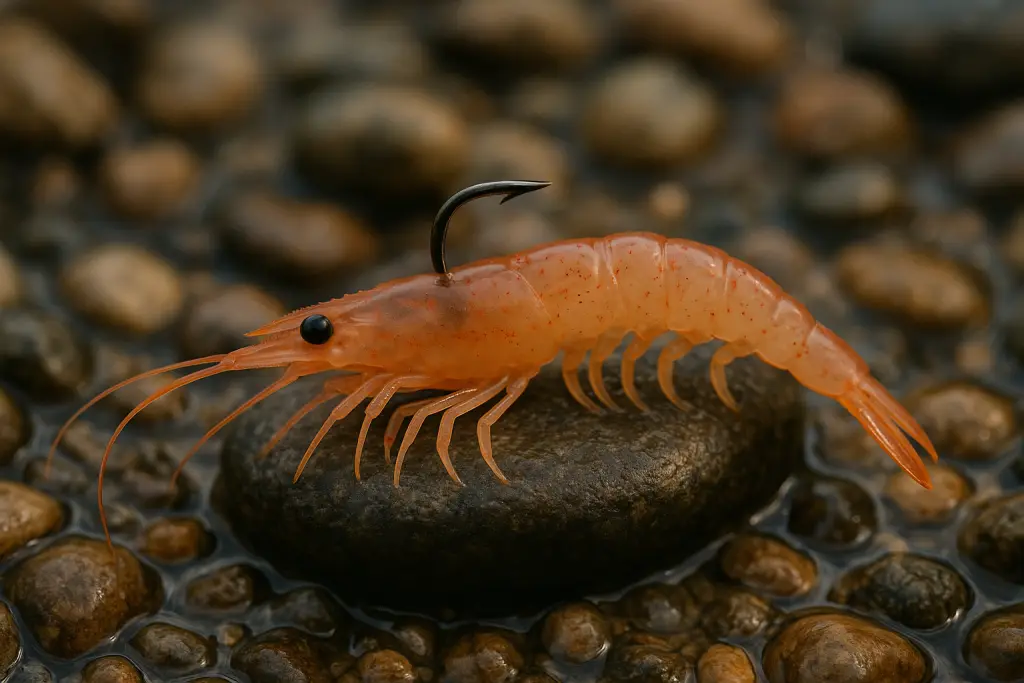
Crevette
Irresistible shrimp for brook trout, ouananiche, and char in cold water.
★★★
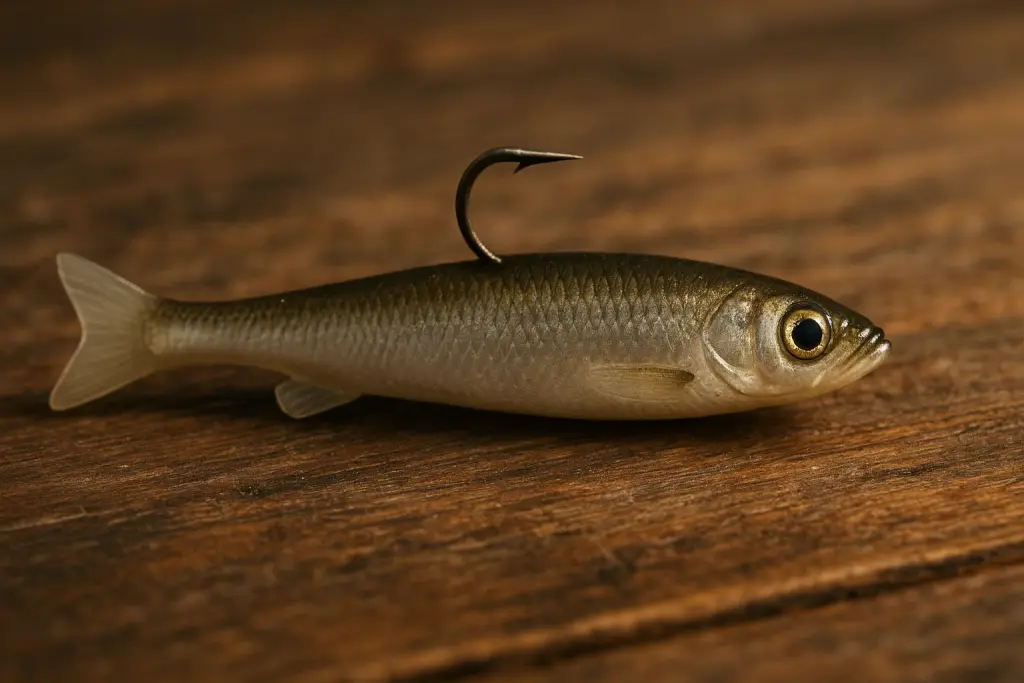
Éperlan
Fresh smelt ideal for landlocked salmon, lake trout, and brook trout in cold lakes.
★★★★★
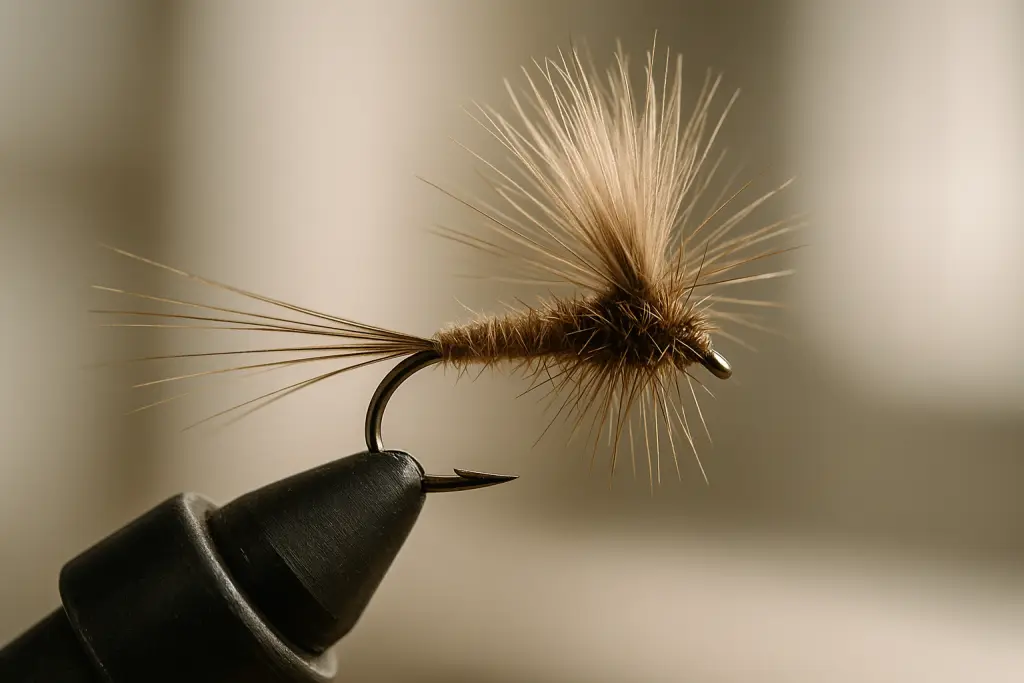
Mouche sèche
Floats perfectly to entice brook trout and landlocked salmon in calm waters.
★★★★★
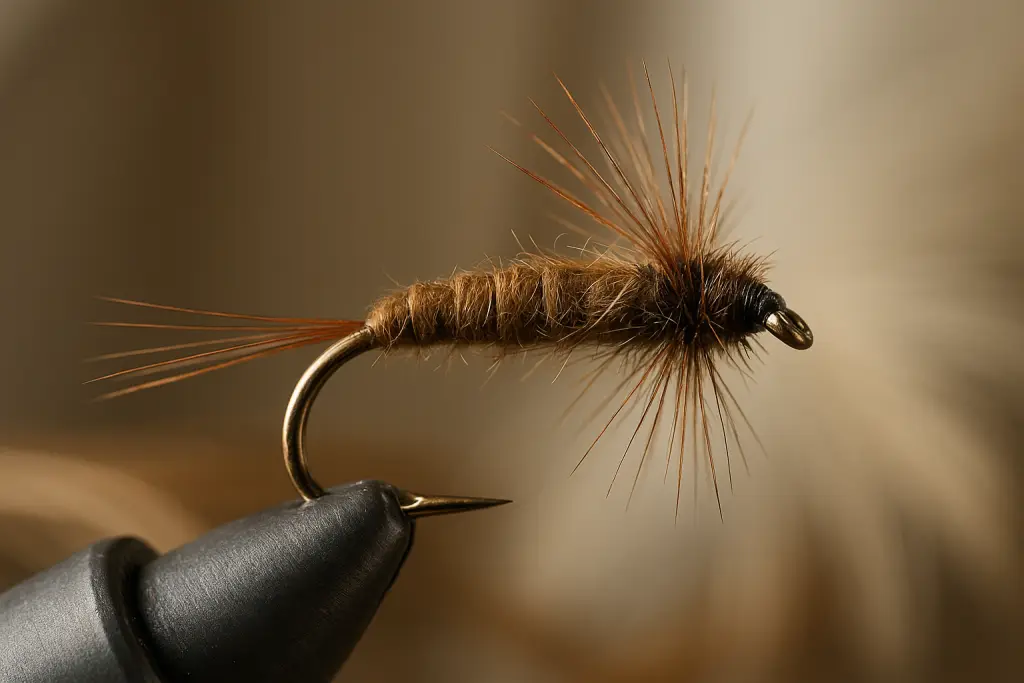
Nymphe
Irresistible nymph for brook trout, ouananiche, and char in still waters.
★★★★★
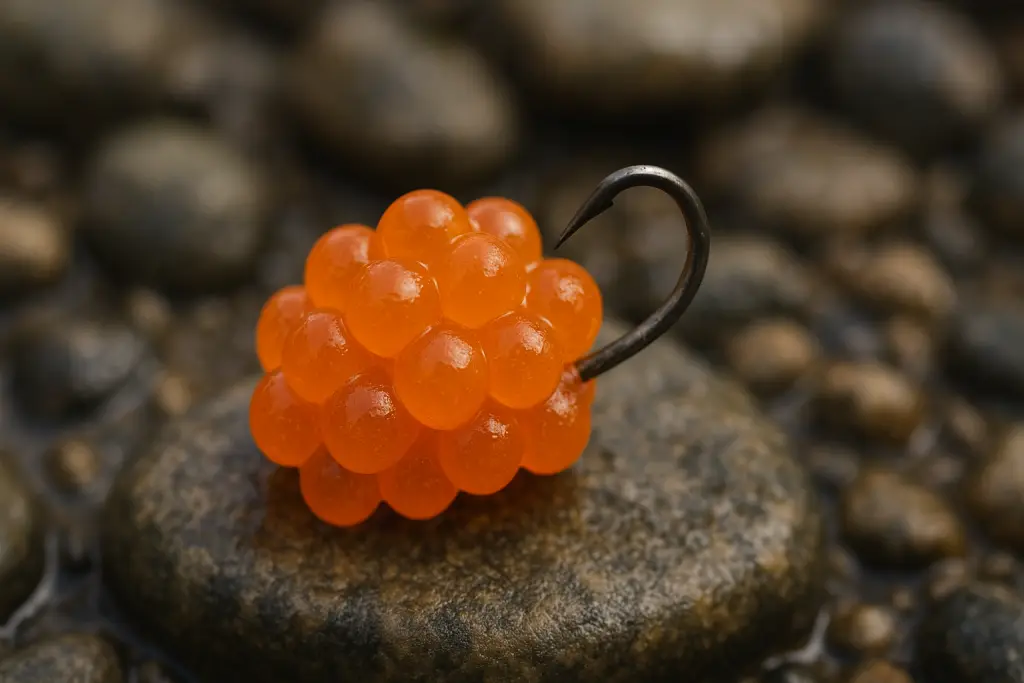
Oeufs de poisson
Attract salmon, brook trout, and ouananiche with irresistible freshwater eggs.
★★★★★
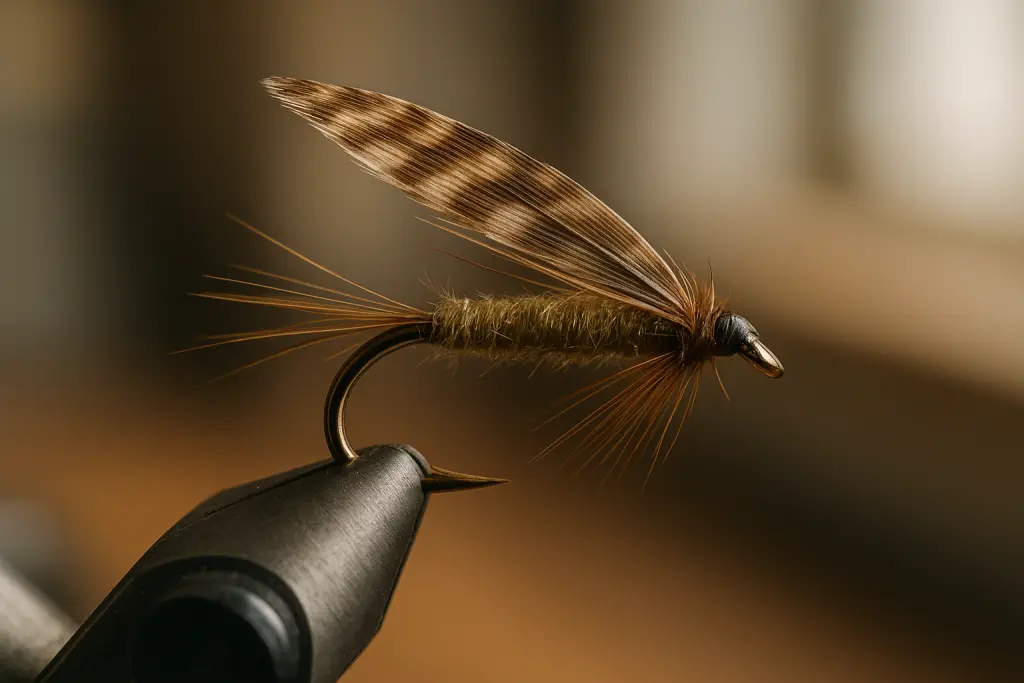
Wet fly
Fly fishing mid-column — traditional method.
★★★
Recommended gear
Recommended gear
For ouananiche, a 7 to 9-foot rod, with medium power and fast action, is ideal. A light casting reel or a size 5 or 6 fly reel will work perfectly. Use a line of 6 to 10 lb for light casting and a 4 to 6 weight for fly fishing. Hooks should be appropriately sized, generally from 6 to 10. A fluorocarbon leader can be helpful for its invisibility, especially in clear water.
Handling & release
Handling & release
Handle the ouananiche carefully to avoid removing the protective mucus from its skin. Use a wet, fine-mesh net to lift it out of the water. If you plan to release it, minimize the time spent out of the water and ensure it is well-oxygenated before releasing. For a photo, hold it horizontally and support it with both hands.
Predators
Predators
The main aquatic predators of the ouananiche include pike and yellow perch, which can prey on young individuals. Birds of prey such as the osprey and the bald eagle are also notable predators, capable of capturing fish at the surface.
Conservation & status
Conservation & status
The ouananiche is not considered threatened in Quebec, but it is subject to strict management to maintain populations. Regulations include catch limits and specific fishing seasons. Catch and release is encouraged for large specimens to preserve breeding stocks.
Surprising facts
Surprising facts
- ›The ouananiche is actually an Atlantic salmon that has evolved to live in freshwater.
- ›It is often called "little salmon" by Quebec anglers.
- ›The ouananiche is particularly known for its spectacular jumps when hooked.
- ›It can travel up to 10 kilometers to reach its spawning sites.
- ›The ouananiche requires very oxygenated water to survive, which limits its habitat.
- ›It is a fish very sensitive to changes in temperature and light.
- ›The ouananiche has been successfully introduced into several reservoir lakes for sport fishing.
- ›It is often compared to the rainbow trout for its fighting spirit.
- ›The males develop a hook on the lower jaw during the spawning period.
- ›It can live in symbiosis with other fish species, sharing the same habitat.
- ›The ouananiche is an indicator of the health of aquatic ecosystems.
- ›It is a subject of study for scientists interested in the evolution of species.
Frequently asked questions
Frequently asked questions
What is the best season to fish for ouananiche?+
Does the ouananiche migrate like the Atlantic salmon?+
What lures are most effective for ouananiche?+
What size can an ouananiche reach?+
Is the ouananiche edible?+
What is the best time of day to fish for ouananiche?+
Is it sensitive to weather conditions?+
Is the ouananiche difficult to catch?+
How to distinguish an ouananiche from an Atlantic salmon?+
Is the ouananiche a threatened species?+
What are the natural predators of the ouananiche?+
Can the ouananiche live in warm water?+
What is the weight record for an ouananiche in Quebec?+
Can you fish for ouananiche year-round?+
What are the signs of an ouananiche spawning?+
Buyer’s guides
The gear we recommend


Member catches
No catches yet for this species. Be the first!
Have you caught ouananiche?
Share your photo with fellow anglers — show off your catch!
Be the first to share your catch of this species.
A photo, your first name and the spot are enough — no account needed.
Our picks
Gear for Ouananiche

Bionic Baits 276
Discover a comprehensive fishing kit that will appeal to both enthusiasts and beginners alike. This 276-piece set is…
31.88 $

Reaction Tackle Blue Camo
Experience unparalleled fishing with Reaction Tackle's blue camo braided fishing line. Designed for serious anglers,…
20.09 $

Red Pliers 8.8"
Discover the essential tool for all fishing enthusiasts. These stainless steel fishing pliers are designed to provide…
16.99 $