Chargement...
Complete guide
Touladi
Overview
The lake trout, also known as gray trout, is an iconic fish of the deep lakes of Quebec. Valued for its flavorful flesh and fighting spirit, it is highly sought after by sport fishermen. The lake trout offers an intense fight, especially when it struggles in the icy depths of the northern lakes. Mainly distributed in the watersheds of the Laurentians, Abitibi-Témiscamingue, and Saguenay–Lac-Saint-Jean regions, it is also found in some lakes in the Eastern Townships. Its popularity lies in the challenge it represents for anglers, particularly due to its preference for deep, cold waters, which requires specific techniques to catch it.
Angler indices
Identification
Identification
The lake trout has a streamlined and robust body, with a length that can reach 90 cm to 1 meter in the largest specimens. Its color ranges from silvery gray to dark green, sprinkled with light spots that form a unique pattern on its back and sides. Its mouth is wide, equipped with sharp teeth, well adapted to its carnivorous diet. Its fins are generally darker, with light edges, and its tail is slightly forked, characteristic of members of the Salmonidae family. The scales of the lake trout are small and well embedded, providing effective protection. Young lake trout often display brighter colors, while adults tend toward duller shades. During the spawning period, males develop brighter colors and a more prominent lower jaw.
How to tell it apart
The lake trout can be confused with other salmonids.
| Criterion | Lake Trout | Arctic Char |
|---|---|---|
| Size | Up to 1 meter | About 70 cm |
| Color | Silvery gray with light spots | Reddish with pale spots |
| Habitat | Deep lakes | Cold lakes and rivers |
| Tail | Slightly forked | Very forked |
Distribution in Quebec
Distribution in Quebec
In Quebec, the lake trout is primarily found in the deep lakes of the Laurentians, Abitibi-Témiscamingue, and Saguenay–Lac-Saint-Jean. It is also present in a few lakes in the Eastern Townships. These regions provide the ideal conditions of temperature and depth that the lake trout favors. It is rare to find it in rivers or small lakes, as it prefers deep, cold waters. In these areas, it is often one of the predominant species, especially in lakes where it has few competitors for food resources.
Habitat
Habitat
The lake trout prefers deep, cold lakes, generally those with clear and well-oxygenated waters. It is often found at depths of 15 to 50 meters, where the water temperature remains constant throughout the year. In summer, when the surface of the lakes warms up, it descends even deeper to find optimal conditions. Structures such as rocky ledges, drop-offs, and underwater plateaus are preferred spots for the lake trout, as they provide shelter and hunting opportunities. The search for lake trout often begins with identifying these structures on a bathymetric map.
Life cycle
Life cycle
Lake trout spawning occurs in the fall, generally between September and November, when the water temperature drops below 10 °C. Females lay their eggs on gravel or rocky bottoms, often in shallow water, where males fertilize them. The eggs incubate over the winter and hatch in the spring, when the young fry begin to feed on zooplankton. As they grow, their diet becomes increasingly carnivorous. They reach sexual maturity between 5 and 7 years. With a lifespan that can exceed 20 years, the lake trout has a relatively long life cycle for a freshwater fish. Spring → Growth and intensive feeding → Summer → Depths for coolness → Fall → Spawning → Winter → Rest and incubation of eggs.
Behaviour
Behaviour
The lake trout is primarily solitary, although it can be found in small groups around food-rich areas. It is territorial, especially during the spawning period. Sensitive to changes in pressure, it can alter its depth in response to weather variations. Calm, cloudy days are often the best for fishing, as the lake trout is less fearful of shadows and noise. It is also more active early in the morning and late in the afternoon when the light is less intense.
Diet
Diet
The diet of the lake trout evolves with its age. Fry primarily feed on zooplankton and small invertebrates. As they grow, they begin to hunt larger prey, such as fish like smelt, brook trout, and even other young salmonids. Large lake trout can also consume small aquatic mammals. Their feeding is more active in spring and fall, periods when they accumulate reserves for winter.
Seasons & best times
Seasons & best times
In spring, the lake trout is often closer to the surface, taking advantage of the slowly warming waters. Fishermen should target shallow areas early in the morning or late in the day. In summer, it takes refuge in the depths, and trolling with downriggers is effective. Fall marks the return to mid-depth waters for spawning, making the lake trout more accessible. In winter, ice fishing is popular but requires precise knowledge of the deep areas where the lake trout hibernates. Cloudy, windless days are generally better, as the fish is less disturbed by changes in light and pressure.
Fishing techniques
Fishing techniques
Trolling with downrigger
This technique is ideal in summer when the lake trout is found in depth. Use a downrigger to keep your lure at the right depth. Avoid sudden movements to not scare the fish. A shiny lure can attract attention even in darker waters.
Vertical jigging
Particularly effective in winter and early spring. Use a heavy lure to reach the depths where the lake trout is located. The vertical movement of the jig mimics a distressed fish, which can entice the lake trout to strike.
Spoon lure
Used primarily in fall and spring. The spoon should be animated slowly to mimic an injured fish. Silver and blue colors are often effective in clear waters.
Fly fishing
Although less common, this technique can be used to target lake trout at the surface in spring. Use a fly that mimics a small fish or aquatic insect. Precision and discretion are essential.
Ice fishing with natural baits
In winter, use baitfish like smelt to attract the lake trout. Place the bait at different depths to find the fish. Ensure that the bait is always moving to remain attractive.
Lures & colours
Recommended lures & flies
To catch lake trout, the choice of lures and colors depends on environmental conditions. In clear waters and sunny weather, silver or blue colors are often the most effective, as they closely mimic baitfish. When it is overcast or the waters are murky, opt for brighter colors like yellow or orange to attract attention. Phosphorescent lures can be useful in depth or low light. In general, spoons and swimbait lures are good choices.
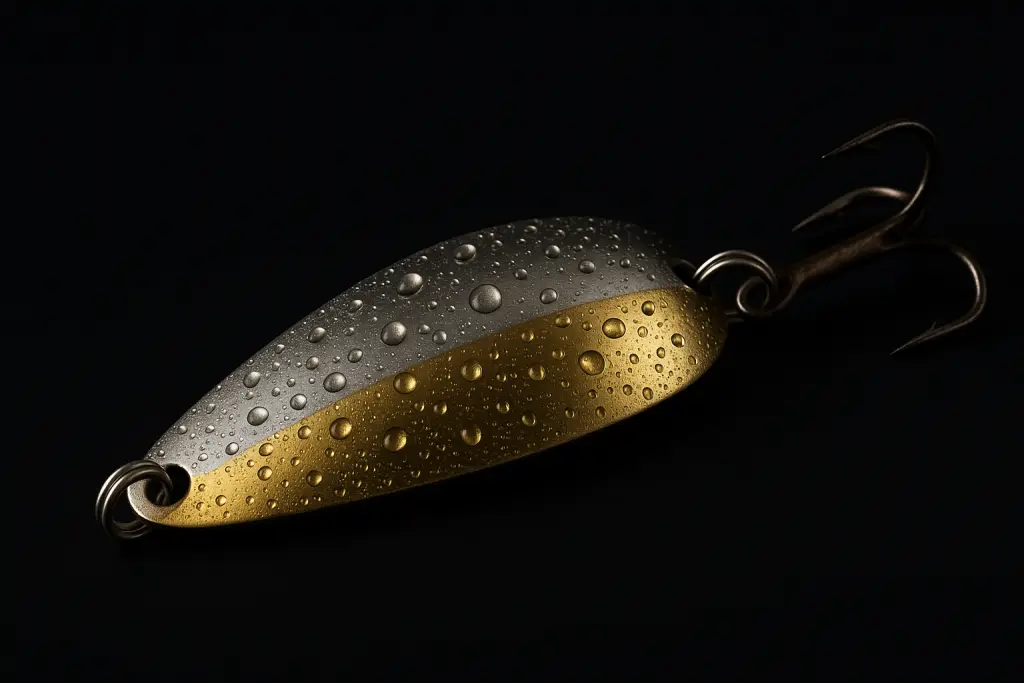
Wobbling spoon
A curved metal blade that flashes and undulates. Timeless classic for trout, char and pike.
★★★★★
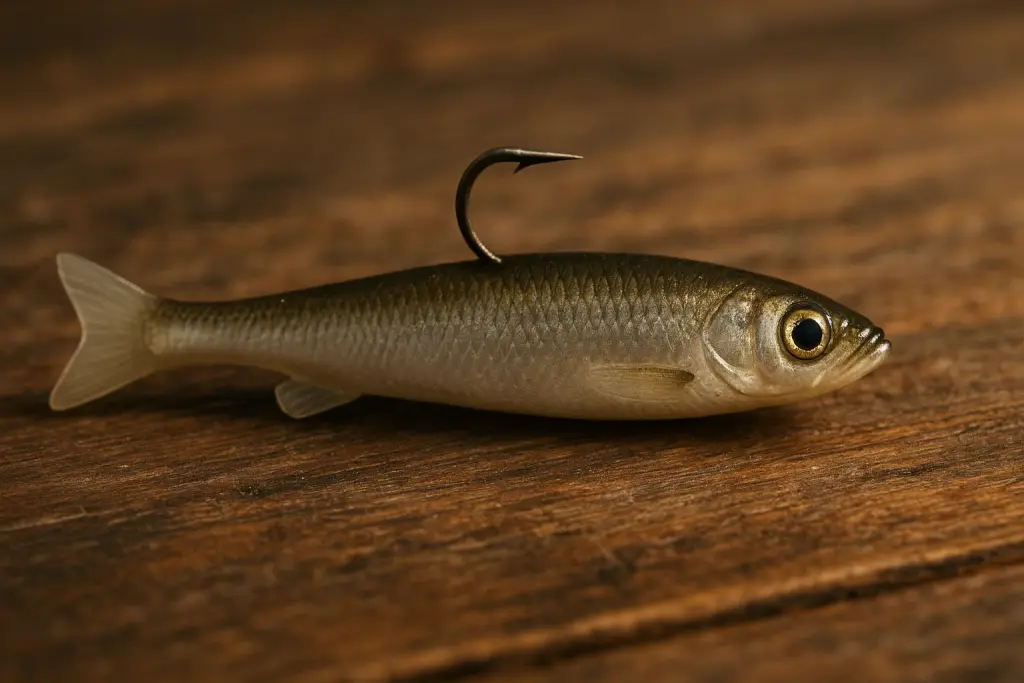
Éperlan
Fresh smelt ideal for landlocked salmon, lake trout, and brook trout in cold lakes.
★★★★★
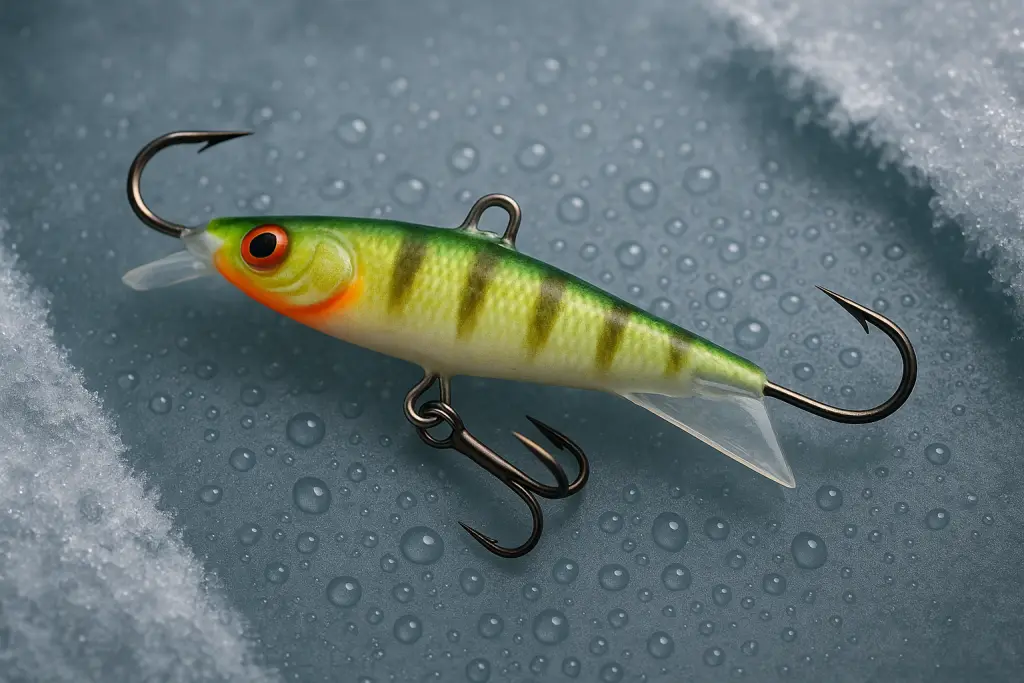
Jigging Rap
The #1 lure for ice-fishing walleye. Horizontal circle motion mimicking a wounded falling baitfish.
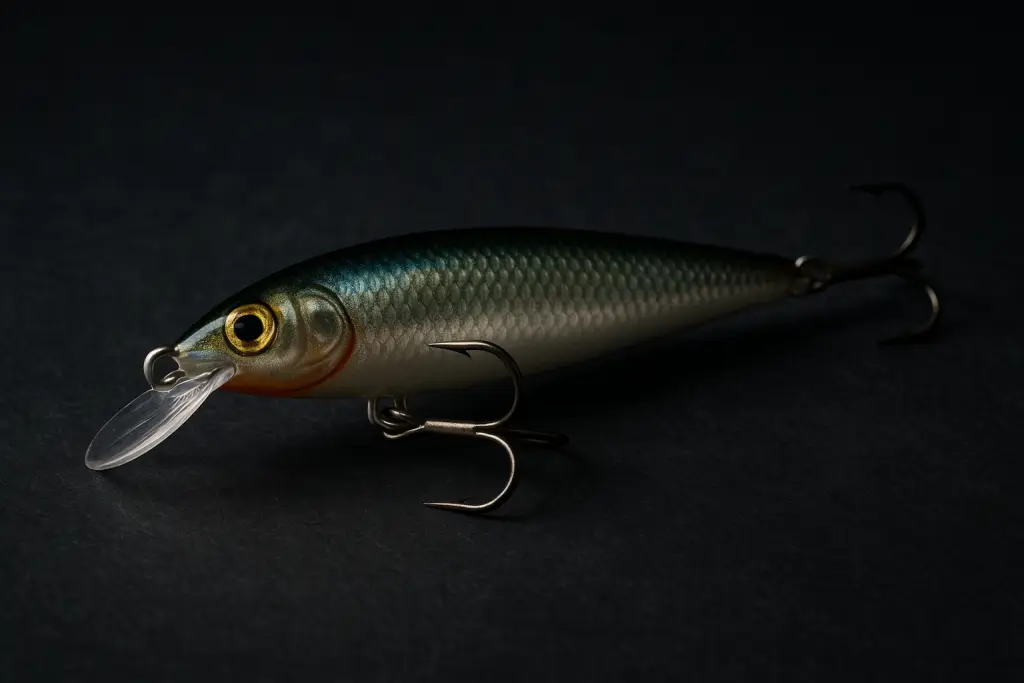
Minnow
The live baitfish that mimics everything predators eat. Essential for walleye, pike and bass.
★★★★
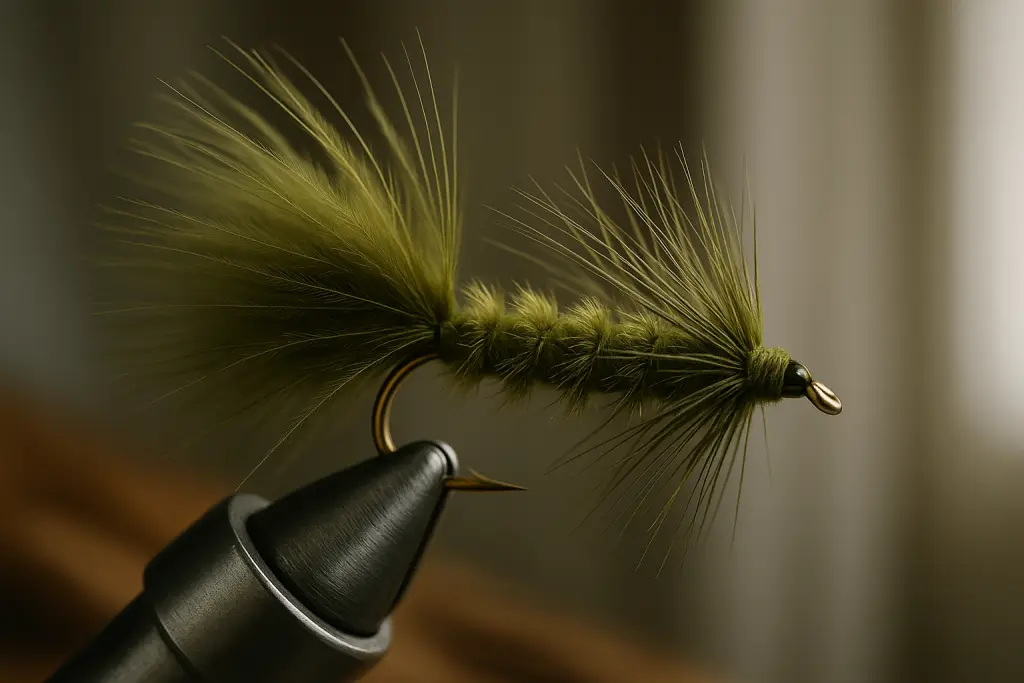
Streamer
The fly that imitates a baitfish. Most effective for big trout and char, in lakes and rivers.
★★★★
Recommended gear
Recommended gear
To fish for lake trout, a rod 2.1 to 2.7 meters long with medium to heavy power is recommended. A moderate action allows you to feel the bites well and effectively fight the fish. A spinning reel or baitcasting reel capable of holding at least 150 meters of 10 to 20 lb line is ideal. Use hooks sized 1/0 to 3/0, depending on the size of the bait or lure. A 15 to 20 lb fluorocarbon leader may be necessary to prevent the fish from seeing the line.
Handling & release
Handling & release
To handle a lake trout, it is important to hold it firmly but gently to avoid injuring it. Use a landing net with fine mesh to remove it from the water. If you wish to release it, minimize the time out of the water and handle it with wet hands to protect its mucus. When taking photos, support it under the belly and near the tail. For a successful release, ensure that the fish is well oxygenated before letting it go.
Predators
Predators
Young lake trout are vulnerable to aquatic predators such as pike and yellow perch. Birds of prey, such as the bald eagle and the osprey, can also capture lake trout, especially young ones or those swimming near the surface. Adults have few natural predators due to their size and deep habitat.
Conservation & status
Conservation & status
The lake trout is a species managed in Quebec with quotas and minimum size limits to ensure its sustainability. Anglers are encouraged to follow catch-and-release rules for fish below the legal size or in excess of quotas. Conservation efforts include habitat management and protection of spawning areas. Monitoring populations is essential to maintain ecological balance.
Surprising facts
Surprising facts
- ›The lake trout can live up to 25 years under optimal conditions.
- ›It is one of the largest members of the Salmonidae family.
- ›The lake trout has a slow growth rate, making it vulnerable to overfishing.
- ›It can survive in waters as cold as 4 °C.
- ›The flesh of the lake trout is rich in omega-3, beneficial for health.
- ›It is often called gray trout due to its distinctive color.
- ›The lake trout can descend to depths of more than 50 meters.
- ›It is an opportunistic predator, ready to hunt smaller fish.
- ›The largest specimens can weigh over 20 kg.
- ›The lake trout is an indicator of water quality in northern lakes.
- ›It requires specific spawning areas to reproduce successfully.
- ›Lake trout populations are affected by climate changes.
- ›It is often targeted during ice fishing competitions.
- ›The lake trout has a slow metabolism, which helps it survive in cold waters.
Frequently asked questions
Frequently asked questions
What is the best time to fish for lake trout?+
What are the signs of a good lake trout spot?+
Can you fish for lake trout in summer?+
What type of lure is most effective for lake trout?+
Is the lake trout sensitive to noise?+
What is the best time of day to fish for lake trout?+
What is the minimum size limit for lake trout in Quebec?+
Should you always use a fluorocarbon leader?+
Is the lake trout a good fish for consumption?+
How does climate change affect lake trout?+
What are the main predators of lake trout?+
Do you need a special license to fish for lake trout?+
Can lake trout be fished with a fly?+
What is the best technique for fishing for lake trout in winter?+
Is the lake trout a schooling fish?+
How to handle a lake trout for release?+
How do you catch lake trout?+
What do lake trout eat?+
How do you cook lake trout?+
Buyer’s guides
The gear we recommend


Member catches
No catches yet for this species. Be the first!
Have you caught touladi?
Share your photo with fellow anglers — show off your catch!
Be the first to share your catch of this species.
A photo, your first name and the spot are enough — no account needed.
Our picks
Gear for Touladi

Pristis UTA II
Discover the essential tool for all fishing enthusiasts: the Pristis UTA II fishing pliers. Designed to combine perfo…
34.99 $

Plano 2-Tray
Discover an ideal storage solution for all your fishing accessories with this functional and stylish tackle box. Desi…
27.96 $

UCEC 150pcs Circle Hooks
Discover the UCEC fishing hook set, perfect for freshwater and saltwater fishing enthusiasts. These high carbon steel…
16.98 $