Landing nets, pliers & fish-handling tools
— Buyer’s guide 2026
Handling fish well is key to a successful release. A rubber landing net, good pliers and a lip gripper protect the fish — and your fingers. Here’s how to pick your handling tools.
Disclosure: this page contains Amazon affiliate links. If you buy through them, we may earn a small commission — at no extra cost to you. It helps cover our operating and development costs and keep improving the platform.
How to choose your handling tools
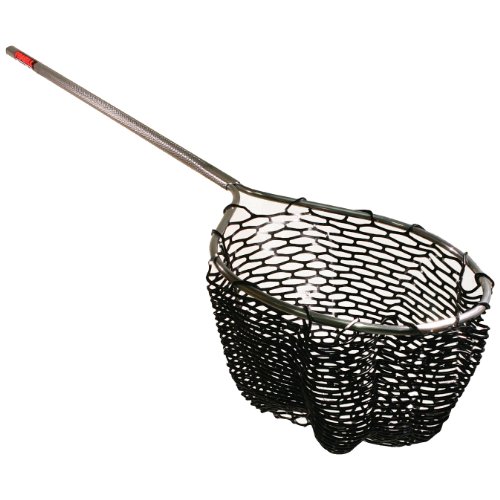
Rubber knotless landing net: best for catch and release — it protects slime and fins and won’t tangle your hooks.
Basket size for your target fish: a large, deep basket for pike and walleye, a compact one for trout.
Telescopic handle: handy from shore, a dock or a kayak to reach the fish without leaning out.
Long-nose pliers: to remove deep hooks without hurting the fish or your hands.
Lip gripper: to lift and hold the fish without squeezing it or touching its gills.
Jaw spreader for pike: opens the jaw safely to retrieve the lure.
Braid scissors / cutter: a blade that cleanly cuts modern braid (ordinary clippers just crush it).
Responsible release: keep the fish wet, handle it little, and release it quickly.
Popular models and types
Frabill rubber landing net
A safe bet for catch and release. Knotless rubber mesh preserves slime and fins, and hooks tangle far less than in nylon netting. Downside: rubber is heavier and bulkier than a fine-mesh net. For whom: anglers who release their fish and want to protect them.
View on Amazon ↗Rubber landing net (generic)
The budget way to switch to rubber. A deep basket and soft mesh suit most species without paying for a brand name. Downside: finish and durability vary from one model to the next. For whom: someone who wants a first fish-friendly net at a low price.
View on Amazon ↗Long-nose pliers
The go-to tool for unhooking without getting hurt. The long nose reaches hooks set deep, especially in pike and walleye with their sharp teeth and gill plates. Downside: cheaper models rust quickly, even in freshwater. For whom: every angler — the accessory to keep in the box at all times.
View on Amazon ↗Lip gripper
To hold the fish safely, for you and for it. Grips the lower jaw without squeezing the body or touching the gills, handy for photos and unhooking. Downside: don’t hang heavy fish vertically or you risk injuring the jaw. For whom: anyone handling pike, walleye or bass who wants to limit stress.
View on Amazon ↗Braid scissors / cutter
A blade built for modern braid. It cleanly cuts fibers that ordinary line clippers only crush, for clean, fast knots. Downside: the thin blade dulls if used on wire line or split rings. For whom: anyone fishing braid who re-ties often.
View on Amazon ↗Which tool for your need?
Catch and release (rubber net)
View on Amazon ↗A knotless rubber landing net protects the fish and won’t tangle your hooks.
Unhooking / pike
View on Amazon ↗Long-nose pliers and a jaw spreader to safely remove the lure from pike.
Handling the fish
View on Amazon ↗A lip gripper to lift and hold without squeezing.
Cutting braid
View on Amazon ↗Braid scissors for clean, fast knots.
Buyer’s guides