Pêcheur Québec
Published on September 19, 20269 min read
Fishing gear, fishing tackle, choosing a rod, licences, your first cast, catch and release and eating your catch: everything you need to start fishing in 2026.
Fishing is one of the few hobbies that costs little to start and pays you back on the very first outing. It is also far from a niche pastime: in Quebec alone, 733,931 sport fishing licences were sold in 2025-2026 — 689,567 to residents and 44,364 to non-residents, according to the provincial government. Whether you picture quiet lakes, fast rivers or the open sea, there is no better time to learn.
Getting started is simpler than it looks. Pick one fishing rod suited to the water you can actually reach, read the regulations for your zone, learn one knot and one cast, and practise catch and release from day one. Begin on calm fresh water — a pond, a lake shore, a slow river — rather than the ocean. Your odds of catching something on trip number one go up enormously.
Key takeaway — One rod, one licence, one knot. Everything else can wait until you have caught your first fish.
The three main forms of fishing
Three forms of fishing coexist today, each with its own purpose and its own rules.
Traditional fishing relies on ancestral tools — harpoons, traps, drift nets — still used by coastal communities from the Gaspé Peninsula to Brittany and the South Pacific. The goal is subsistence and cultural transmission. The FAO estimated the world fishing fleet at about 4.9 million vessels in 2022, a large share of which is small-scale and artisanal.
Recreational fishing is built around leisure. It brings families and friends together around pike, trout, bass, walleye or mackerel, and it usually requires a licence. Fly fishing belongs here and is popular worldwide, in rivers as much as in lakes.
Sport fishing is about the challenge of the catch rather than the meal. Tournaments run on standardised rules, with weigh-ins, timed sessions and anti-cheating checks on weights and prohibited technology.
Why the distinction matters: industrial fishing is what weighs on global stocks, while well-regulated recreational fishing supports conservation. The FAO found that 62.3% of assessed marine stocks were fished within biologically sustainable levels in 2021 — down from previous assessments, which is exactly why the rules you follow on your local lake are not bureaucratic decoration.
Fishing gear and fishing tackle: what a beginner actually needs
Two words get used interchangeably, and separating them makes shopping much easier.
Fishing gear is everything around you: technical clothing, a tackle box, a fishing net (landing net), a personal flotation device, and accessories such as a portable fish finder.
Fishing tackle is everything attached to the line: fish hooks, sinkers, fishing lures (soft plastics, spoons), swivels and leaders.
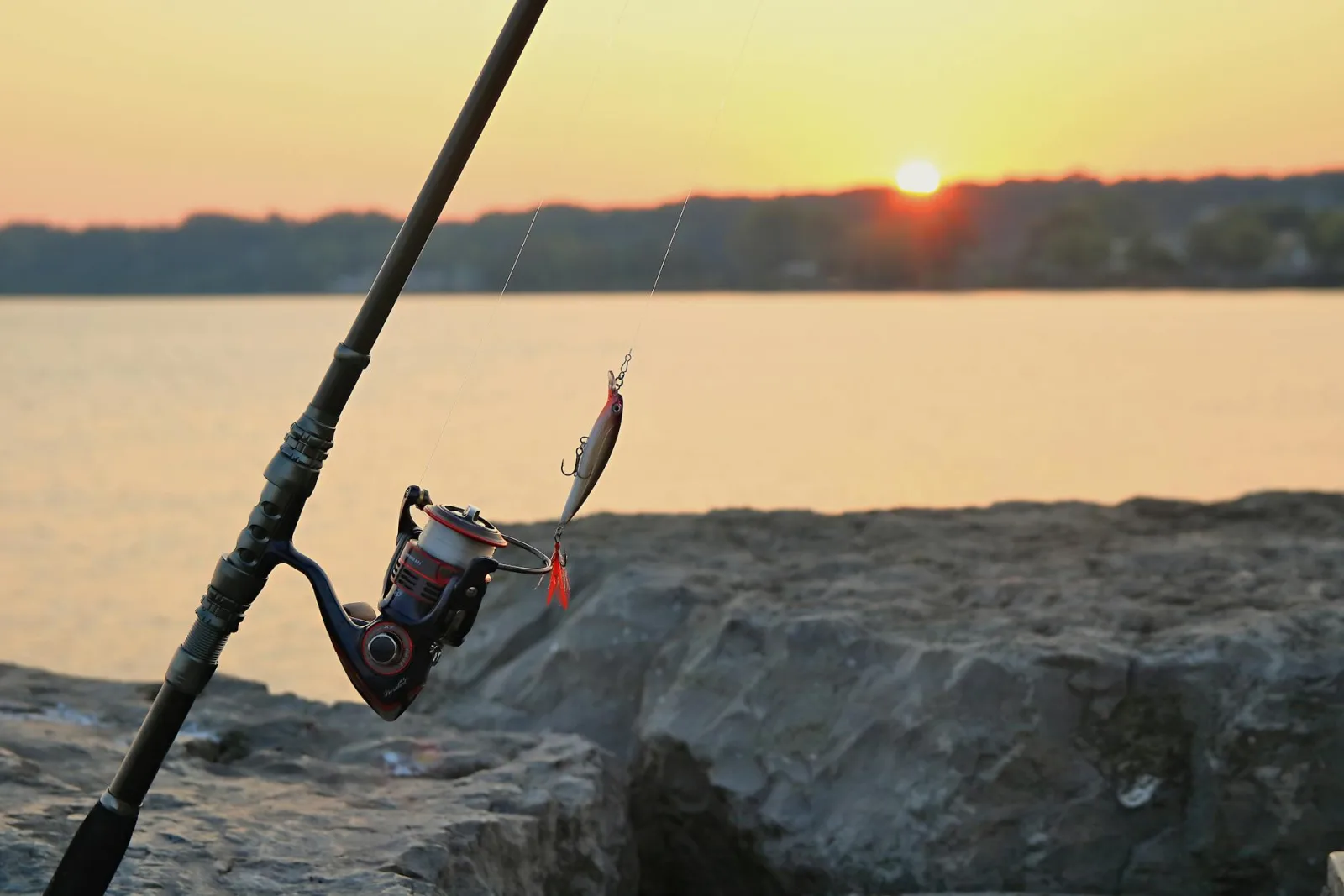
For a first outing, buy: a spinning rod, a beginner spinning reel, 6-10 lb monofilament fishing line, an assortment of medium single hooks, a few soft plastics and spoons, a bobber, pliers and scissors. A rod-and-reel combo is by far the easiest way in — see our buyer's guide to beginner rods and our essential starter kit.
Match the gear to the water. For walleye on big Ontario or Quebec lakes, go heavier on line and rod power. On an urban pond, a short rod and discreet lures work better. On the Gaspé coast for striped bass, corrosion-resistant gear is not optional.
Three mistakes to avoid: overloaded cheap kits where quality is sacrificed for piece count, cheap line that breaks on your first decent fish, and leaving the flotation device at home when you step into a boat.
Choosing your first fishing rod: length, power and action
Length. A rod of 6 to 7 feet (1.80-2.10 m) is the versatile choice for fresh water, whether you fish perch, trout, bass or panfish from the bank or a small boat.
Power and action. Power (ultra-light, light, medium) tells you the lure weight and fish size the rod can handle. Action (fast, moderate) tells you where the blank bends. A fast action suits jigs and single hooks; a moderate action cushions the fight and keeps treble hooks from tearing free.
For kids and teens. Shorter rods (5 to 5.5 ft), grips sized for small hands, and pre-mounted combos that any beginner can use straight out of the package. Our guide to fishing with children covers the rest.
A little history. Fibreglass rods have been popular since the 1950s for their toughness and flex, and the fixed-spool spinning reel — the one nearly every beginner starts with — was patented by Albert Illingworth in 1905.
Care. Rinse the rod after every saltwater outing, check the guides for corrosion or sharp edges that cut line, and store it flat so the blank does not warp.
Regulations: licences, size limits and closed seasons
Always check the local regulations before you fish. This is the one rule that never changes, and the details change every season.
Licences. Quebec's regulations cover 29 fishing zones, each with its own quotas, closed periods and minimum sizes — start with our fishing licence page and the zone regulations. Ontario publishes its Fishing Regulations Summary by Fisheries Management Zone. Licence-free days exist in several provinces, and in France the permit is bought from a departmental federation, annually or by the day.
Sizes and limits. Every province or state sets minimum sizes and daily limits, and they differ not only by zone but sometimes by individual lake. Do not trust a number you read on a forum or in a guide written last year — including this one. Open the official table for your zone the week you go.
Closed seasons. Spring is when fish become active again, and it is also when pike, walleye and bass spawn. The closures that follow are strict, and they are the single reason those populations are still there to catch.
Special waters. Some areas are no-kill, others ban natural bait or require barbless single hooks. Urban sectors and reserves often have their own rules.
Learning to fish: from the rig to your first cast
Thread the line. Run the fishing line through every guide from the reel up, tie it to the spool with a solid knot, and add a leader if the water is clear or the species is wary.
Rig hook, line and sinker. Use medium single hooks. Set the sinker 20-30 cm above the hook. Add a bobber if you want to fish at a set depth. The clinch knot is the one knot to learn first: it attaches a hook securely and you can tie it cold and wet. A simple earthworm remains the most effective beginner bait — see our fishing baits.
Practise the cast dry. Remove the hook, clip on a casting plug, and go to a park or an open field. Check behind you for people before every swing.
The spinning cast. Open the bail, trap the line under your index finger, bring the rod over your shoulder in one smooth motion, and release as the tip points at your target. Landing short means releasing earlier; overshooting means releasing later. Ten minutes on grass saves an hour of tangles on the water.
Freshwater fishing techniques: lakes, rivers and ponds
From the bank. Position yourself near drop-offs, weed edges or inflows. Stay quiet and low — fish are most active early in the morning and at the end of the day. Simple baits (worms, corn, small lures) are enough.
In rivers. Learn to read current. The classic holding spots are behind boulders and in deep pools, and they are where you will find trout and smallmouth bass.
Urban ponds. Rules are often specific: limited access, certain baits banned. Expect carp, bluegill, crappie and bass, and share the space with walkers and runners.
Through the seasons. Fish move with water temperature. In spring they feed again after spawning, in summer they follow oxygen and cooler depths, in autumn they school up and feed hard before winter, and in winter they hold deep and sheltered — which is when ice fishing takes over.
Keep a logbook. Dates, spots, weather, species. It is the cheapest tool there is for getting better, and after one season it starts predicting fish behaviour better than you do.
Catch and release: putting fish back in good shape
Some species must legally be released, and releasing well is what lets the next person catch the same fish.
Use the right gear. Single hooks, ideally barbless. A fine-mesh or rubber landing net and long pliers so you can unhook quickly without handling the fish.
Handle it properly. Wet your hands first — dry hands strip the protective slime that keeps a fish from infection. Hold it horizontally and keep it out of the water for less than 10 to 15 seconds.
Release it facing the current. Support the fish until it swims off under its own power. Never throw a fish back.
Know when to keep one. If the injury is severe or the regulations require it, keep the fish. And never waste a catch.
Protecting the water: litter, lost gear and invasive species
Take everything home, including line offcuts. Some ports and parks now have monofilament collection points — ask at your local tackle shop.
Lost gear is the big one. Canada's Ghost Gear Fund has supported the retrieval of 40,936 units of gear, more than 2,474 tonnes of abandoned or lost equipment and 926 km of rope from Canadian waters since 2020. Ghost nets, abandoned lines and hooks keep catching birds, seals, turtles and fish long after anyone has stopped fishing them. Recover your snagged lines whenever it is safe to do so, and report abandoned nets to local authorities.
Never move live fish from one body of water to another. That single habit prevents most of the spread of disease and invasive species.
Eating your catch safely
Fishing for the table is still one of the main reasons people fish, and a few precautions make it a safe pleasure.
Contaminants. Certain waters and certain species accumulate mercury or PCBs. Governments publish updated consumption advisories — Quebec's fish consumption guide and Ontario's Eating Ontario Fish are the ones to check before you make wild fish a habit.
Simple rules. Limit large predators (big pike, large walleye, large marine carnivores) for pregnant women, young children and vulnerable family members. Smaller, younger fish carry less.
Frequency and preparation. An occasional meal after a trip carries little risk; very regular consumption is what raises exposure. Fillet cleanly and remove the skin and visible fat, where fat-soluble contaminants concentrate.
Planning a fishing trip
Destinations by season. The Gaspé for salmon and striped bass in summer, Ontario and Quebec for walleye and muskie from spring to autumn, alpine lakes for trout in summer, the French Atlantic coast for sea bass and mackerel in autumn.
Paperwork first. Buy the right licence online, then check quotas, open seasons and permitted gear. Hiring a guide for a first trip into unfamiliar water is often the difference between a story and a blank day.
Logistics. Build a checklist in order: rods, reels, tackle, clothing, safety (flotation devices, waterproof phone case, weather forecast checked the morning of).
Fish responsibly. Favour operators and lodges that encourage catch and release and habitat protection, and read other anglers' reviews before you book.
Fishing in 2026 is more accessible than it has ever been: a rod, a licence and some curiosity are enough. Start simple, on fresh water, close to home. Keep a few fish, release the rest carefully, and you will still be catching them in twenty years. If you are fishing in Quebec, our complete Quebec fishing guide picks up exactly where this one stops.
?Frequently asked questions
What do I need to start fishing?
Do I need a licence to fish?
What is the best fishing rod length for a beginner?
What is the difference between fishing gear and fishing tackle?
What is the easiest bait for a first outing?
How do I release a fish without hurting it?
Is it safe to eat the fish I catch?
When is the best time of day to fish?
Go further
Buyer’s guides